
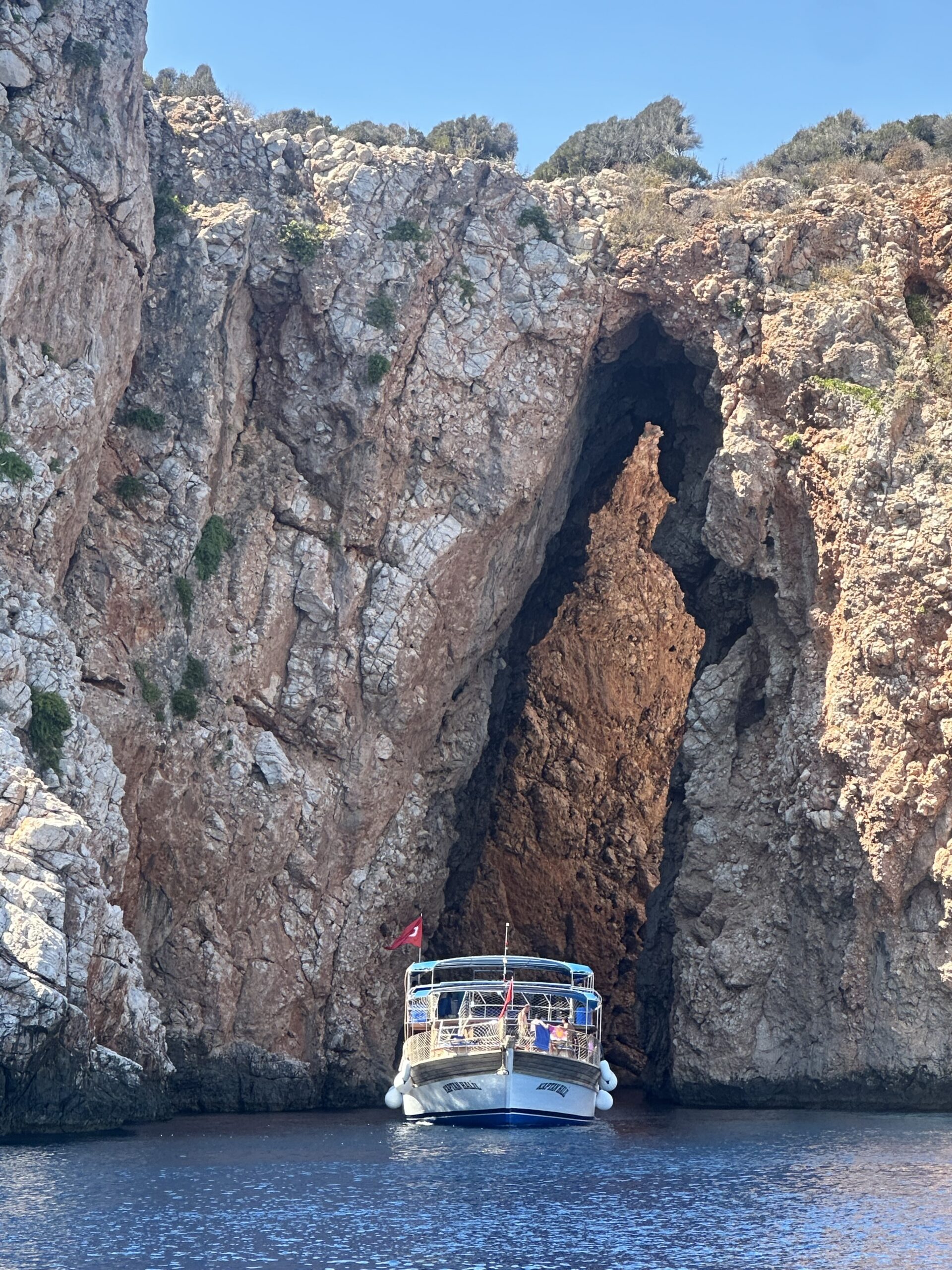
With impossibly clear turquoise water and tiny white beaches, Suluada – or the ‘Turkish Maldives’, as it is often called – was advertised to me as one of Turkey’s ‘best-kept secrets’. But after visiting the island on a boat trip from Antalya in September 2026, I couldn’t help thinking that particular secret had been let out of the bag – big time.
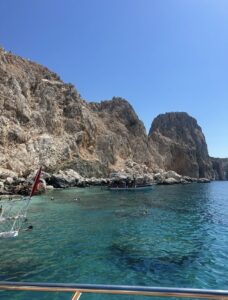
I’ll start by saying this: Suluada is beautiful. The water really is that colour – clear, turquoise and almost ridiculously inviting, set against the rugged coastline of a tiny uninhabited island off Turkey’s Mediterranean coast.
Suluada itself is minuscule, as islands go – just 1.2km (or 0.75 miles) from end to end, with its two white beaches measuring only around 50m and 120m.
It’s easy to see why photographs of Suluada are all over Instagram and why boat trips promising secluded beaches, crystal-clear water and a slice of undiscovered paradise have become so popular.
There’s just one problem with being a ‘best-kept secret’: eventually, everybody finds out about it. And what those dreamy photographs don’t necessarily show you is everybody else who has had exactly the same idea.
My questions are: has Suluada become a victim of its own success? And, more importantly, how much tourism is too much for one tiny island?
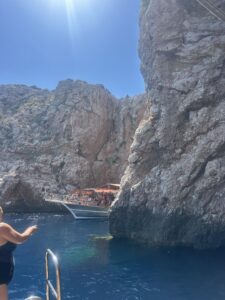
My trip to Suluada
I visited this part of the Turkish coast on a day off dental work while in Antalya. I had seen the “peaceful trip” advertised on Booking.com for £27 per person, including lunch, and been hooked by photos of a pristine white shoreline and water as clear as the stuff that comes out of the tap.
Booking.com sold me the trip with the following misleading description: “On the Turkish Riviera, a Suluada boat trip will take you to one of Turkey’s best-kept secrets – often called the Turkish Maldives for its powdery white sands and clear turquoise waters. You will visit the island’s most stunning and secluded coves on both the north and south sides, where the water is warm and the crowds are minimal.”
“From departure until return you’ll be surrounded by striking scenery that makes for memorable photos and relaxing moments on the water.”
What’s not to love, I thought.
I’ve not seen much of Turkey on the whole, so my sister and I – she never having been to Turkey before and being a keen snorkeller – were looking forward to a memorable day bobbing about in that ridiculously clear water.
It took nearly three hours to get from our hotel to Adrasan, which is where we joined the boat. I hadn’t anticipated it would take that long and, to be fair, probably wouldn’t have gone if I had known. But, I suppose it enabled us to see some of the Turkish countryside outside of our five star hotel, which we had hardly left, other than to be taxied to the nearby dental surgery.
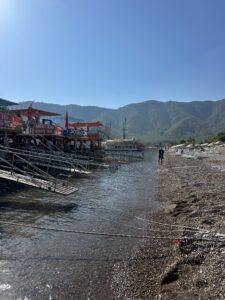
On arrival, my sister took one look at Adrasan beach, where the mini bus dropped us, and said it reminded her of a scene from Mad Max. I could see exactly what she meant.
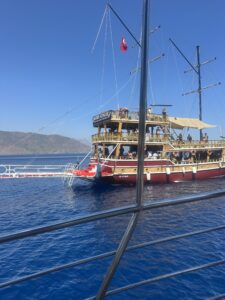
A long line of hefty tourist boats were backed up against the dusty beach in a long, slightly surreal line, gangplanks down and waiting to swallow their next load of passengers. However, instead of post-apocalyptic vehicles heading into the wasteland, these were boats preparing to ferry hundreds of us towards one tiny Mediterranean island.
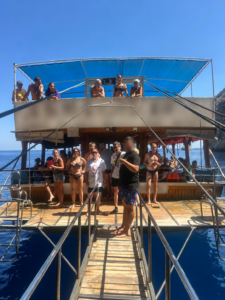
One after one, the boats left the beach – ours being one of the last. And the banging music began as we departed. Now, I am a party girl. I love music. But 2009 Romanian club music pounding as you cruise along the uninhabited coastline is maybe a bit OTT, wouldn’t you agree?
So loud was it that my sister at one point, asked for it to be turned down a little. I know that makes us sound like a couple of middle-aged spoilsports, but this was a “relaxing trip to the Turkish Maldives”and not a Club 18-30 party boat.
On the plus side, our captain was a very friendly chap and told us he had lived in Stevenage in the UK, which felt a million miles away from Suluada. His shipmate also had a very cute puppy with him. I have little more to say that is positive.
As we approached the island, I started counting the boats moored there – their ropes tied around large rocks on the small, pebbly (not “powdery”beach), so much so that I could see that people were having to crawl under and over them to get along the shoreline. See what I mean in this Instagram post.
I counted 19 boats. And those were simply the ones I could see around us at that particular moment. These weren’t little sailing boats carrying half a dozen people either. Many were large tourist boats packed with day-trippers, carrying up to 65 people each. That could potentially be over 1,200 people on that tiny slip of boulders and pebbles, I estimate.
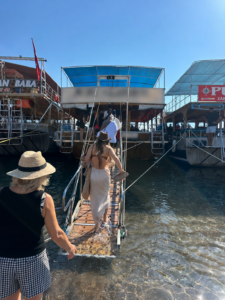
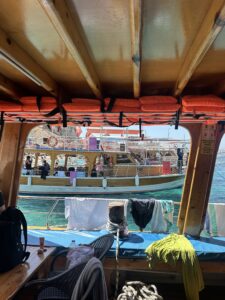
Then there was the noise. Announcements in different languages boomed from tannoys about tea being served and how long people had until the boat departed. Banging club music spewed out from different boats, competing with each other. Crew yelled at bathers to get out of the way of reversing boats, which roared as they manoeuvred in and out of the same relatively small stretch of beach.
Influencers blocked the shoreline and views as they posed, posed again and demanded more and better photographs. My sister and I were left agog, as we disembarked and joined the melee.
I didn’t expect to have Suluada to myself. I’m a tourist too. I’d paid for a boat trip and was contributing to the problem. I am aware of that. But standing on that small beach, looking at this extraordinary little place, overwhelmed by tourist boats, I found myself thinking: How much tourism is too much tourism?
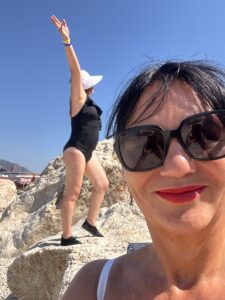
There was something else my sister and I noticed that day. For somewhere that looked so pristine, it seemed strangely devoid of wildlife.
We saw small shoals of tiny fish gathering at the surface around the tourist boats, apparently accustomed to waiting for people to throw them bread, but we saw nothing else. No turtles, no seabirds, no dolphins and certainly none of the endangered Mediterranean monk seals known to inhabit this stretch of coast.
Our captain told us you could sometimes see dolphins around the headland and we had seen some that morning, from our hotel balcony. It was a stark contrast to places like Maltezi beach on Amorgos, Greece, where I’d three months before swum in crystal-clear water teeming with fish.
We also noticed how extraordinarily salty the bath water-like water felt. Floating required almost no effort. The eastern Mediterranean is naturally particularly warm and saline, but climate change is contributing to changes in temperature, salinity and marine ecosystems in Turkish waters, I learned. Fishing is another potential pressure. Studies of Turkish fisheries have found serious historical overexploitation.
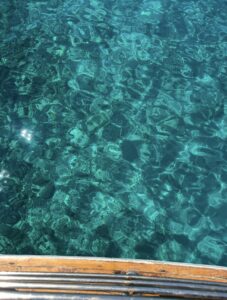
Of course, none of the above means I can conclude that climate change, salinity, overfishing or tourism was responsible for the lack of wildlife we happened to see. A few hours on a boat trip is hardly a scientific survey. The fish could have been deeper than my sister was able to snorkel, the birds elsewhere and we may simply have picked a quiet day.
But it was interesting because Suluada has previously been described as rich in wildlife. A Turkish government article in 2019 referred to dolphins and loggerhead turtles being encountered on boat trips and gulls living on the island. A professor from Akdeniz University has also highlighted its importance for marine life and the Mediterranean monk seal.
There was, however, one rather incongruous bit of wildlife on board. One of the captain’s ship mates wandered around with a parrot, placing it on passengers’ heads and laps, taking photographs and then selling them the prints. Amidst all the chaos, I was a little taken by surprise and disorientated when I returned from the toilets and a bird was plopped on my head. I shouldn’t have accepted it as I did.
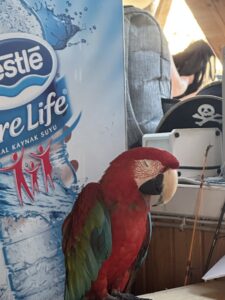
I have no idea whether the bird’s wings had been clipped or whether it was simply extremely well trained, but watching a parrot being passed between strangers on a noisy tourist boat, banging with Romanian dance music, did make me wonder about its welfare. After photos, it was fed watermelon and dozed off on the bar, then later carried ashore in a cat carrier.
Animal welfare organisations discourage the use of captive birds as tourist photo props, particularly where repeated handling, noise and an inability to escape may cause stress.
The parrot aside, I couldn’t help wondering whether 19 tourist boats, their engines, bathers, music and tannoy announcements might have had something to do with why the wildlife wasn’t making itself particularly visible that afternoon. I can’t prove that it did. But it added another question to the one already going through my head: how much pressure can somewhere this small take?
This isn’t actually a new problem. Perhaps the most extraordinary part of this story is that concerns about visitor numbers at Suluada aren’t new.
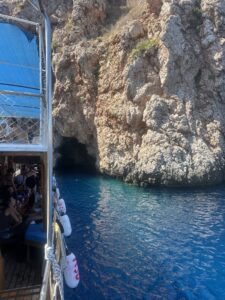
Back in July 2019, Türkiye’s Directorate of Communications reported that more than 50 boat tours a day were visiting Suluada during summer, bringing more than 1,500 visitors every day. The report said approximately 60 boats belonged to the Adrasan cooperative alone and at least 45 of them were making daily trips to Suluada.
Another report that same month put the estimated number of visitors even higher, at almost 2,000 per day. And remember: that was seven years ago. Experts were warning about Suluada then.
That university professor, Mehmet Gökoğlu, was already calling for Suluada to be given special protected status in 2019. He highlighted its importance to Mediterranean monk seals and other marine life and warned that precautions were needed as visitor numbers increased.
Cuma Gök of the Börtü Böcek Nature Group was even more forthright, claiming around 70 boats from Adrasan and another 30 from Kemer were bringing tourists into the area during summer. He said pollution was already affecting the beach and argued that protection was insufficient. Again, that was in 2019.
This raises an obvious question: what will Suluada look like seven years from now if its popularity continues to grow unchecked?
The Instagram problem
Suluada isn’t alone. Social media has completely changed the way we travel. One beautiful photograph goes viral. Someone labels somewhere a hidden gem. Google searches increase. People flock there. And suddenly the hidden gem isn’t very hidden anymore.
There’s an irony here which isn’t lost on me. I’m a travel blogger. I photograph places and tell people about them. Guilty as charged. Not that I think I have a huge amount of influence, but it has made me think more carefully about when I should – and shouldn’t – do so
Tourism also brings money into local communities. Boat operators, restaurants, hotels, taxi drivers and countless other businesses depend upon visitors. So I’m certainly not suggesting tourists should simply stop going to Suluada.
But perhaps the question shouldn’t be whether people should visit, but how many people should be able to visit at the same time.
We’ve seen this happen before
There is a famous precedent. Maya Bay in Thailand became internationally famous after appearing in the Leonardo DiCaprio film The Beach. Eventually, the pressure from enormous visitor numbers became so serious that Thai authorities closed Maya Bay in 2018 to allow its ecosystem to recover. It remained closed for around three and a half years.
When tourists returned, they did so under tighter controls and seasonal closures have subsequently been used to give the natural environment periods to recover. In other words, Thailand had to protect the place tourists had travelled thousands of miles to see from the tourists themselves.
Could Suluada learn from Maya Bay?
I’m not necessarily suggesting Suluada should be closed. Surely it makes more sense to manage tourism before environmental damage reaches the point where closure becomes necessary. Instead:
- Could the number of boats permitted around Suluada at any one time be limited?
- Could operators be allocated timed arrival slots so dozens of boats aren’t converging on the island simultaneously?
- Could there be a daily visitor cap?
- Could anchoring be restricted in environmentally sensitive areas?
- Could feeding fish and other wildlife be discouraged?
And – a slightly less scientific but equally heartfelt plea from somebody who experienced it – could there perhaps be restrictions on booming music and tannoy announcements around what is supposed to be a natural paradise?
Compare this to the national nature reserve at the Medes Islands in the bay of Estartit in Catalonia, Spain, and it’s a stark contrast. Boats aren’t allowed to drop anchor on the seabed. They moor to buoys floating offshore. You aren’t allowed to feed the fish or set foot on the island itself. It is patrolled and anyone who breaks these rules is fined.
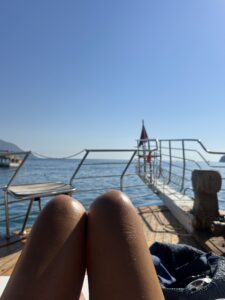
Would I tell you categorically not to visit Suluada? No. Would I go again? Most definitely not. To be honest, I wish I’d stayed in our tranquil oasis, by the pool at the wonderful Hotel Akra.
I completely understand why people want to see Suluada. I wanted to see it too. But the whole experience made me feel somewhat sad and slightly ashamed for having contributed to that chaos.
Its water is genuinely spectacular. Its tiny white beaches and rocky coastline are beautiful. On a quiet morning, with just a handful of boats bobbing offshore, I imagine it would be magical.
In hindsight, I should have read the reviews, rather than being swept away by the photos, which showed just a smattering of boats around what on first sight appears a cone-shaped island, jutting out of the Mediterranean. One person commented on my social media post that they went in April and it was peaceful.
Admittedly, there were good reviews online, but others said:
“The boat trip was ok, but everywhere we stopped was busy with lots of other boats, so not great for swimming.”
“The main disadvantage is the abundance of boats on the island. If restrictions of 2-3 boats were introduced and broken down by days of the week, there would be an effect.”
“The destination marketed as the Maldives of Turkey has nothing to do with it…..the beach was so crowded that there were more people than grains of sand… and besides, there was no sand at all, only pebbles. Result: an entire day wasted in a place with no particular charm. Clearly not up to the description.”
So, I’m not the only one who has noticed.
And that’s why I think Suluada is worth talking about now – rather than waiting until somebody proves that serious damage has already been done. Because there’s little point marketing somewhere because of its pristine water and unspoilt natural environment if the sheer number of people arriving to experience those things eventually changes them forever.
Suluada doesn’t need fewer people to love it. Perhaps it just needs us to work out how to love it without loving it to death.
The Turkish Tourist Board was approached for comment but had not responded at the time of publication.
Have you been to Suluada? What did you think? Please let me know.
Sources:
- Türkiye’s Directorate of Communications: “Maldivler değil Suluada”, 11 July 2019
- Hürriyet Daily News: “Danger of pollution on Antalya’s white island”, 19 July 2019
- World Animal Protection: wildlife selfie guidance
- Tourism Authority of Thailand: Maya Bay reopening announcement
If you’ve found this article interesting, you can read more Turkey content on The Sun Lounger.
- Turkey in winter: A slower, more authentic side of Dalyan revealed
- Things to love about Kalkan in Turkey: a cat lover’s paradise
- An insider’s guide to Yalikavak on the Turkish Riviera
- Why you should experience Turkey’sTurquoise Coast by gulet
- Turkey teeth: why I now look forward to going to the dentist
Please follow The Sun Lounger on social media:


