
A warm and welcoming home to share with friends was at the top of the wish list for award-winning, London-based garden designer Rob John when he was looking for a property to renovate in central, inland Portugal.
He said: “Eating, drinking wine and chatting around a table are some of my favourite things to do. I wanted that to be at the heart of the house and, importantly, I want my guests to sleep well.
“I have been very much led by both the house, my own taste and the various things I have acquired over the years. This means that certain elements of the house are rather special to me and pretty much everything has a story.”
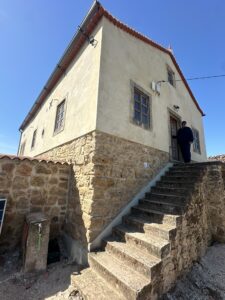
Think ‘holiday home in Portugal’ and your imagination may take you to the well-trodden tourist hotspots of the Algarve. But that’s not the area in which Rob chose to renovate a home. Instead he picked up two semi-derelict properties near the village of Cabaços, in rural Portugal – an area largely undiscovered by mass tourism.
While one of the properties is back on the market, Rob not being able to buy the adjoining land he had initially hoped for, he is lovingly and respectfully restoring the other – bought for €80,000 – into an understatedly stylish home.
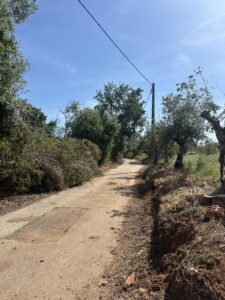
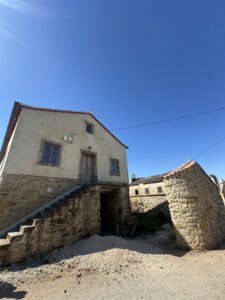
It is hidden away on a quiet, dusty lane (above), set in spacious grounds and has its own olive grove – where nightingales sing into the otherwise silent skies after the sun has gone down. Sheep currently wander on and off his land and he has a resident lizard, Larry, living below the rear doorstep of his house.
Rob started working in horticulture 23 years ago, with one garden and one client. Today, there are 10 on his team and together they develop and maintain over 140 gardens.
Although he remains discreet about his client list at Rob John Garden Design, some of his work comes through word-of-mouth recommendations within exclusive circles, earning him a reputation among some discerning clients.
Buying a property in Portugal
Rob first visited this part of Portugal – situated midway between Porto and Lisbon – when he was invited to design a garden for a prominent businesswoman who had recently retired, from London.
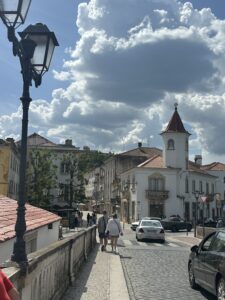
While feeling like a million miles from any form of substantial civilisation, he is 20 minutes from the World Heritage Site of Tomar (above), while Coimbra – Portugal’s third largest city – is 30 minutes away.
This is an area characterised by its rolling hills, limestone landscapes and rural charm. It’s known for its quiet, traditional atmosphere, offering visitors a laidback lifestyle, hiking trails, historical sites and proximity to river beaches.
There are nearly a quarter of a million empty homes across Portugal. Derelict buildings and ruins, often called ruínas or casas devolutas, are common in rural parts of the country due to decades of population migration to cities and emigration. Thousands of abandoned stone houses and farms exist, especially in central Portugal and the Algarve.
While only expecting to be there for the duration of his contract, he fell in love with the fertile landscape, its rolling hills peppered with olive groves, orange and avocado trees, the Portuguese language and, of course, the climate.
What’s the weather like in Portugal?
Winters can be cold, damp and wet for days on end or it can be bright, sunny and warm enough to lunch outside, says Rob. The temperature drops in the evenings but it never snows, though frost is not unheard of. Summer can be stifling and 40 degrees is not unusual, but mostly it’s a pleasant high 20s. The abundance of rivers and lakes make cooling down enjoyable and the coast is only an hour away.
I visited Rob’s stunning home in the spring of 2026, a space into which he has poured his passion and creative energy. Every detail within it reflects a perfectionist’s vision for its restoration, bringing his ideas vividly to life.
Of the area, he said: “I love its tumble-down nature. It’s quite enchanting – beguiling, almost.
“There are places to swim in the local rivers, an almost endless lake close by and charming towns, with markets selling treasures. Food grows everywhere. It’s a cheese and wine-producing region and there’s a slight hippy edge in certain places, so you’ll also find vegan cafes, craft markets, retreats and yoga. Four years on and I’m still exploring.
“It’s very rural as well as being very green. And, of course, it is cheap to buy here. You can buy a ruin here from as little as €30k. Finished houses can start at €200k, although it’s getting pricier by the day, as the area becomes more discovered.”
There are properties dotted around the landscape and about 15 houses in his hamlet which are inhabited by English, French, Dutch, South African, Swedish and Portuguese neighbours.
How to find a holiday home in Portugal
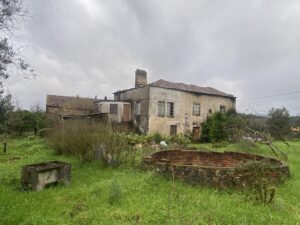
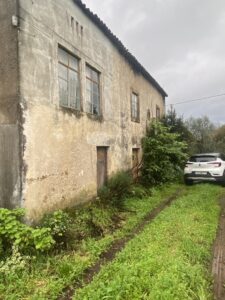
He used the website Idealista when searching for his property (pictured above, pre-renovation), set his parameters and looked online at pretty much everything that came up for sale in his search area and budget.
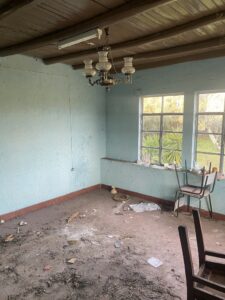
He explained: “The house was a semi-ruin which no one had lived in for 20 years. It needed complete refurbishment. There was a roof and windows but it wasn’t completely weather proof. You wouldn’t spend a night there.
“I didn’t want a new property or a typical Portuguese house. I wanted something with character, history in the walls, a uniqueness. I like it more and more each visit, but there is still a way to go.”
The property itself is an old farmhouse in classic, Mediterranean style, with adjoining barn, which Rob also intends to restore. Animals would have lived on the ground floor of the main house, with the family residing on the floor above.
Buying a ruin in Portugal
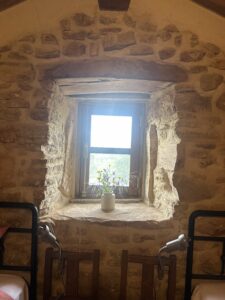
Originally, it had five very small bedrooms, an open kitchen/dining area with fire and a big shallow roof space. Now arranged over three floors, the ground floor now has three bedrooms, each with en suite, the first floor a cosy living room for winter nights, a double height dining room with original fireplace, a good size kitchen, utility and office space, and a spacious suite on the top floor, within the eaves of the house.
His original restoration budget was £200K, but he freely admits that he hasn’t adhered to it: “I guess I didn’t really know what that included – so when I was buying bathroom fittings and handmade Moroccan tiles, they were not part of the original budget, nor was the £1,000 I spend every month on travel from the UK.
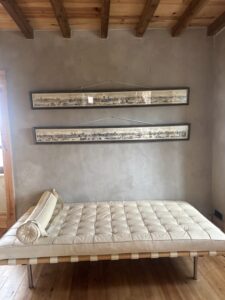
“I have been inspired by many things, going back years – things I’ve collected, images I have seen, places I have visited. I’m very visual and can easily remember something I saw 30 years ago – a door trim, a panelled curtain – and I enjoy browsing flea markets and reclamation yards.
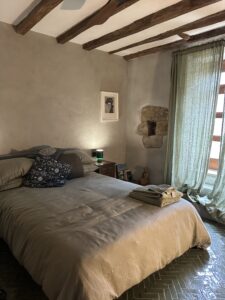
“I wanted to create bedrooms you want to spend time in and a kitchen you want to cook in. Comfortable beds are an absolute priority, as are linen sheets and en suite bathrooms. It’s about relaxing and letting go of stress.”
Living ‘a boa vida’ in Portugal
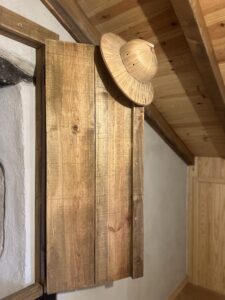
Moving from room to room, it’s almost unfathomable that Rob doesn’t have an interior design background. The inspiration for this Portuguese farmhouse has been global.
He said: “When I bought the house, the light switches were brown Bakelite so I wanted to put that back into the rooms. This meant shopping in Germany rather than in the local hardware store, but I’m very happy that I did. It’s a tribute to the past, the history of the house and they look and feel great too.
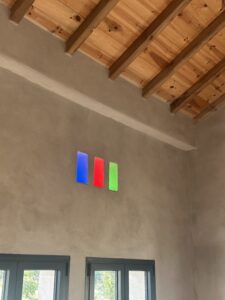
“There were three small spaces in the wall of the dining room – big enough for the local owls to come through during the building process – and I wanted coloured glass in them, as they face the morning sun. Stained glass is not easily available in Portugal so it came from London in a suitcase, wrapped up in fabric to get through the plane journey. It all arrived in tact and looks great in the morning with the sun shining through it, reflecting on the wall opposite. It’s a small detail but again, it makes me happy.
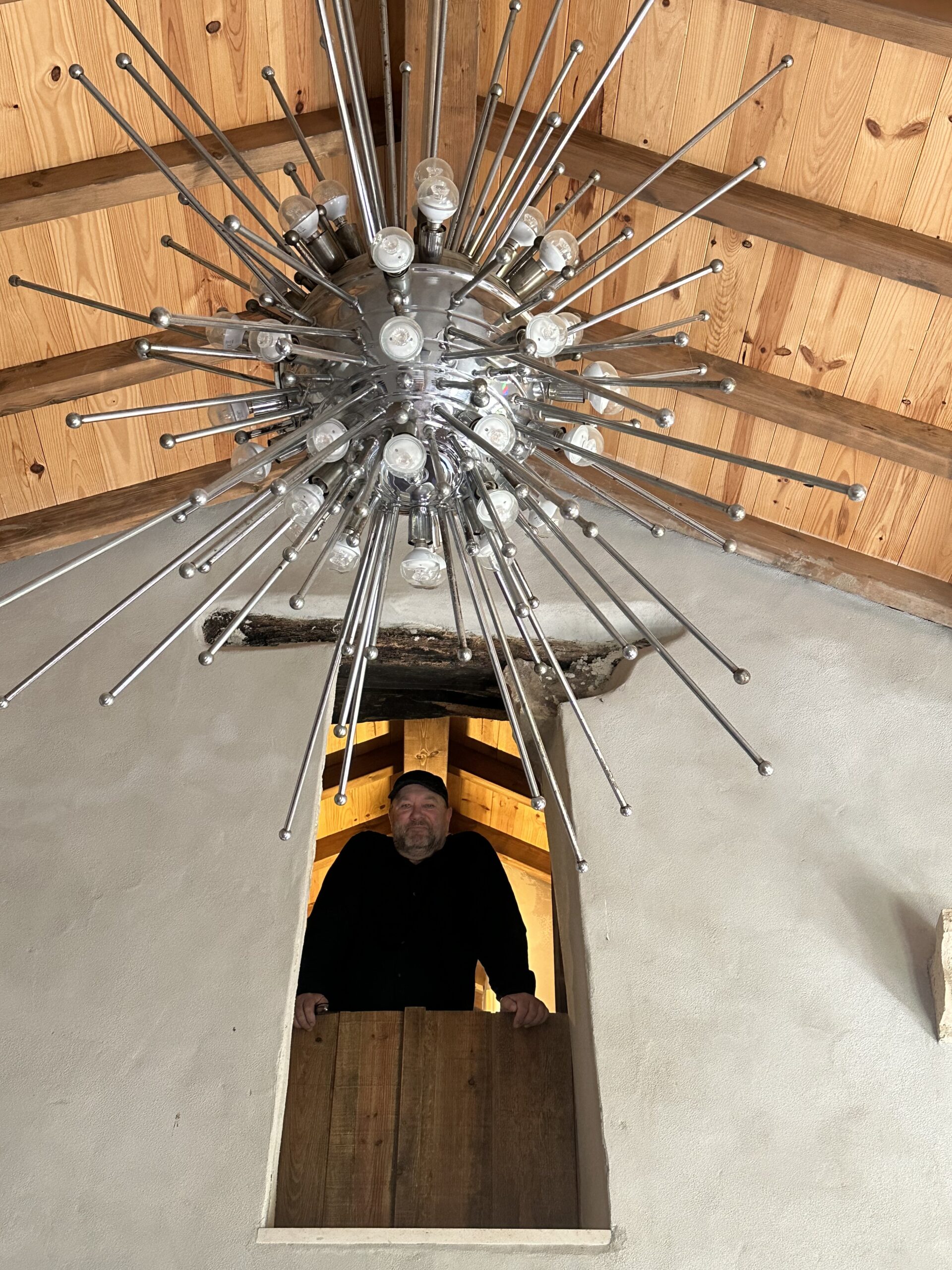
“Above the dining table, in the double height room hangs a Sputnik chandelier from the mid 50s. Designed by Italian lighting designer Oscar Torlasco. It’s my guilty pleasure and I owe its existence in my life to a good friend, Drew, who took me up and down the antiquey end of the Kings Road in London, looking for something special.
“He’s the kind of friend I should never go shopping with! Getting it from London to Portugal and reassembling it was no easy feat but its hanging now and really sets off the room well.”
Rumour has it that, whilst still hanging in the shop, awaiting packing, Madonna walked in and enquired after the same Sputnik chandelier, to be told it had been sold the previous day.
Creating a ‘retreat’ in Portugal
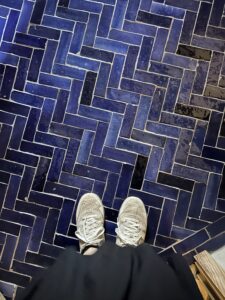
Another element of the house that draws attention is the tiling in the three downstairs bedrooms. The iridescent shades give their names to the blue, jade and green bedrooms of the house.
Rob had wanted tiled floors with underfloor heating for the winter and had priced them up in Portugal at about €8,000. Having designed a garden in a Riad in Marrakech for a client years previously, he was aware of the wonderful array of materials available in Morocco.
He explained: “So, a tile shopping trip to Marrakech seemed a sensible idea – and with flights from Lisbon taking as little as 30 minutes and costing less than €50 – it seemed churlish not to go.
“Shopping for tiles in Morocco means heading out to the clay pits where they are physically made and buying directly from the source. It’s a huge commitment in trust to a man in a shed, using Google Translate. He takes your order, your cash – in this case €2,000 for the tiles and €2,000 for transport – and that’s it. The waiting game begins. You have no idea what you’ll be sent or whether you’ll be sent anything at all.
“It took about two weeks before I received a call from a man in a van from somewhere in Spain. He was on his way but it took days for him to arrive. One evening he’d be two hours away and the next day he was eight hours away again. I was back in London when he finally found my house at about midnight. It was pouring with rain and my very kind builder headed out to meet him. Far more tiles than I needed were unloaded in soggy wet boxes. The wait was stressful, but I’d saved €4,000, and it was worth it!”
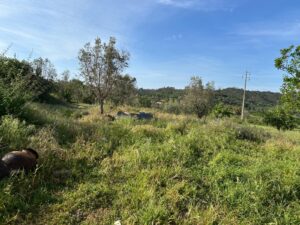
While the house is 70% complete, the land is the last element to be re-developed. Being an award-winning garden designer, the end result is certain to magnificent.
Rob said: “I have more land than I need and it needs some attention. There are about 40 olive, citrus and various other fruit trees. They are much neglected, though we harvested olives last year and the oil is delicious, green and raw. It’s very tasty.
“I will turn my courtyard into an exotic garden – large leaves in shades of green – with a table for cooler lunches on hot days. The back area by the house will be an herb garden. It gets the first sun of the day so is good for morning coffee and leads off the bedrooms.
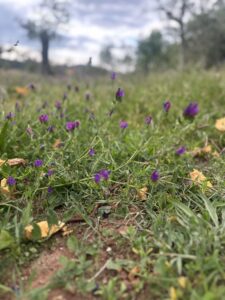
“I will need a kitchen garden. Things grow easily here and I have a well, so there is plenty of water. I’ll need a pool – a long pool, running between the olive trees – as it can hit 40 degrees in high summer.
“The rest of the land I’ll turn over to wild flower meadow-style planting with mown paths down to a large pond. Finally, around the edges of the garden I will add trees, a lot of trees. I want to see spring blossom and autumn colour as I get older, and I have nightingales…they need to be looked after!”
Like Gaudi’s Sagrada Familia in Barcelona, Rob is not sure he will ever entirely finish his labour of love.
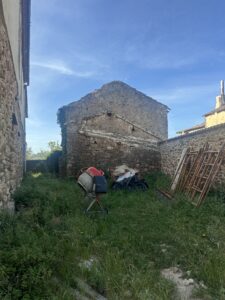
He said: “Once the house and land are done there’s the adjoining barn (above) and then I have my eye on the neighbouring property. I long since ran out of freely flowing funds – so I’m working to pay for next steps now. It’s a journey.”
Rob visits once a month – or every other month during busy work months – his late father’s Hungarian heritage meaning he has an EU passport and therefore doesn’t have to worry about Schengen restrictions. Long-term, he’d like to spend more time there than he does in London, hosting friends and renting the house out occasionally so it pays for itself.
So, how easy is it to buy a property in Portugal?
“Very easy. Once the price is agreed you make an appointment with the town lawyer, take a witness, usually the selling agent, and sign away. Most properties that are for sale are hassle free. The problem comes when you want to buy stuff you see that is not listed – usually there are family disputes which prevent a sale.”
Has language been a barrier in the buying/renovating process?
“Not really, the agents around here all speak English and can organise the various forms you need to submit to the council. Northern Europeans make up a big percentage of the property market and they tend to pay higher prices, so are targeted by the agents. The Portuguese rarely buy a project, in my experience. They much prefer a new build.
“Most builders don’t speak English and have very fixed ideas of what you want, so shop around carefully. My builders are Jim, an English carpenter, and Ronald, my Dutch all-rounder, were also easy to communicate with for obvious reasons
“Plenty of builders were available but I wanted a builder I could communicate ideas to – that was the difficult part.”
How easy is it to restore a property in Portugal?
“At times, extremely hard. Being far away and relying on others to relay your vision was difficult. Things have not always been done in quite the way I would have liked and money has been wasted, but other times things have gone really well.
“When there is no one chasing, the whole ‘mańana, mańana’ mantra can become the way things go.”
Have there been any major setbacks in the renovation?
“Not really, although it’s just been frustratingly slow at times. There was a massive storm in January 2026 that devastated the area. I lost my chimney, solar panels, roof tiles and quite a few trees. Others nearby faired a lot worse. It’s a setback of sorts that’s easily resolved. The trees, however, will take a long time to replace and that’s the true tragedy.
What would your advice be to anyone planning to buy a property to renovate in Portugal?
Do your research into the weather, transport links, ease of getting utilities, costs of the work and talk to expats if you can. Explore your area and then go for it. It is a great place, which has yet to be largely discovered by tourism and offers an opportunity to explore a different culture that in many ways is quite different to other parts of Europe.
Like what you read?
Read about a woman’s quest to buy an affordable French property here.
Read about how to spend 48 hours in Lisbon here.
For more honest travel content, follow The Sun Lounger on social media:
https://www.instagram.com/thesunlounger/
https://www.tiktok.com/@the_sun_lounger


