
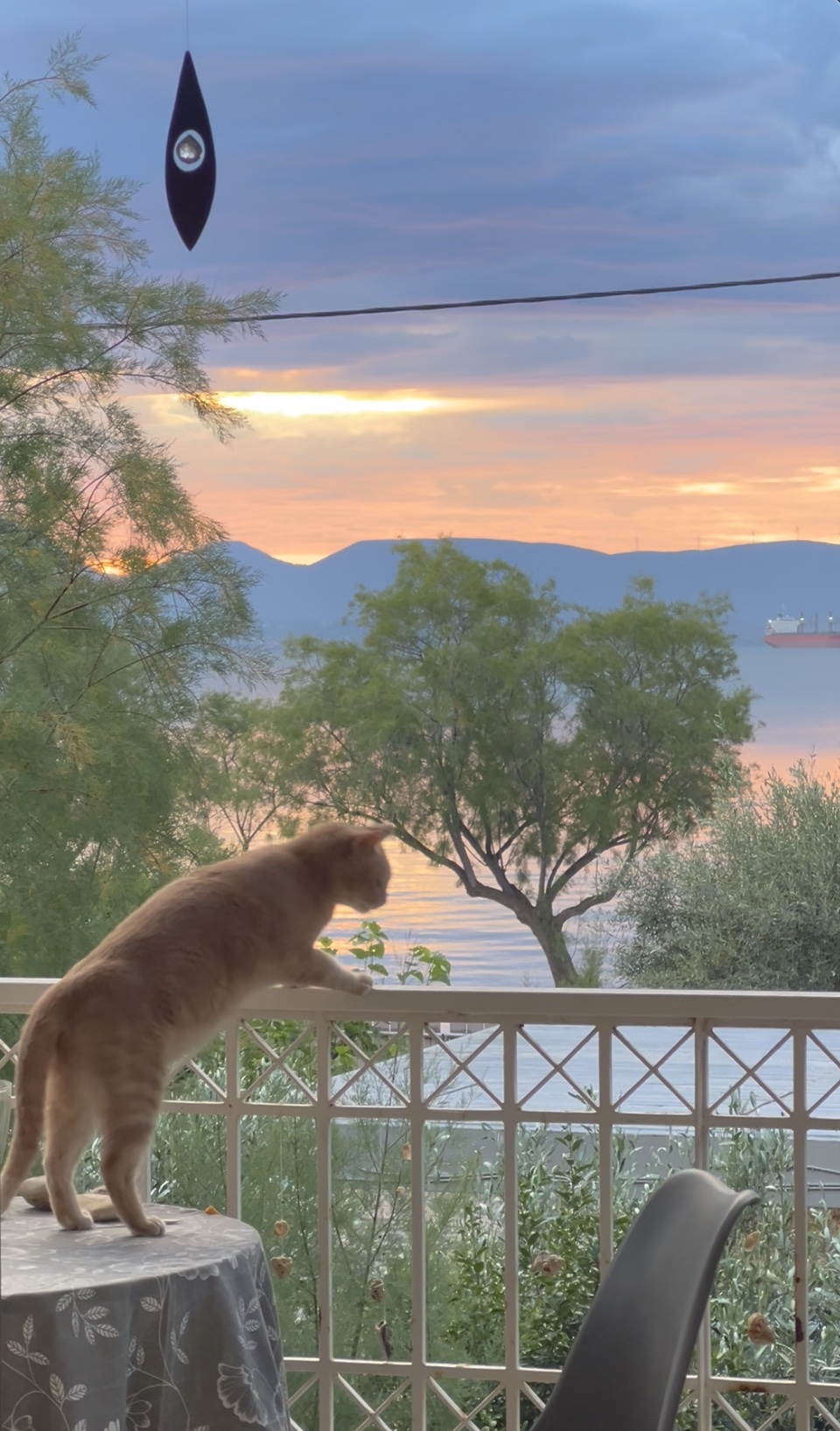
Author and illustrator Siski Kalla says she’s never met an animal she doesn’t like – an obvious bonus when housesitting people’s pets, which is what she and her two home-schooled teenage children did this spring, describing their trip as a “magical key to discovery”.
Slow travelling from the UK to Greece in May, the trio got a taste of what it was like to live like a local, away from the tourist trail, all without paying a penny (or Euro), for their stay.
Siski, from London, tells us about her month-long adventure:
Who hasn’t wondered what it might be like to live like a local overseas. Maybe it’s just me, but I wonder on a daily basis. I’ve been lucky enough to live in London, Thailand, New York state, Michigan and Chile – and still I wonder.
There are so many – too many – places to choose from. That’s why house-and-pet sitting is like a magical key to discovery for me. I can go anywhere in the world to see what it’s really like to live in a place, staying in a real home, shopping in the same way locals do, working as I do it… all without paying a penny for my stay. It’s the best travel deal ever!
I’m a children’s book author and illustrator, and my two children are home educated, so they travel with me. I draw and paint on the move. I’ve lived in different continents, mainly out of curiosity, but also for my ex-husband’s work (he’s a volcanologist – a scientist who studies volcanoes), but now, my kids and I are almost nomadic, doing about six house/pet sits each year, all with Trusted House Sitters (THS).
I discovered THS while looking for ways to house-share (I own a house in Chile) and it seemed such a perfect solution for people like me, but also for those with pets who love travel and don’t want to put their beloved ‘floofs’ into kennels.

I couldn’t believe all the incredible options, but what really drew me in was the pets and their ‘pawrents’ (I’ve got an issue with the word ‘owner’ because if you love another living being, do you really want to ‘own it’ too?).
Looking through the descriptions people put on their profiles on the THS website, with all the photos of their animals, you can immediately tell these are people who love their animals deeply, which makes them wonderful in my book. It’s an instant like.
Knowing these people are willing to entrust me and my kids with care for their beloved pooches, cats, chickens, horses, sheep and goats gives me immediate warm fuzzies. Plus, I’ve never met an animal I don’t like, so that helps, obviously.
This year, in May, was our first sit abroad, in Greece (above), although I have done others in the UK. Three weeks in a house on the beach, a balcony view of the sea, 10 beautiful dogs (two of which were puppies) six gorgeous cats, two stray cats that only needed feeding and one more stray dog outside the property that needed regular medication, food and water.
I’ve got to admit, I was worried it’d be too much for us. The kids are great, really hands on and can handle a couple of dogs each. But still…would the feeding and walking take us all day? Would we have time to work/study, let alone, enjoy the surroundings?
I decided to make it an educational adventure – we’d travel slowly to Greece by train and ferry. The kids would get to grips with European geography, hear different languages, deal with exchange rates and cultural differences, and get even more travel-savvy with all the connections, tickets, buying food and so on, and we wouldn’t be adding tonnes of CO2 to hasten climate change further.

For the record, we fly back to Chile annually, so we are certainly not green, eco heroes, but that’s why it seems even more important to go by train, whenever possible. Slow travel turned out to be the best decision I could have made!
I took a deep dive into a website called The Man at Seat Number Sixty-One – and I can’t recommend it highly enough. He breaks down all the possible journey routes, with details such as which side of the train to sit on for the best views.
I also used Rome 2 Rio, Trainline and Expedia, and of course the local ferry/train company websites. I wrote it all out on paper, then checked and re-checked, then booked pretty much everything in advance.
It did make me appreciate what travel agents do! The marrying up of one train schedule to another, trying to suss out where was best to make stop-overs and what to see and do, and booking places to stay took me quite a few days, all in all.
When we do it again (which we definitely will!) I’d be far more relaxed as there’s always another train. And I wouldn’t take as much ’emergency food’, either. I’d packed enough sandwiches, drinks and snacks to last us a month! I wasn’t sure how easy it would be to find food on the trains and at train stations, but I needn’t have worried.
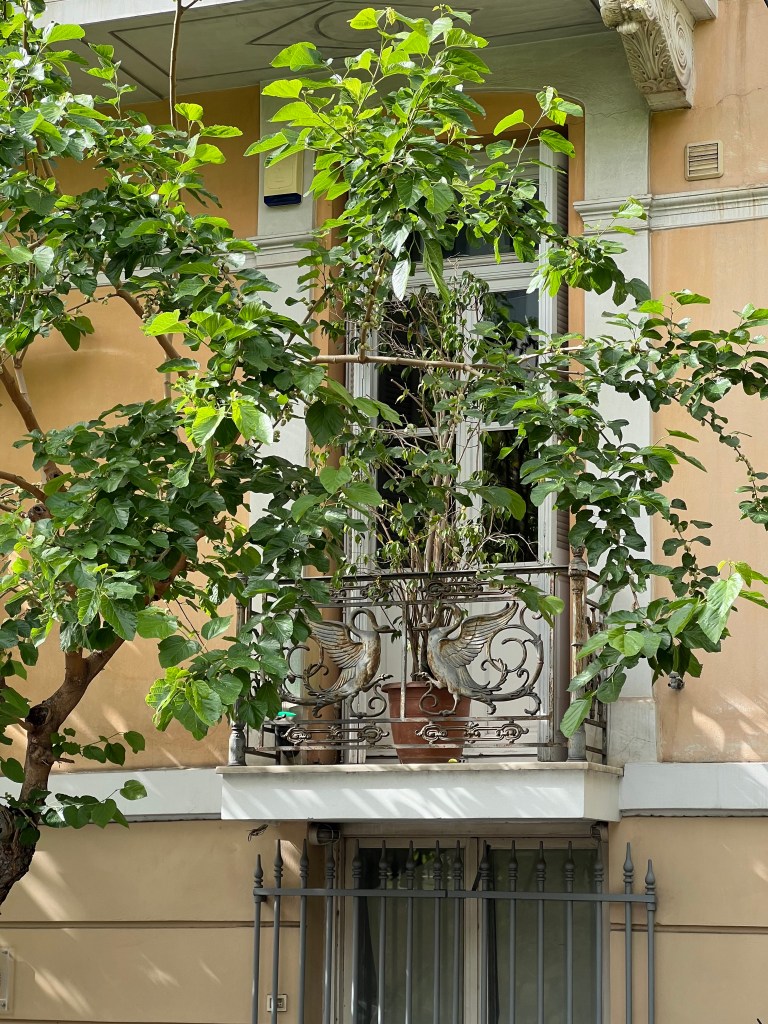

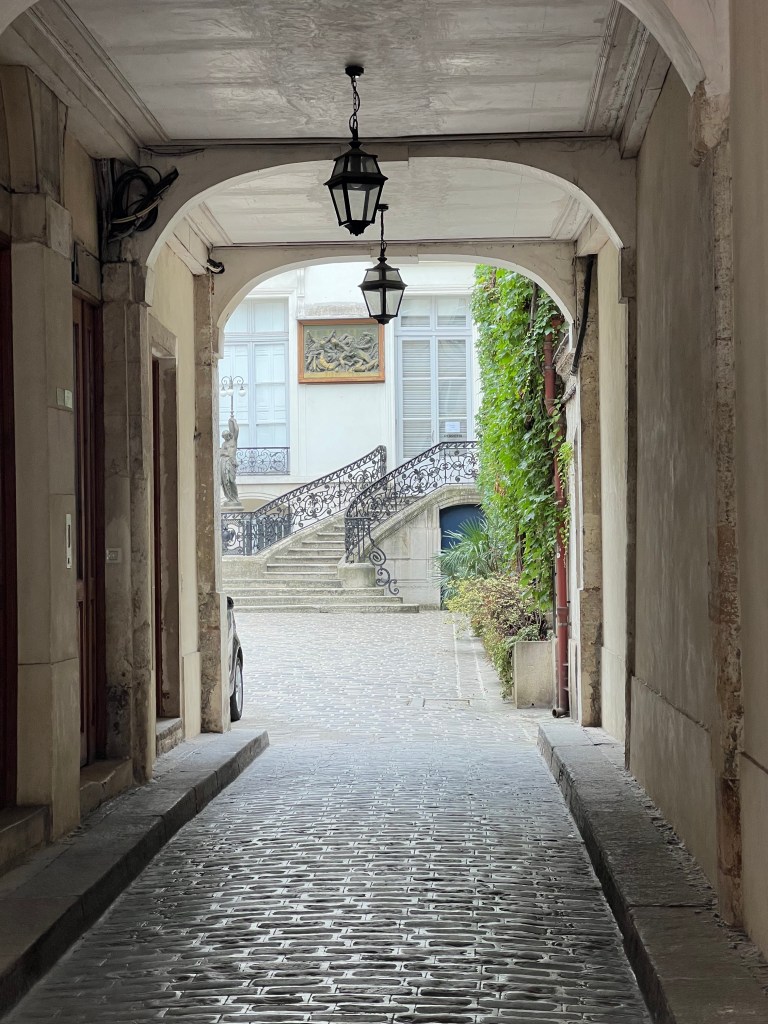
Day one: we travelled from London to Paris on Eurostar (€405 return for three adults), spent a wonderful afternoon exploring Coulée Verte (above centre), the roof-level gardens built on an old rail line, at Gare de Lyon. We stuffed ourselves with pastries from a nearby boulangerie, then onto a train that would take us all the way to Milan, Italy (€289 return for three adults).
I booked first class for some of the legs of our train journey, as the train prices in Europe are vastly different to the UK and even first class seemed a bargain in comparison. That turned out to be a great decision. We got free croissants and coffee, wide reclining leather seats and our own compartment. Eat your heart out, Great Western Railway!
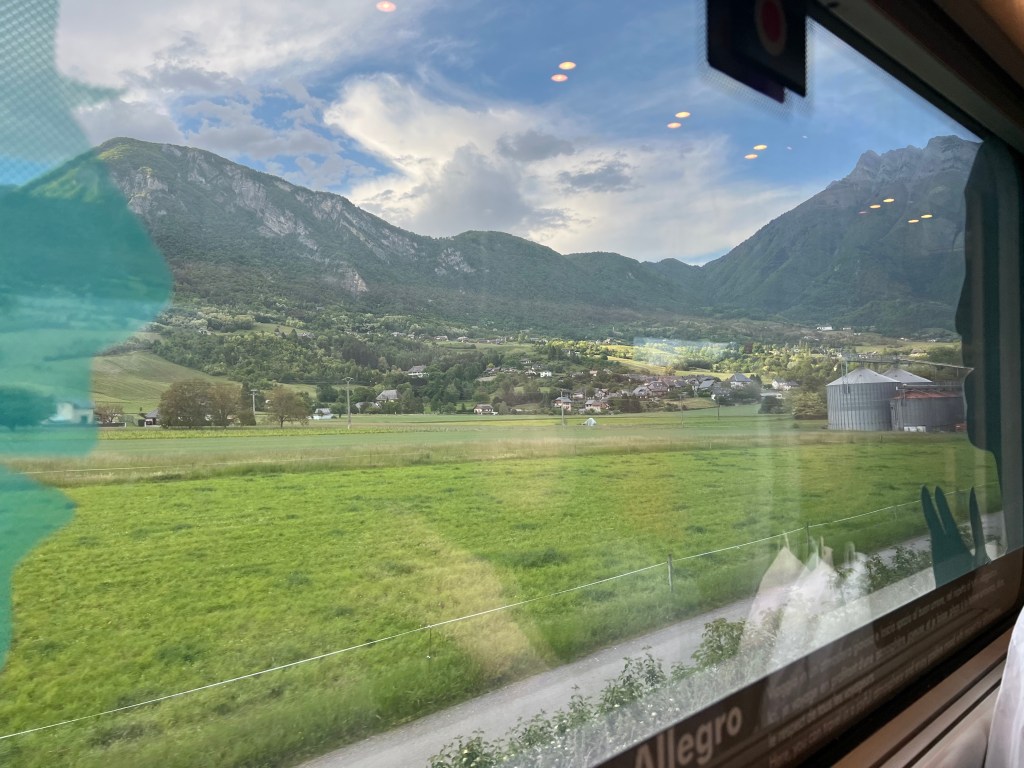
Travelling by train through France, through the Alps (above) and across to Italy, was by far one of my all-time favourite travel experiences in a vehicle. My favourite was travelling by ‘bangka’ boat in the Philippines under the moonlight, with phosphorescence at the bow of the boat, which is hard to beat! The kids were enthralled with the journey – and they’re well-travelled teens, so that’s pretty impressive.
Day two: We were greeted in Milan with thunderstorms and a taxi driver strike. A wide-smiling Italian offered us a ride for €50 for a five-minute journey. It was dark, thundery and we were already wet. I asked the kids what they thought and “let’s walk” was their answer. And walk we did. It didn’t take us long and we laughed so hard as we got wetter and wetter. I was so glad we’d turned the guy down.
Day three: a night in Milan at a basic, central hotel, close to the station (€162 per night) was all we needed to recharge for the next day – a mega journey of severn hours to Bari, a coastal town all the way down the leg of Italy. The train line runs along the coast, so you gaze out of the window at glorious beaches filled with parasols, towns with pretty streets and colourful houses. The seven hours passed quickly. Cost: €339 return.
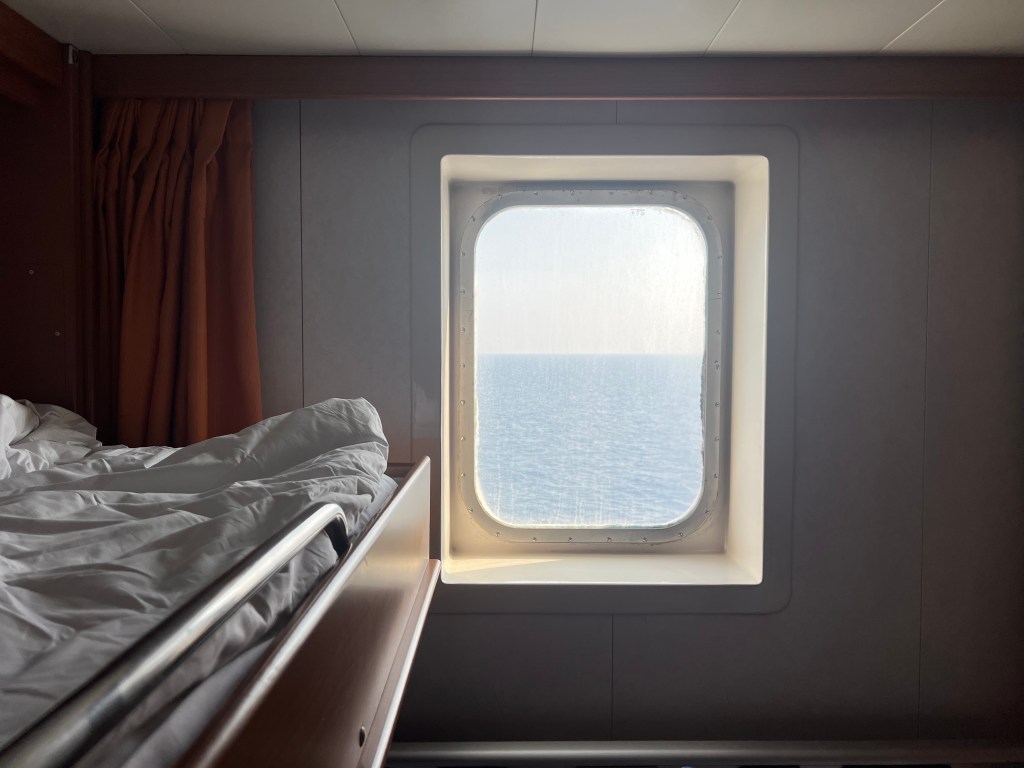
From there, we’d get the overnight ferry (above) across to Patras, on mainland Greece, which took around 16 hours. We booked a four-bed cabin with window for the crossing. A one-way tickets starts at €73 per person. We paid €583 for return tickets and a cabin with window.
Day four: Another train in the morning to Athens (tickets start at €18 each), where we spent a couple of wonderful days. May is such a wonderful time to be in Greece – something home education allows you to do.
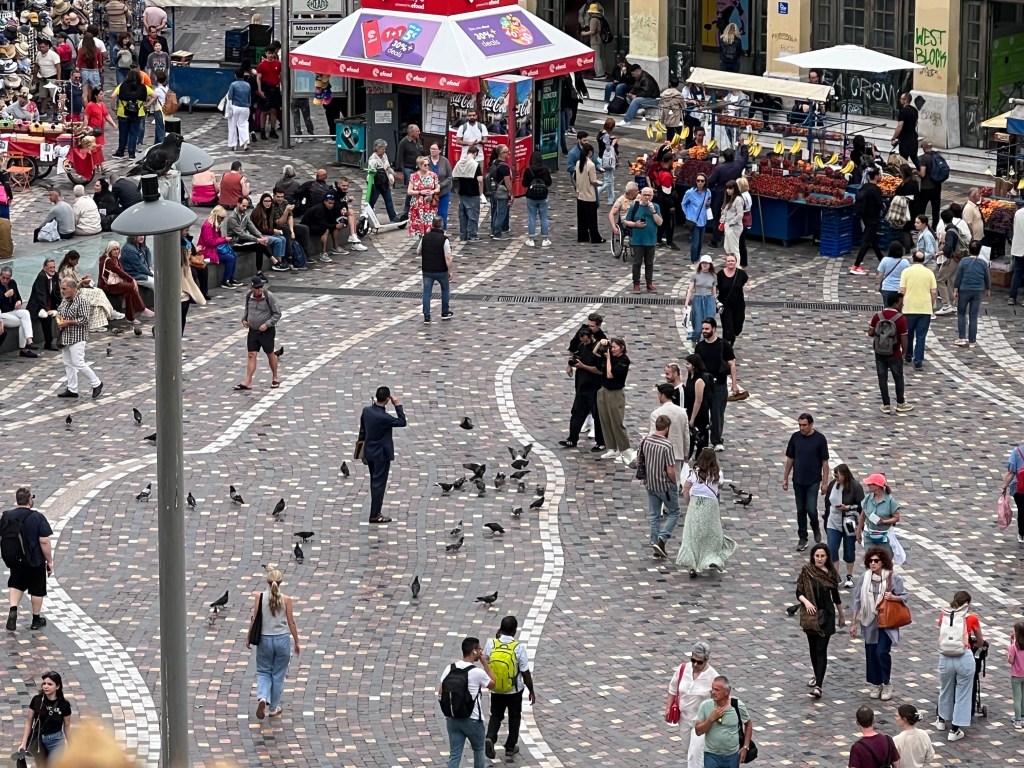
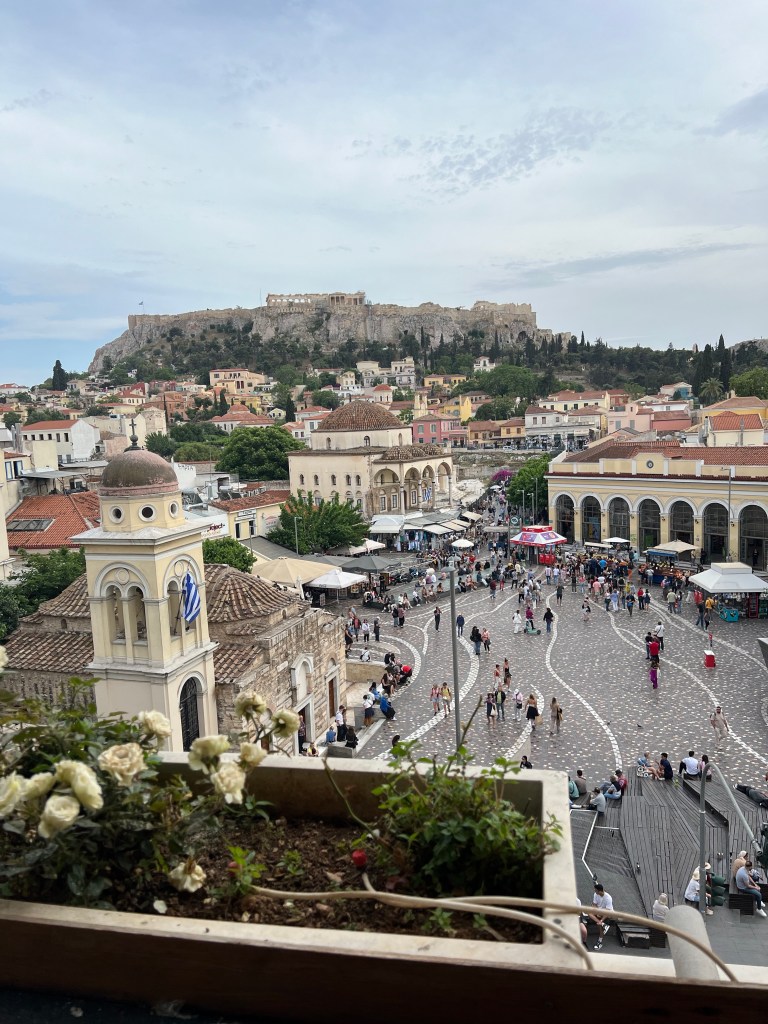
In Athens (above), we stayed at Ermou Monastiraki, which had views of the Acropolis. Getting up to the apartment was, um, interesting. The lift was clearly ancient and gave some ‘fun’ jolts along the way. But the apartment itself was very modern, shiny and new, black with warm gold touches. The balcony was the highlight, big enough for us all to sit out there and so high up we were surrounded by swallows swooping around in the mornings. Cost: €160 per night for three people.
In Athens, went to the Acropolis at the earliest possible slot and managed to have to it nearly to ourselves for a short while. Then the buses unloaded and the crowds were insane!
We wandered around Plaka, stopping at some of the lovely little cafes and tavernas to have a coffee and a bite of something sweet – galaktoboureko was a favourite. It’s sweet but also refreshing as it’s served cold and a bit like egg custard, but less eggy!
We spent a lot of time at MS Roof Garden in Monastiraki. Not only was the food delicious (the stuffed vine leaves, the pitta with taramasalata, moussaka…heaven!) but the view down onto Monastiraki Square meant we could sit for hours people-watching. As it was still early in the season, it only got really busy in the evenings, so we often had the place to ourselves for lunch.
We all fell in love with Athens, but were also shocked at the poverty. People begging, injured, sick and dressed in rags, while just a couple of blocks away tourists were emptying their purses for souvenirs. As we took a local train out of the city to the coast where our house-sit was, we passed through what looked to me almost as rundown as the slums I’d seen in Rio, Brazil, years ago. Grim stuff and such a contrast to the pretty tourist parts of Athens.
As we arrived at the small train station on the coast, our host, Christiana, who I’d spoken to via video call and messages, was waiting for us with a warm welcome and a hug, and soon we were bumpy-roading it to her home. It gave me comfort to see the dog blankets on the back seat and in the boot – we were all excited to meet her animals!
Note: poverty in Athens, and in some other areas of Greece, more broadly, is a complex issue with roots in the 2008 financial crisis and subsequent austerity measures.
How much does it cost to house sit?
When house-pet sitting with THS, you don’t exchange any money. You pay your travel expenses and your food while there, but that’s it.
There is a registration fee of £129 or £199 per year, including insurance, and the higher fee membership gives you cancellation cover, as well as airport lounge passes. You can also do a combination membership which allows you to do sits and also get sitters to look after your pets/home.
You need to supply references from people who know you well. Obviously, it’s ideal if you’ve pet/house-sat for them or helped them out in some similar way, but it’s not essential to have had pet experience with them. I was lucky because I’d done some dog-sitting and also looked after a friend’s farm for a while, so those are the references I chose.
The home owners pay all the bills, the wifi etc, and you use their home as if it were yours – within limits, obviously – you don’t go rearranging their book shelves or anything like that!
There’s no need to go and buy a huge bottle of olive oil or salt, herbs or cleaning products, because it’s all there, as it is in any lived-in home. Obviously, you replace items you use when it runs out, but it saves having to fill a kitchen each time you stay somewhere.
Everywhere we’ve stayed has had incredible kitchens – it’s one of my favourite aspects of our sits. I’ve cooked things I wouldn’t dream of attempting in my own, tiny kitchen in London, and got to use tools and gadgets that have then led me to buy the same things, as they’re so good!


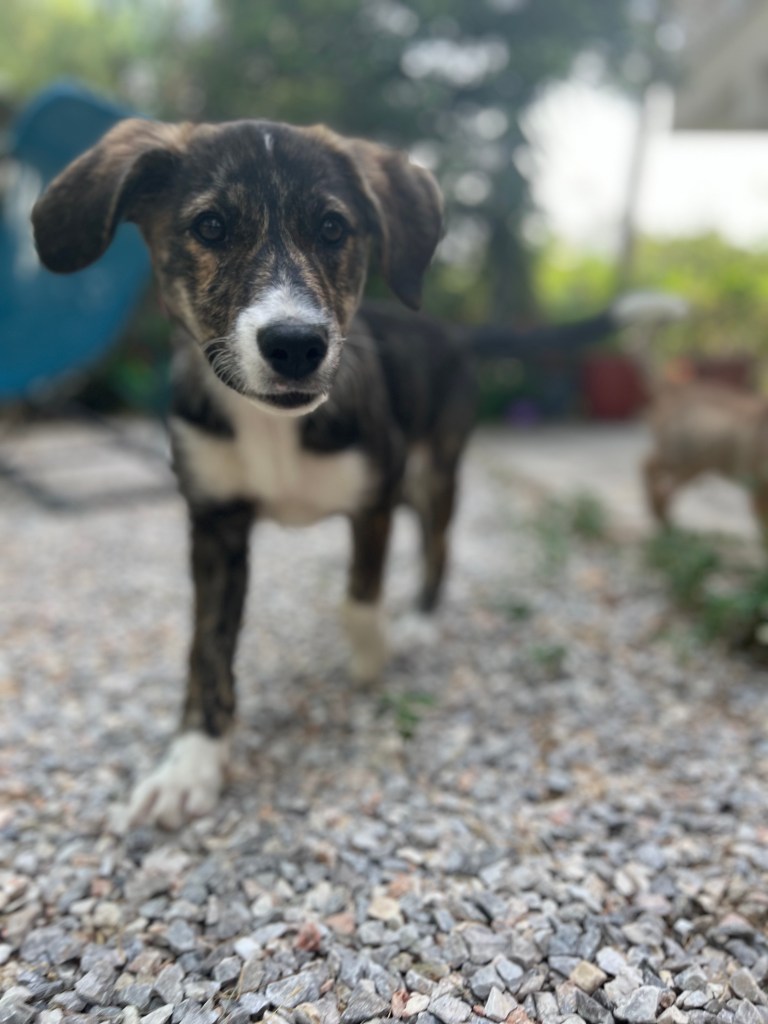
With so many dogs (above) and cats, feeding time in the morning was intense. But Christiana took time to explain everything fully and she stayed for a couple of days before leaving us on our own.
Where do you sleep on a house sit?
A lot of people on THS also have an Airbnb property attached to their homes, so we often sleep in that part, using the main house, the kitchen and living room to be with the animals.
They were fed a raw food diet, with beetroot, courgette, carrot and parsley, and then added to the meat, along with oats and/or kibble. Preparing and feeding everyone took us about 40 minutes, then it was time for our breakfast, after which we’d take the dogs out for their walk.
The dogs slept for large chunks of the day – I suppose the heat and having to be ‘sociable’ with so many other dogs all day is exhausting!
How do you get about when house sitting?
Christiana left us the use of her car which was great and she showed us the local market and where to buy food, the good restaurants and so on. We fell in love with the local bakery’s spanakopita (spinach and feta in flaky filo pastry) and feasted on apricots, cherries and strawberries from the local market.
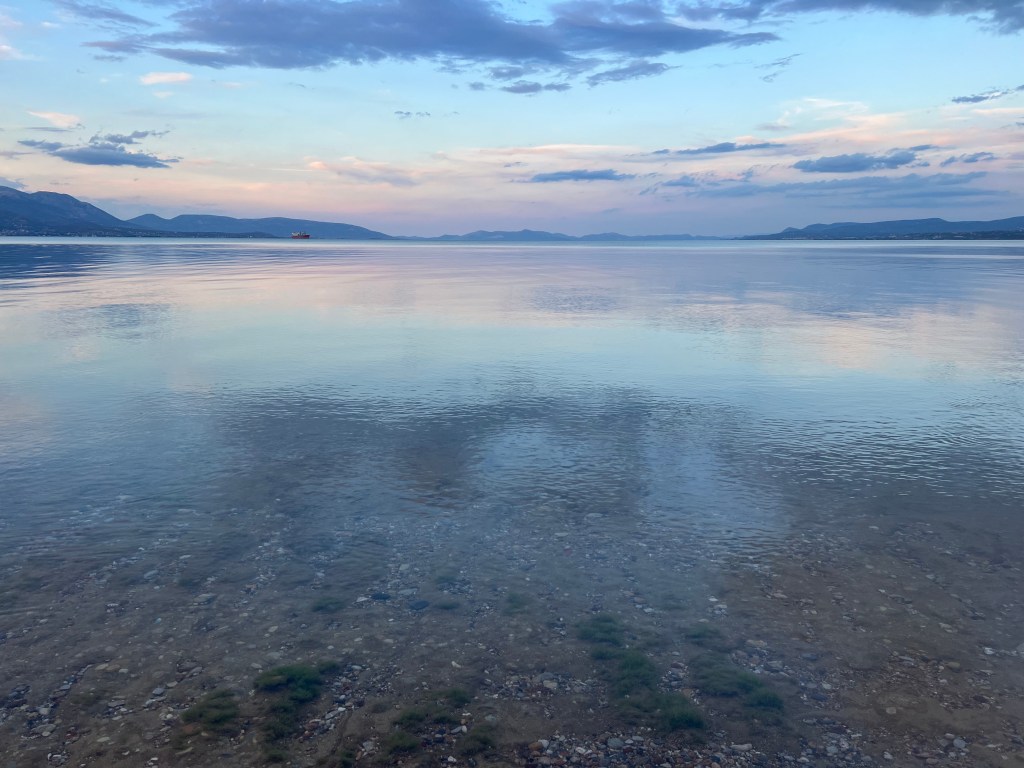
The ladies in the supermarket began to recognise us and helped correct our attempts at Greek. We gradually began to get a sense of what life would be like if we lived there. Where we stayed is not a foreign tourist destination. It has a beach where folks from Athens come to spend a day or two at the weekend, maybe a bit like Hove or Broadstairs are to London, so we certainly saw a part of Greece most Brits wouldn’t.
That said, the place wasn’t short on foreigners. Many of the homes there are owned by Germans and it seemed almost everyone was close to retirement age or older. We were told that the young people went to the city to find work – a similar story to the UK.
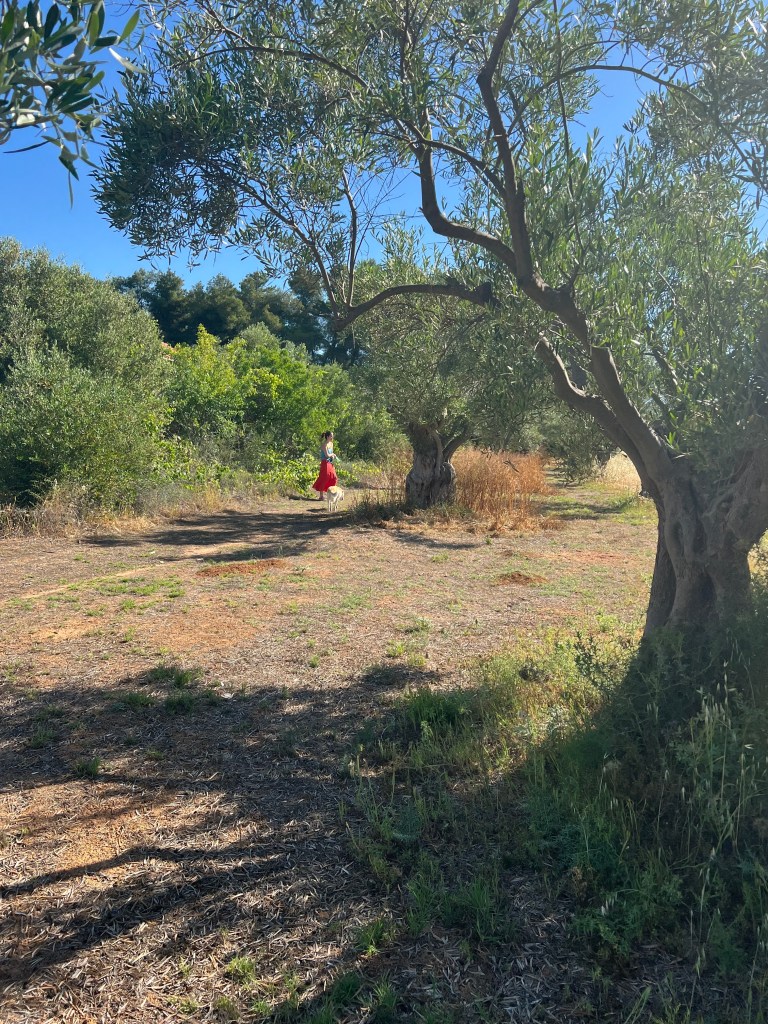
Before we knew it, it was time to say goodbye to all 10 dogs and six cats, with promises that we’d return any time Christiana might need us.
For the next stage of our trip, I’d booked us what I called a proper holiday on Zakynthos. We had a week in a beautiful stone cottage a few minutes from beautiful beaches, with nesting turtles and tavernas serving delicious Greek food nearby.
It did feel different, not only because we all hid our phones/tablets etc for the time we were there (I was allowed to use my phone for photos only) so there was zero working or studying, but also because we were clearly tourists not travellers.
Not a bad thing, it just means that, in my experience as a tourist, things are more expensive, generally more luxurious and definitely more relaxing!
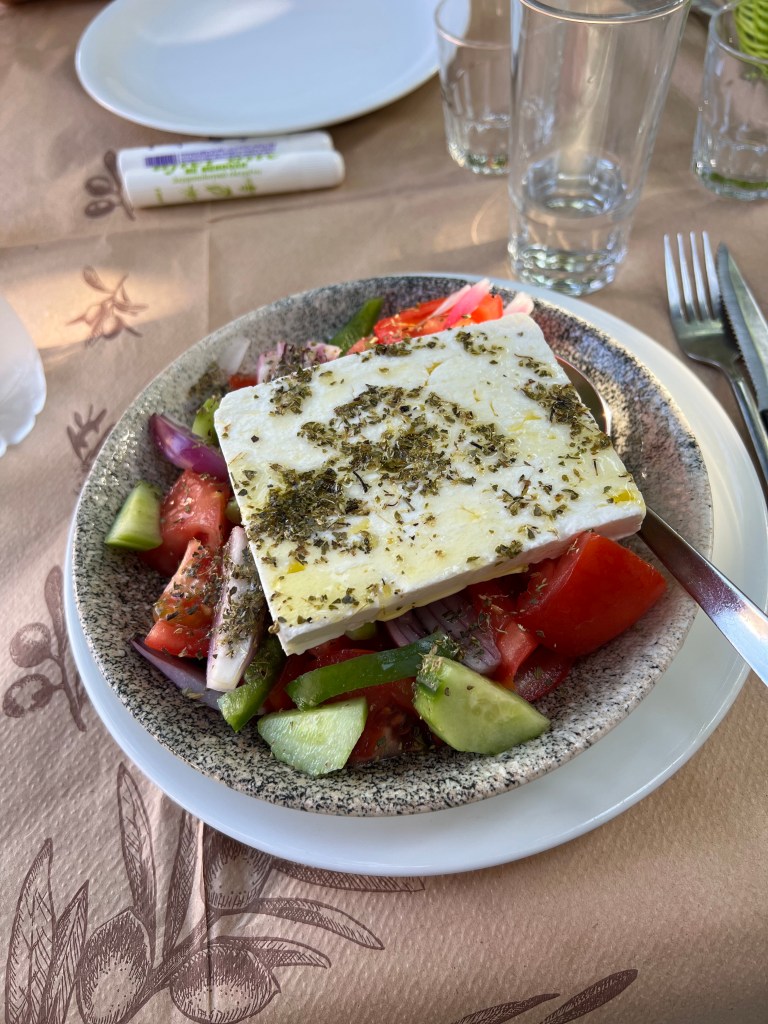
As a traveller, you experience more of local culture, try to speak the language (albeit minimally in the case of Greek) and probably spend more time in each place. As someone once said, a tourist sightsees while a traveller sees, talks and listens, too.
On the return journey, we felt like pros at the whole train/ferry thing and I wondered why on earth I hadn’t travelled like that in Europe more. I’d done Paris and Cologne, but never as far as this. And even though it takes a lot longer (with our stopover in Milan, the whole journey took a little over 48 hours, compared to a three-hour flight to Athens), it didn’t feel like it. And it was far less stressful.
Train stations can be just as busy as airports but there’s a different vibe. There are old people and young people, families, workers, people on their commute – all sorts. If you miss a train, there’s usually another not that long after. And once on a train, you’ve got room to walk around, stand up, there are no seat belts to hold you in place. It’s vastly different from flying, where I think it can feel like being squeezed into an airborne sardine tin.
Cost of rail travel in mainland Europe
The overall cost for our return travel was €1,611, which works out as €539/£468 per person – nearly the same as three flights from Heathrow to Athens with British Airways. This could have been reduced by around half had we booked
standard class and also a reclining seat rather than a cabin on the ferry.
But as it was our first time, I wanted all the comforts!

We’d got a taste of what life would be like as ex-pats and it was pretty wonderful. We felt welcomed by both the locals and the other foreign residents, the setting was stunning, the fresh food incredible and cheap, and we were able to work and study while enjoying the surrounding area.
However, living in that part of Greece meant living among people who were either from overseas and/or of retirement age. That might suit some, but we decided we need to live with people our own age nearby, activities beyond gardening and dog-walking. I want to live in a community of people who are working, active, still creating and producing.

There may be other parts of Greece that fit the bill. We’ll definitely be back to explore some more. Or maybe we should try northern Europe next. Or Spain and Portugal. And then Ireland still calls me…
So, the search continues for my ideal location and in all honesty, I’m perfectly happy with that!

Like what you’ve just read? You can read more honest travel reviews here. Please follow The Sun Lounger on social media:
https://www.instagram.com/thesunlounger/


 The Sun Lounger
Leave a comment