

Kalkan in Turkey is journalist Tracey Bagshaw’s happy place, having holidayed there around 20 times. We asked Tracey, from Gorleston in Norfolk, UK, why. This is what she said:
We first went to Kalkan, on Turkey’s south coast, for a bit of a change. Creatures of habit, we’d been going to Mallorca for years and thought it was time to try somewhere new.
“It’s just a week. If we hate it, it’s only seven days lost…”
That was 15 years and around 20 visits ago.

We’re not alone. Our happy place is also the happy place of thousands of others who go back year after year, despite moaning that it’s “not what it was”.
“What it was” depends very much on when you first went. The first time is the one that sets the bar. Those who went in the 70s when it had just a few simple tavernas and a lot of derelict buildings barely recognise the Michelin-quality restaurants, high-end boutique hotels and “genuine fake” bag and watch shops that line the very steep, cobbled streets of the Old Town.
But they keep going back – as do we.
We revel in a lot of the things others moan about and have a phrase we use often: “Turkey, innit?”
It explains all those idiosyncrasies which, if they happened at home, you’d run screaming for cops/health and safety/child protection.
The family on the moped with dad on the front, mum on the back and the nine-month-old wedged between them. The three blokes travelling in the bucket of a digger up the hill signalling for you to cross – without letting the driver in the cab beneath them know. Firecrews watering the flowers on the central reservation of the dual carriageway or putting up enormous flags for public holidays (it’s not like they have nothing to do – the area can be a tinderbox in high summer and being on a steep hill, the engines are painfully slow getting to an emergency), celebrating whichever genius decided to make the pretty lights at the roundabout in the same colours as the traffic lights, meaning loads of sliding halts when drivers get there to realise the green light is actually 30ft up in a palm tree… that sort of thing.
And then there’s the animals.


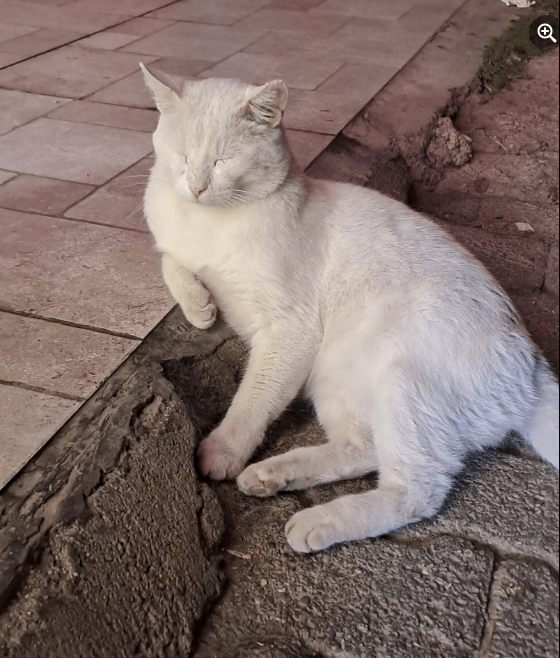
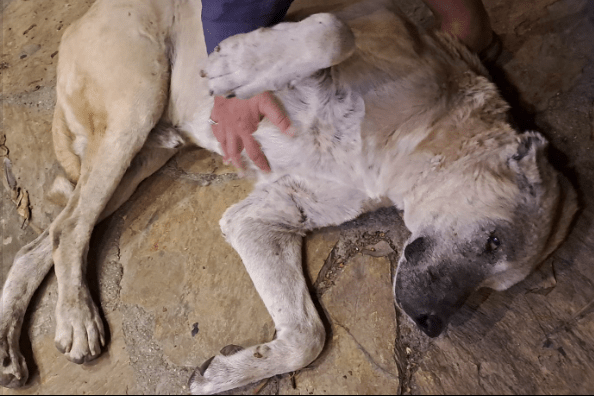
The town is well known for its street dogs and cats who bask in the sun, sit at your feet (or on your lap, or a spare chair, or the table) in restaurants staring at your plate – “Don’t you want that last bit?” – follow you home just for the company and generally make it all a bit special with their antics.
There’s a local charity (KAPSA) which makes sure they are neutered, given health checks and treatment and fed when the tourists go home. The council provides bags of food in winter and donations mean there’s enough to go round.
Because of this, some of them have been around for years and are welcomed as old friends by returning holidaymakers. Some even find themselves homes back in the UK.
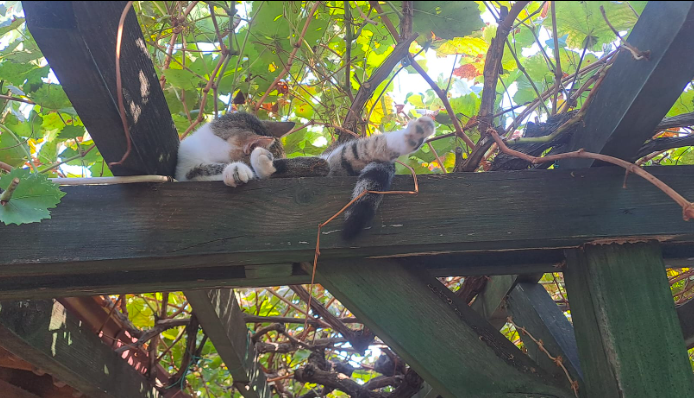
Most villas have resident kittens and cats – ours had a pool inspector who removed the pool tiles and patrolled the overflow channel on a regular basis. Why? We have no idea. But we caught him in the act, knocking one tile off with a paw, disappearing inside and then popping up at the other end.
You’ll come across the occasional tortoise crossing the road. Even the taxi drivers, who tend to drive as though they also have nine lives, will avoid them – although this is more to preserve their cars. “They are very hard!” explained one as he swerved wildly.
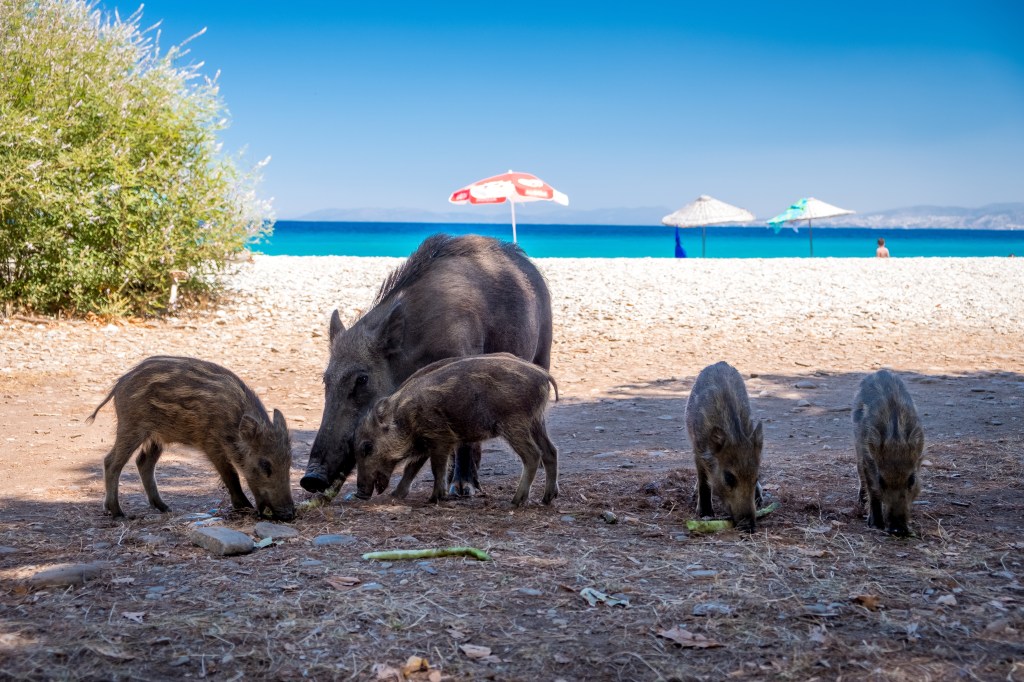
And if seeing your first tortoise in the wild is exciting, wait until a family of wild boar galumph through your restaurant.
First we heard snorting and rustling in the garden. Then the cat sat bolt upright from where she was sprawled on my menu as Mr Wilde-Hogg ran through, followed by the missus and the kids.
They were spotted several times over the next few days in the area, where villas and hotels have been built over the forests and scrubland they used to call home.
Originally a safe harbour for trade and olive growing – not a Greek fishing village as the Sunday supplements usually claim – the town now runs solely on tourism.
Most visitors are from the UK – the town has a big community of ex pats who have settled there – but there’s smattering of Germans and Dutch, with an increasing number of Russians tempted along the coast from Antalya.
Since covid temporarily cut off its lifeline of free-spending Brits, more Turkish families have chosen the area for their holidays, building and renting villas – but they are not as welcome. They eat in, don’t drink and rarely go into the town – and with more than 100 restaurants, bars and cafes vying for business, that’s not what’s wanted.
What is wanted are people who like a drink and enjoy good food with a view and don’t mind spending some money.
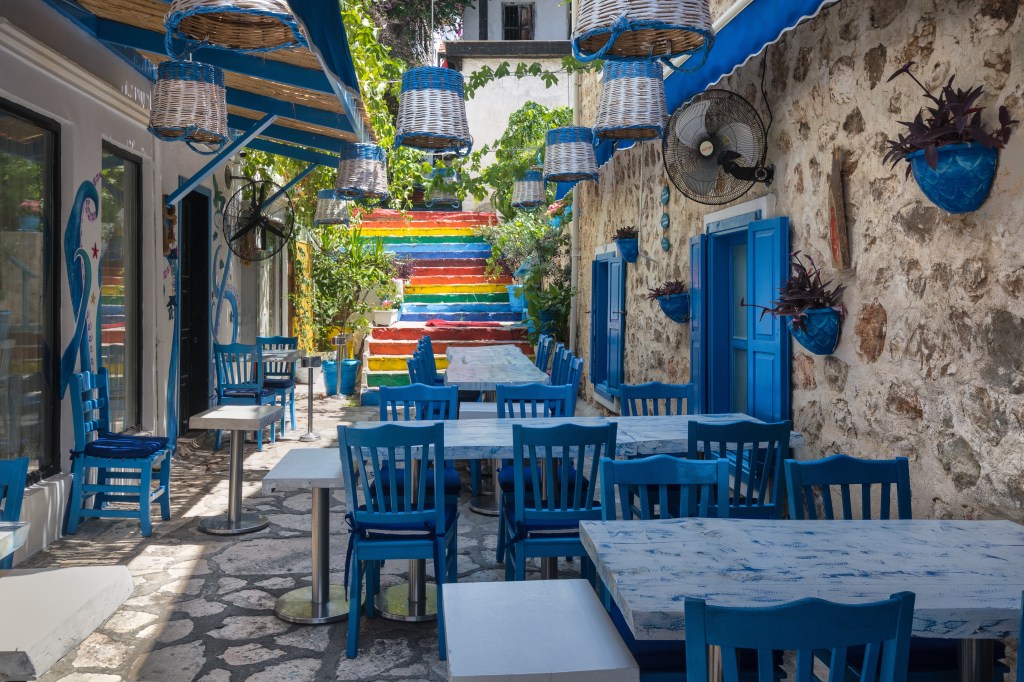
With a small cluster of steep, narrow streets, most of the Old Town restaurants can’t expand outwards, so they go up. Every place has a roof terrace and, in general, the better the view, the higher the prices. There are cheaper “local” places to eat which do tasty basic food with great service but no view, and dining by moonlight overlooking the sea is what people come here for.
Booze isn’t “cheap as chips/cheaper than Primark” any more – it’s around a fiver for a 500ml Efes, £8 for gin (choose local as imported spirits are eye-wateringly expensive, but most bars do a “free-pour”) and north of £20 for local wine – but you can get a perfectly cooked fillet steak for half what you’d pay at home.
If you go to one particular restaurant your steak comes with a side order of table theatre and a garnish of flames, which seems very risky with so many old wooden buildings cheek-by-jowl and the fire crews busy on horticultural duties. But it’s quite the thing – and the meat matches the performance.
With just a small pebbly beach, Kalkan’s beach clubs are where most people go to relax on a lounger and swim in the sea. Little boats leave from the harbour and they range from the simple, with sunbeds and a bar, to the very swanky, where a button on your sun umbrella summons a waiter with cocktails and snacks. Costs vary and we don’t bother.

If we want to go to the beach we hop on the dolmus to Patara, about 20 minutes away, where there are 18km of protected golden sand (it’s an important breeding ground for turtles) and fascinating ancient ruins from when what is now a scruffy little village was one of the most important ports along this part of the coast.
It was also the birthplace of Father Christmas. You’ll come across a few places along this stretch of coast with Baba Noel branding, which seems strange until you know.
This year it cost 15 euros for foreigners to get into the beach and the ruins (or 55 for a card of 10 admissions), but there is local opposition and they are trying to get that price reduced. It is steep, but it’s definitely worth it if you’re going only once.

Kaputas beach is in the opposite direction. It’s a small crescent of sand at the mouth of a very steep and narrow gorge which gets ridiculously busy at weekends, high season, religious holidays… pretty much all the time, actually. There are a lot of steps down and it used to be (oh god, now I’m doing it!) a lot quieter and nicer, but it’s still worth a trip. Go early, don’t drive – as parking is along a very tricky coastal road – and leave before the hordes arrive.
I wouldn’t call Kalkan’s harbour beautiful. It’s narrow and full of boats which are eager to take you on trips around the bay to visit local coves and mudbaths which, allegedly, take 10 years off you. Do a couple of them during your stay and you could qualify for half fare on the flight home.
Fun fact: the two islands just outside the harbour which all the boats go to – Mouse and Snake – form a perfect exclamation mark when viewed from space.
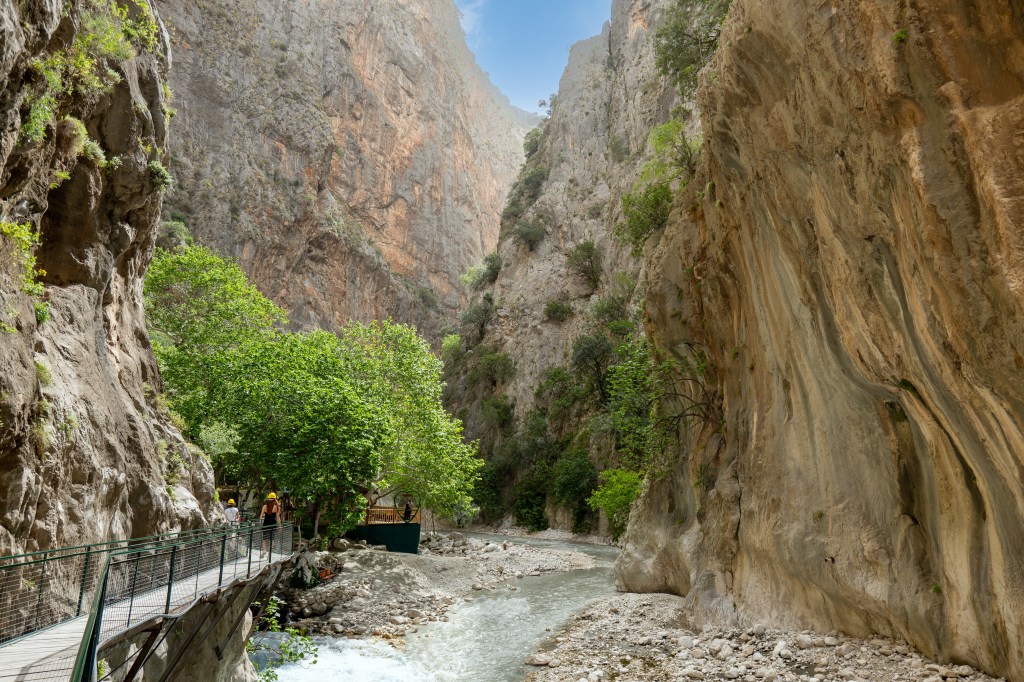
Futher afield there are boat trips to sunken cities, and bus trips to ruined cities and what claims to be Europe’s second longest gorge, at Sakklikent. You can walk along it some of the way, depending on how wild the river is on the day and it’s fun to come down the river on rubber rafts – but it’s a bit of a tourist trap. The riverside restaurants are pretty, though, and there are worse ways to while away an afternoon.
Back in Kalkan there are a few water sports in the harbour and walking trails for active types – the long-distance Lycian Way goes through the town – but it’s all generally low key. The perfect resort for the lazy.

You can catch a dolmus to Kas, the next town, which has ferries running to the Greek island of Kastellorizo (“Meis” to the Turks) which is just 20 minutes away and well worth the trip – especially if you’re missing bacon…
Turkish food is wonderful – lots of fresh vegetables, fabulous meat, fresh fish and some of the best bread in the world – but you won’t find pork. Actually, you do sometimes get wild boar on the menu because, as well as being great cooks, Turks are keen hunters.
I’m not sure how they square that one, to be honest, but I’m sure there’s a way.
Turkey, innit?
Tracey’s Kalkan recommendations:
- For good food, great service and a fabulous view without the matching bill, try Aciktim Izgara. It’s a franchise of a chain but its charmingly rustic setting means you forget that.
- Ak Deniz is a family-run hidden gem, tucked away and offering fabulous food and excellent service.
- Another family-run favourite is Cinar which is open all year round. The chicken and apricot and Inci’s cheesecake are sublime. They do a fabulous breakfast but if you want to travel a bit outside, Belmuar Cinaralti is a popular choice.
- And if you want wild boar (to look at, not to eat) try Tesoro Pizza high up above the main road (if you want to eat it, it’s often on the menu at The Old Trading House.
- Baharat is where you’ll find the flaming steaks. And they live up to the hype.

- Underneath Baharat you’ll find Backyard Number 10 (above) – a wine bar set on a flight of stairs and featuring nibbles boards and delicious Turkish wines.
- Our favourite cosy corner – handy when waiting for a cab as it’s opposite the taxi rank – is Bezirgans Pub.
- If you like live music, Kuytu is a lovely garden bar with bands – traditional Turkish and Western – on most nights.
- In Kalkan we stay in a private apartment but in Patara, our home from home is the Dardanos Hotel. Simple yet stylish, it has a relaxing garden, a lovely pool and offers breakfast.
- Hotels in Kalkan (recommended by friends) include Dionysia with its
breathtaking views from its terrace, the picturesque Fidanka and the friendly Lizo - In Kalkan, The Pirat is a popular large hotel on the harbour, but if you want small and chic, Kalkan Han is right in the town centre. It’s attached to the Salonika 1881 restaurant, which has no terrace but stretches along a street, making it the place to see and be seen.
- There are also hundreds of villas and apartments to choose from.

Tracey’s Kalkan fact file:
- The flight from the UK is around four hours and you can fly to Dalaman or Antalya airports from the UK with a range of airlines
- Kalkan is an hour and a half from Dalaman and three hours from Antalya.
- With its steep streets and slippery cobbles (and below par road finishing) it’s not a great choice for people with limited mobility or pushchairs.
- Taxis are cheap and plentiful, and the bus station and offers scheduled daily services to major cities as well as local villages.
- Accommodation is mainly in villas and apartments and there are small, family-run hotels and a couple of major luxury complexes – The Villa Mahal (rooms start from around £400 per night with a minimum stay of 3 nights) is popular with the Insta-set, as is the newly-opened, adults only Lures (approx £300 per night). You won’t find the “flash the wrist” all-inclusive packages here.
- You can dress up or dress down – but wear flats. This is no place for heels.
- Prices are higher here than in some areas of Turkey, but menus are displayed in all restaurants and bars and you can choose accordingly. We’ve paid well over £100 for dinner for two or just £15 for a fabulous feast for four. Generally speaking, the higher the terrace, the higher the bill. Restaurants outside the main town and those not aiming at tourists are your budget best-bets.
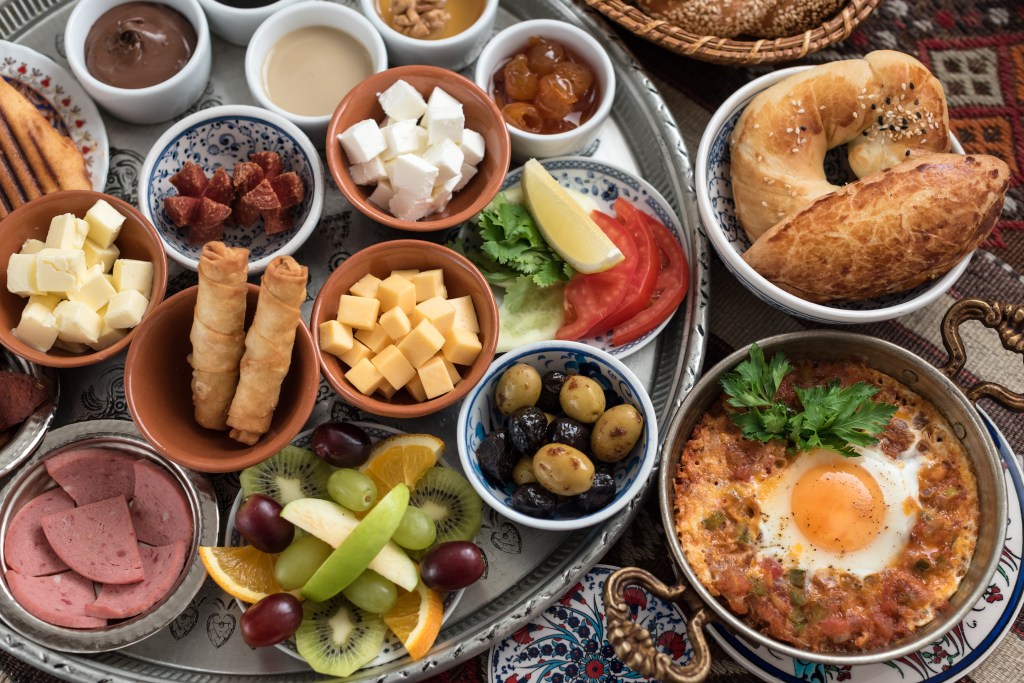
- And try the breakfast. Turkish breakfasts – cheese, bread, honey, olives, eggs, salad, fruit, meat – are enormous and delicious. They are usually shared around a table and some of the best are served in the small villages outside town, just a short drive away.

Liked what you just read? Please follow The Sun Lounger for more travel news, reviews and interviews.
Please follow The Sun Lounger on social media:
https://www.instagram.com/thesunlounger/
https://www.facebook.com/thesunlounger


 The Sun Lounger
Leave a comment