

A well-kept secret which can even be challenging to get to, those in the know go to Anholt to enjoy nature, birdwatch, pick juniper berries for gin, forage for mushrooms, fish from the shore and enjoy its beauty, isolation and overall sense of freedom.
Our latest guest blog post is from Vibeke Mortensen, who writes about her beloved Anholt – the remotest island in Denmark, which few people have heard of, not even the Danish!

Vibeke is a passionate foodie, Spanish podenco owner and freelance translator, translating five languages into Danish, and works on subtitles for household name TV shows such as Escape to the Chateau, The Repair Shop, Great British Bake Off and more.
First of all, tell us a little bit more about yourself (what you do, where you live, who you live with, etc
I am a 65-year-old freelance translator who speaks English, Swedish, Norwegian, German and French, as well as my native Danish. That has been my work since I was about 30 years old. Before that, I worked in quality restaurants as a waitress and loved it. Nowadays, I enjoy quality restaurants as a guest!
I live in the centre of Copenhagen and have done so all my life. My elderly parents still live in my childhood home 900 metres from me in the same street – the same street as the famous Tivoli Gardens. I am married to Hans, who is a tool maker.
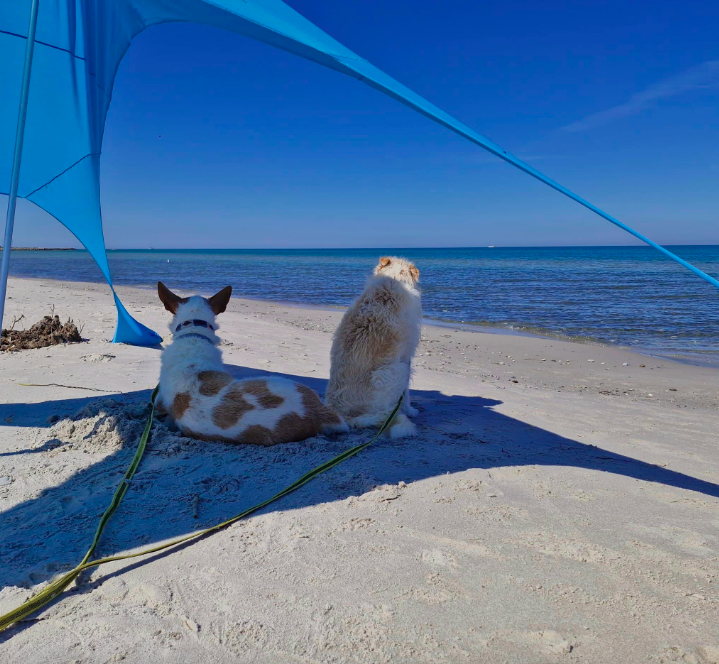
I have had dogs since I was 25 years and we have two rescue podencos – the invisible dogs of Spain.
Your photographs of Anholt have had me captivated, tell us a little bit about it this wild and wonderful place
Anholt is a 22 km2 island (13.6 sq miles) in the middle of the Kattegat – a 30,000 km2 (12,000 sq mi) sea area bounded by the Jutland peninsula in the west, the Danish straits islands of Denmark and the Baltic. To give you an idea of the size of Anholt, only around 150 people live there all year round.
The high season is very short – from the end of June until mid-August – when the population swells to around 6,000 people a week. There are about 250 holiday homes on the island, many of which have been in the same families for many generations.
All buildings are situated within one tenth of the island and the rest is designated as an area of outstanding natural beauty, where nobody is allowed to build.
Getting to Anholt can be a bit complicated and expensive, which contributes to the isolation of the island. While it’s only around 160 miles away (256km), the travel time from Copenhagen is around eight hours.
What’s the landscape and wildlife like?

The landscape of Anholt is open and wild. Ørkenen, known as ‘the desert’, is within the island’s area of outstanding natural beauty, where there are very few trees. Rather than a desert, it’s more like a moor covered by heather, juniper bushes and lichen.
Besides Ørkenen, there are some beautiful meadows inland. There is virtually no farming on the island as the soil is very sandy and it’s hard to grow anything. Instead, you’ll find a wild and wonderful beauty, inhabited by birds, hare and deer.
There are trees in the inhabited part of the island and a few other places, but most of the inland is treeless and consists of dunes and moors. There are two significant hills, Nordbjerg and Sønderbjerg, which around 30-40 metres high, from which you have a view over the whole island.
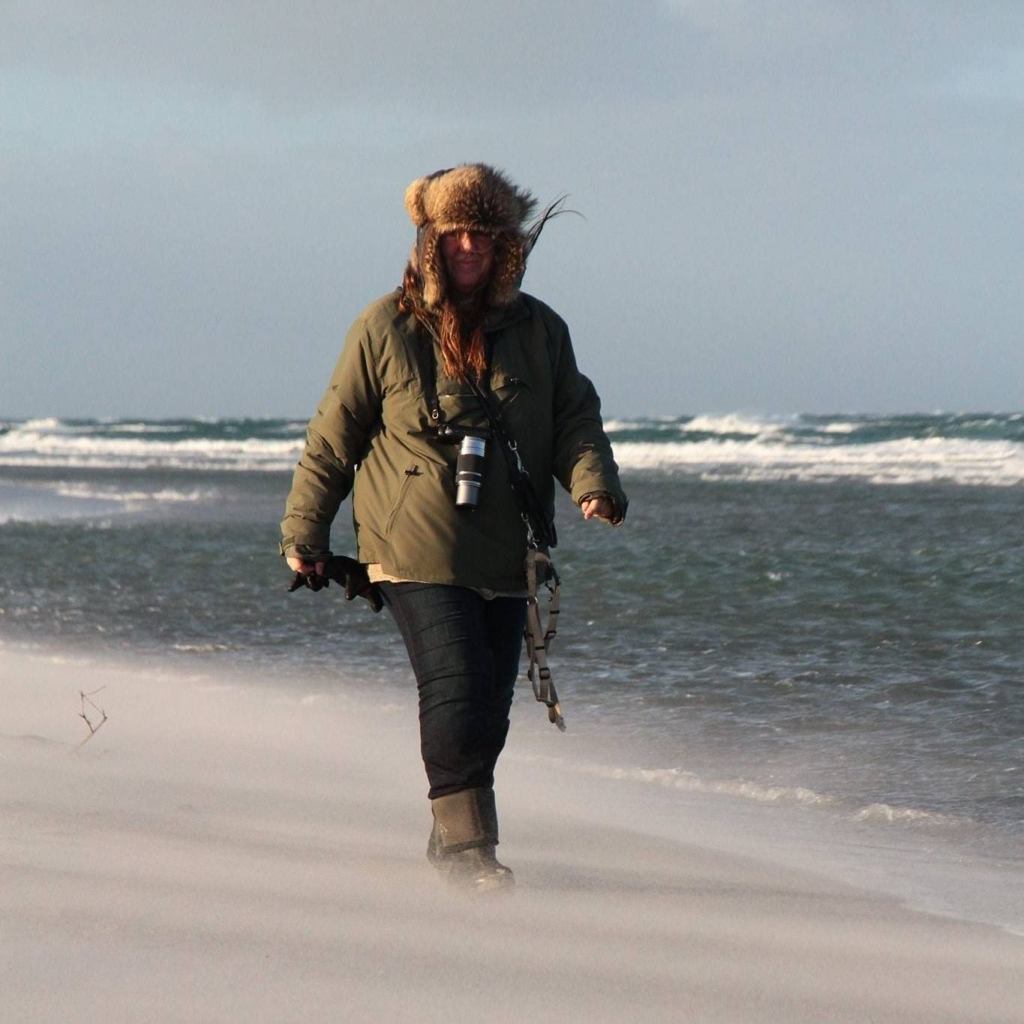
The coastline is 15 miles long and consists of clean, white sandy beaches, where the sea is crystal clear. But note that you won’t find bars, toilets or anything else. So, going to the beach means BYO.
How often have you been visiting Anholt?

I’ve been going to Anholt every summer for more than 30 years. I was introduced to the island by a friend and loved the place from day one. The first summer I was there, the weather was unusually warm and Anholt felt like the Caribbean. It still does on good days, but the weather can be rough too, even in the summer.
I was single when I started going there and mostly went for the sun and the partying! When I met my husband, I introduced him and his then five-year-old son to the place, and they loved it straightaway.
In the beginning, we hired a caravan at the campsite. We then started renting or borrowing houses until we bought our own cottage in 2011. We had, by then, started going to the island all year round – for Christmas, Easter, etc. Now that we have our own place, we spend somewhere between two and three months there a year, divided into five trips.
What do you love about it?
Basically everything! The nature, the social life (everybody knows everybody), the clean sea, the serenity. If you are into naturist swimming too, this is the place to go. You just have to walk a few hundred metres from the harbour and camping site and you basically have the beach to yourself.
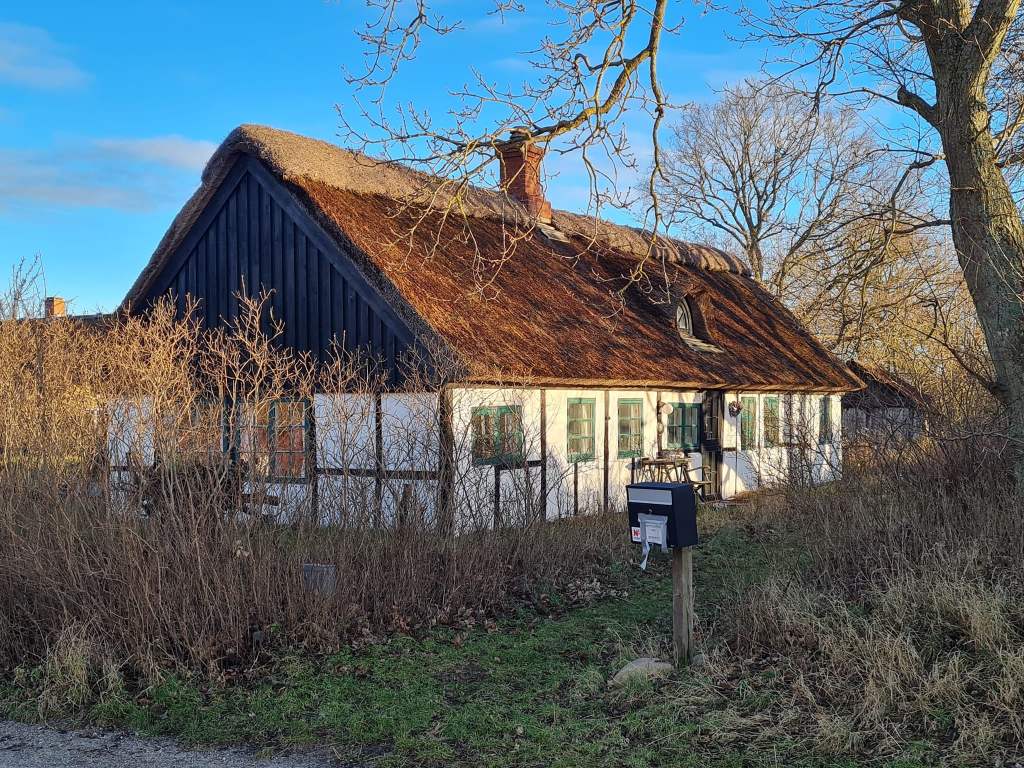
All houses and the tiny, tiny town are situated inland, so the coastline is totally unspoiled. At the far eastern tip of the island, there’s a beautiful lighthouse (built in 1785), which is still in use. It was occupied by the British from 1807 till 1814, early in the Gunboat War (part of the Napoleonic War).
For many years, it wasn’t possible for the public to visit the lighthouse. Now it is, and my husband and I belong to a group of people who open the lighthouse for the public twice a week in the high season, and sometimes out of season too.
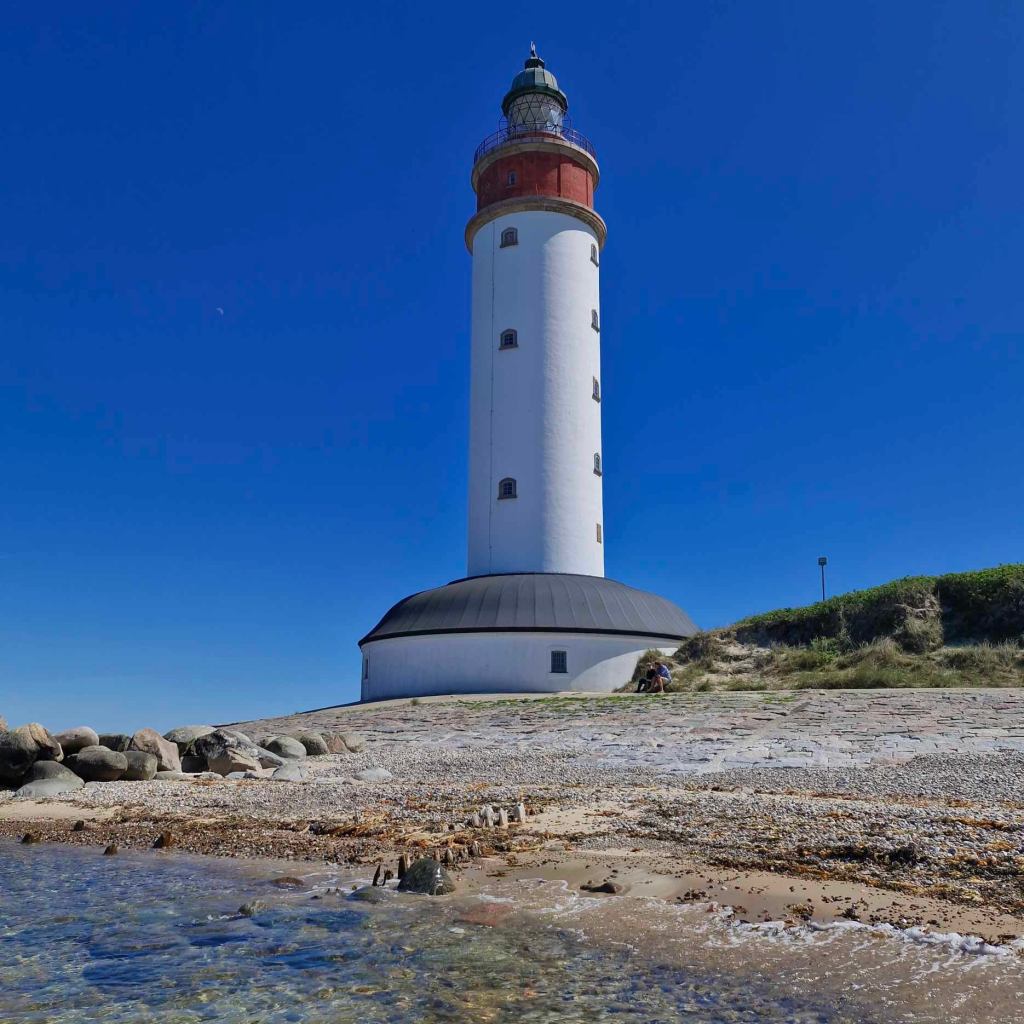
To get there, you have to walk five to six miles along the beach or across and back again. But the view from the lighthouse is stunning and for many visitors on the island, it’s the icing on the cake and well worth the hike.
How long did you stay recently and how often do you go there?
We just got back to Copenhagen after spending a month on Anholt. We’ll go back for a week in October, which is when a lot of people go to pick juniper berries for the acclaimed locally produced Anholt Gin. It is unpaid work, but the pickers get a bottle of special edition gin for every two kilos of berries they pick.
People do it to spend time in nature together and for the social aspect. There is a tight community on the island and the season starts off with a dinner for all the pickers.
What’s the weather like on Anholt?
It’s often very windy. On a perfect summer day, with little wind and clear blue sky, it feels like the Caribbean, only better (if you ask me). The sea is clear and clean and the water temperature in the summer is between 20 and 22 degrees Celsius.
What’s tourism like in winter months?
There is virtually no tourism at all during winter. All B&Bs, the inn and the hostels on the island are closed. If you are really keen to go, you can hire a cottage. The majority of tourists you’ll find on the island in the winter are people who have their own cottages.
How do you get there?
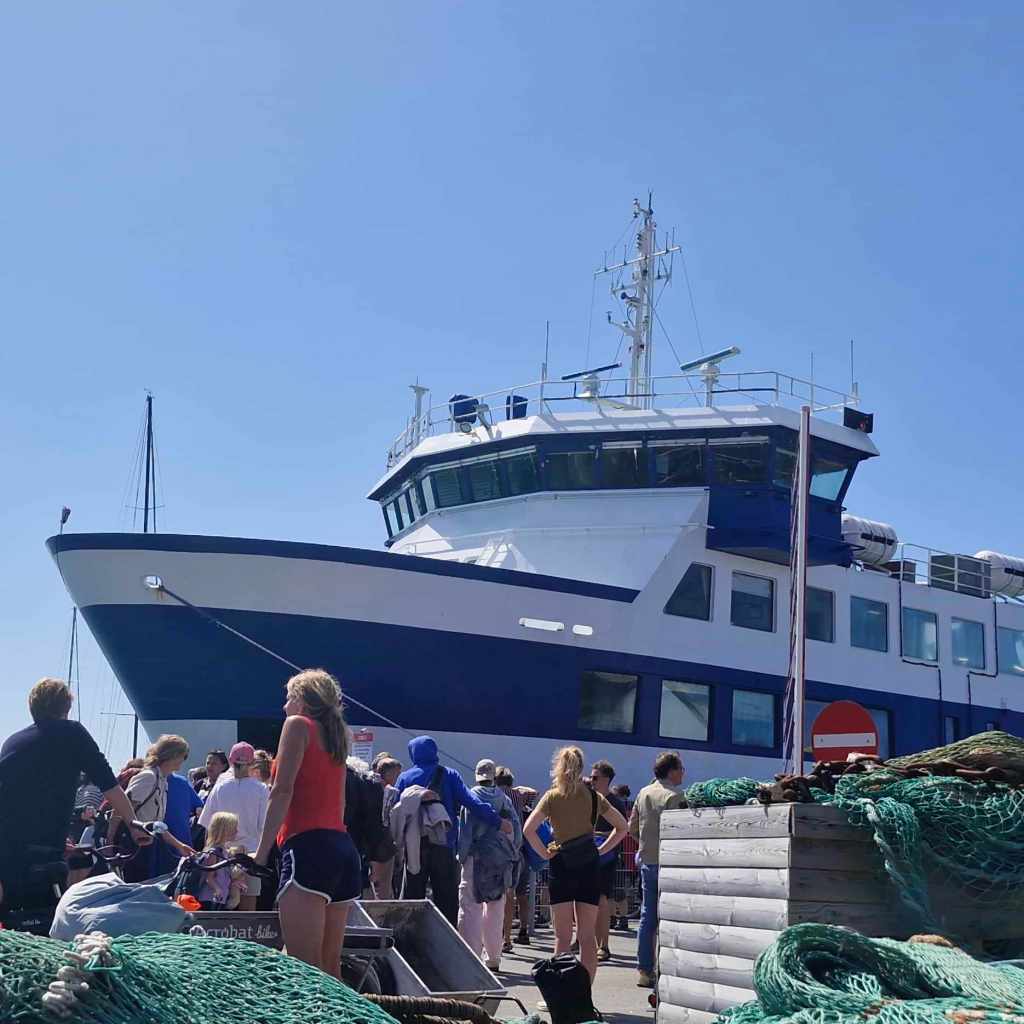
Most people go by ferry from Grenaa in Jutland, on the Danish mainland. The ferry trip takes three hours. In the high season, the ferry sails once every day, but only four times a week out of season. You have to book the tickets in advance and they’re often sold out (when we looked, tickets were around €10 each way).
You can also go to the island by plane from Tune near Roskilde, which is 30 km from Copenhagen. There is a grass landing strip on the island and only small planes can land. They fly frequently from spring till autumn, but not in the winter months (when we looked, tickets were around €140 each way).
Alternatively, you can sail to the island or take a private plane.
Who visits the island (nationalities, ages, families, walkers, bird watchers, other, etc)?
Most of the tourists are Danish, although many Danish know the island by name only. In the summer, quite a few Swedish, Norwegian and Germans go there in their own sailing boats as there is a lovely harbour. We don’t see many other nationalities there.

In the summer, it’s a paradise for families with children. It is an extremely peaceful place and small children often enjoy their first taste of freedom there.
What is there to do on Anholt?
Not much – and that is the beauty of it. You can hike, swim and just enjoy the nature. As soon as you turn your back on the inhabited area, you can walk for hours without meeting anyone.
What are the best places to eat on the island?
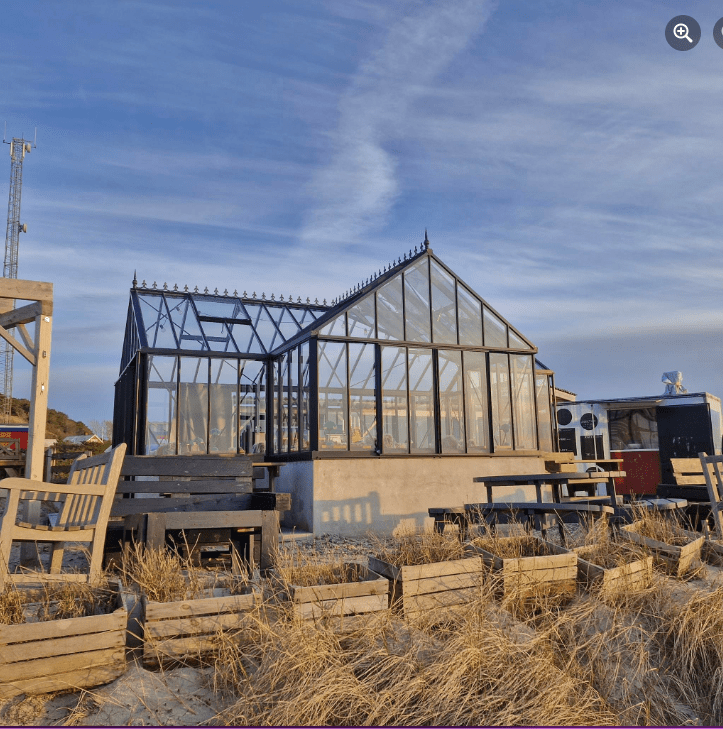
Spiseriet serves food inspired by the owners’ travels during the winter months, with the focus on sharing, quality, animal welfare and organic produce. This year they went to Cape Verde. Next year is still to be decided.
The restaurant is primarily a glass structure or orangery, enabling diners to have brilliant views of the dunes, where it’s situated, and out to sea, across the sands.
You can enjoy a set menu for 395 to 795 Danish Krone – that’s £45 to £90 per person (Denmark has been a member of the EU since 1973 but as opted out of the Euro currency).

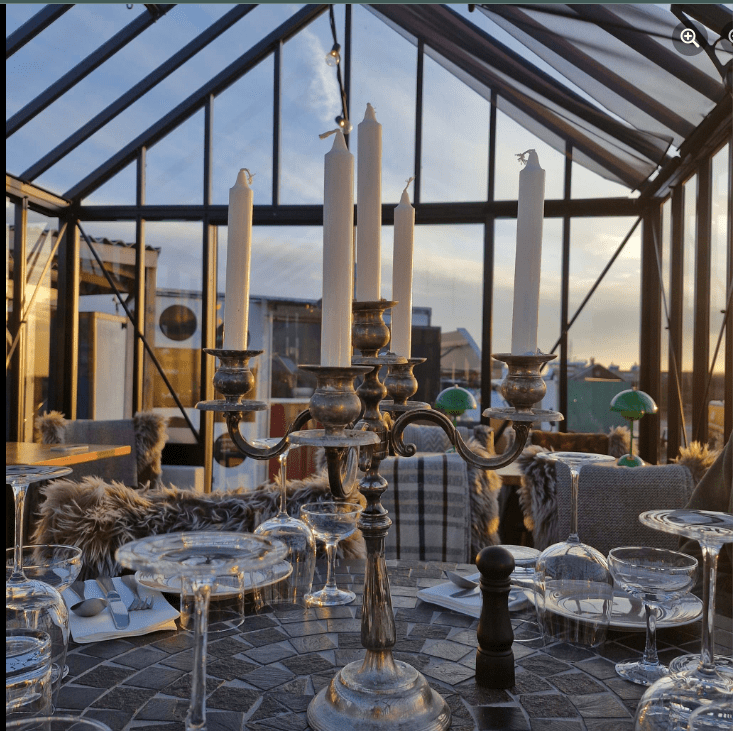
Mouth-watering dishes include Cachupa – a stew from Cape Verde with Norwegian lobster and chorizo, fish taco with smoked cod and bahn bao, steamed and fried bun, with nduja and kale, or ravioli with lamb stuffing, coriander and mint pesto. Anholt Gin, bread, butter and burrata is served as a snack too (making it worth a visit for that reason alone).

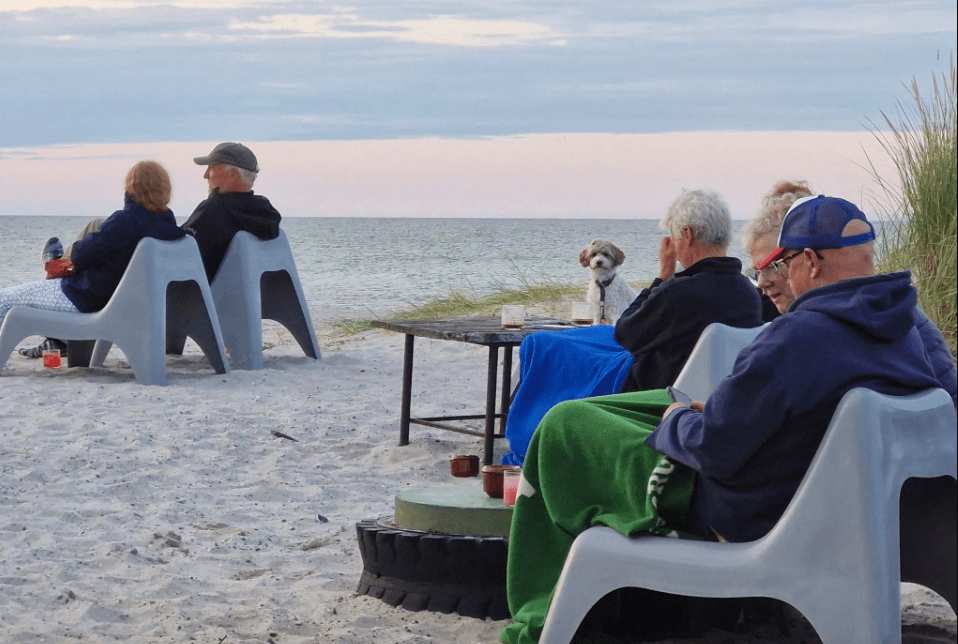

Orakel Bar is the island’s only beach bar – located at the harbour and with a beautiful view of the beach, the slope of Nordbjerg and sunset in the sea.
Open only during the summer, here you can enjoy lovely drinks, good wine, cold beer and simple, tapas-style snacks, away from noise, hustle and bustle of rest of the world.
Orakel Bar serves mostly canned seafood – Danish, Spanish, Portuguese and French, as well as hummus, pea soup, baked tomatoes and burrata. It’s served in the most charming manner in a lovely ambience with a stunning sea view.
An authentic micro bakery, specialising in sourdough, they also serve a vegetarian lunch every day in high season when, once a week, they arrange a communal dinner, seated at one long table. It’s a huge success and you have to be quick when tickets go on sale, as they all go really quickly.

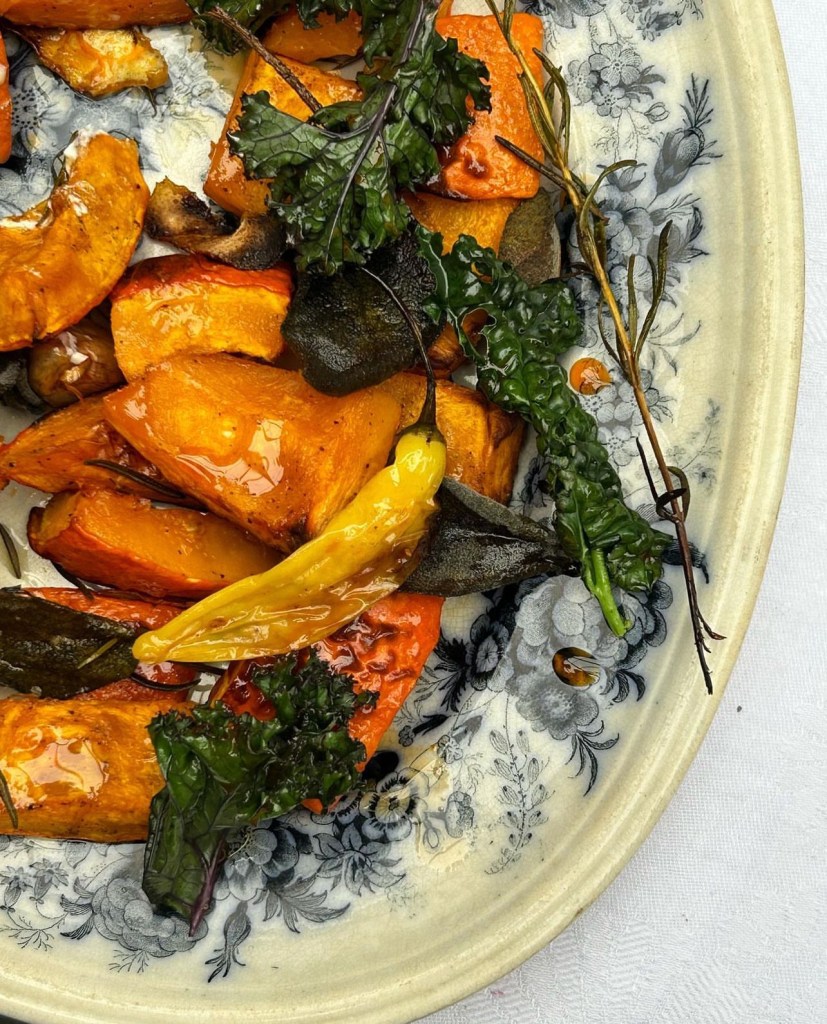

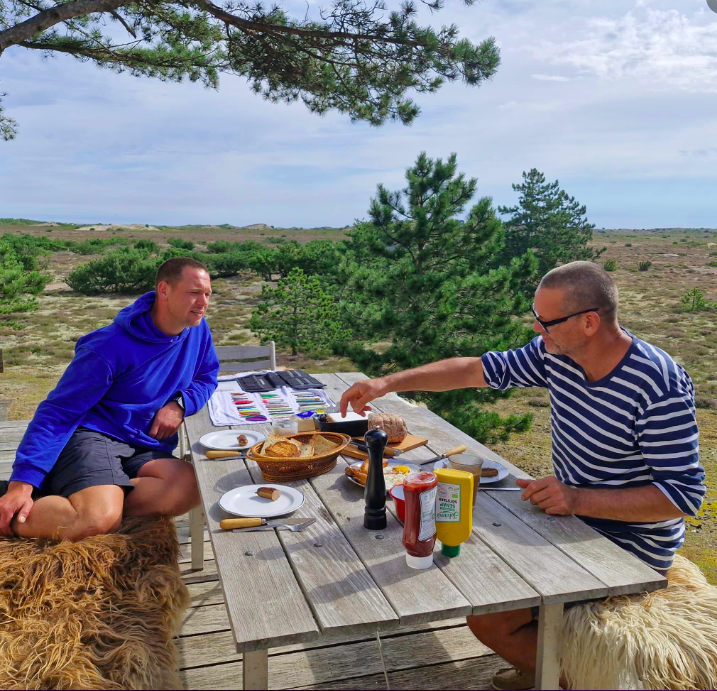
Cuisine on the Island is fresh and includes seafood, such as locally-caught Norwegian lobster and langoustine. People buy them straight from the fishing boats in the morning and prepare them themselves, enjoying them from their holiday homes, gazing at the sunset on the sea.
Are there any hotels or other accommodation you’d recommend?
As well as a fairly primitive camping site, which is literally on the beach, there are a few B&Bs, two hostels and an inn.
Absolutely my favourite on the island is Anholt B&B, a classic, family-run place, located in the town, surrounded by old gardens with mature trees, many cosy nooks and well-furnished terraces
The property comprises buildings which date from 1928 and 1961, respectively, and all eight rooms are decorated differently in bright, friendly colours. Residents are encouraged to disconnect, enjoy nature and the peacefulness of the island.
Prices from 850 DK (£96) per night for a single room.
Casablanca Hostel has neat, clean rooms and the opportunity to socialise with other guests, It’s only 150m from the ferry and the fishermen’s boats that land fresh fish and lobsters in the morning.
Price start from 595 DK (£65) per night.

Are there shops on the island?
As you’d expect from such a small island with such a tiny population, shops are limited and seasonal, so come prepared. There is a small supermarket in the town which is all year round, although, off season, it’s open for just for a few hours every day (except Sunday).
In the summer, there is another (and very nice) supermarket at the harbour. Besides that, there are only a few mainly pop-up-shops in the summer.
How do people get about the island?

We walk, bike or hire golf carts. Very few tourists bring their cars. It is extremely expensive to take the car by the ferry and there is no guarantee that they will take it on the day you want.
Even if you did bring your car, there are only about three miles of road on the island and you can hire bikes at the harbour.
There is free parking in Grenaa, on the mainland, by the ferry.
We share a love for podencos – our gorgeous Spanish rescue hounds. Is Anholt welcoming to dogs?

Yes. They are welcome most places, especially if you dine al fresco. There are so many lovely places to walk the dogs. Off leash dogs are, in principle, not allowed, but the rule is not enforced, as long as the dogs don’t bother people. We don’t let our dogs off leash as they have a strong prey drive. They would be gone for hours, chasing the deer and hares, if we let them run.
If you’re into an action-packed holiday, this is not the place for you. Take a pause from normal life and enjoy Anholt for nature, good food and tranquillity.


 The Sun Lounger
Leave a comment