
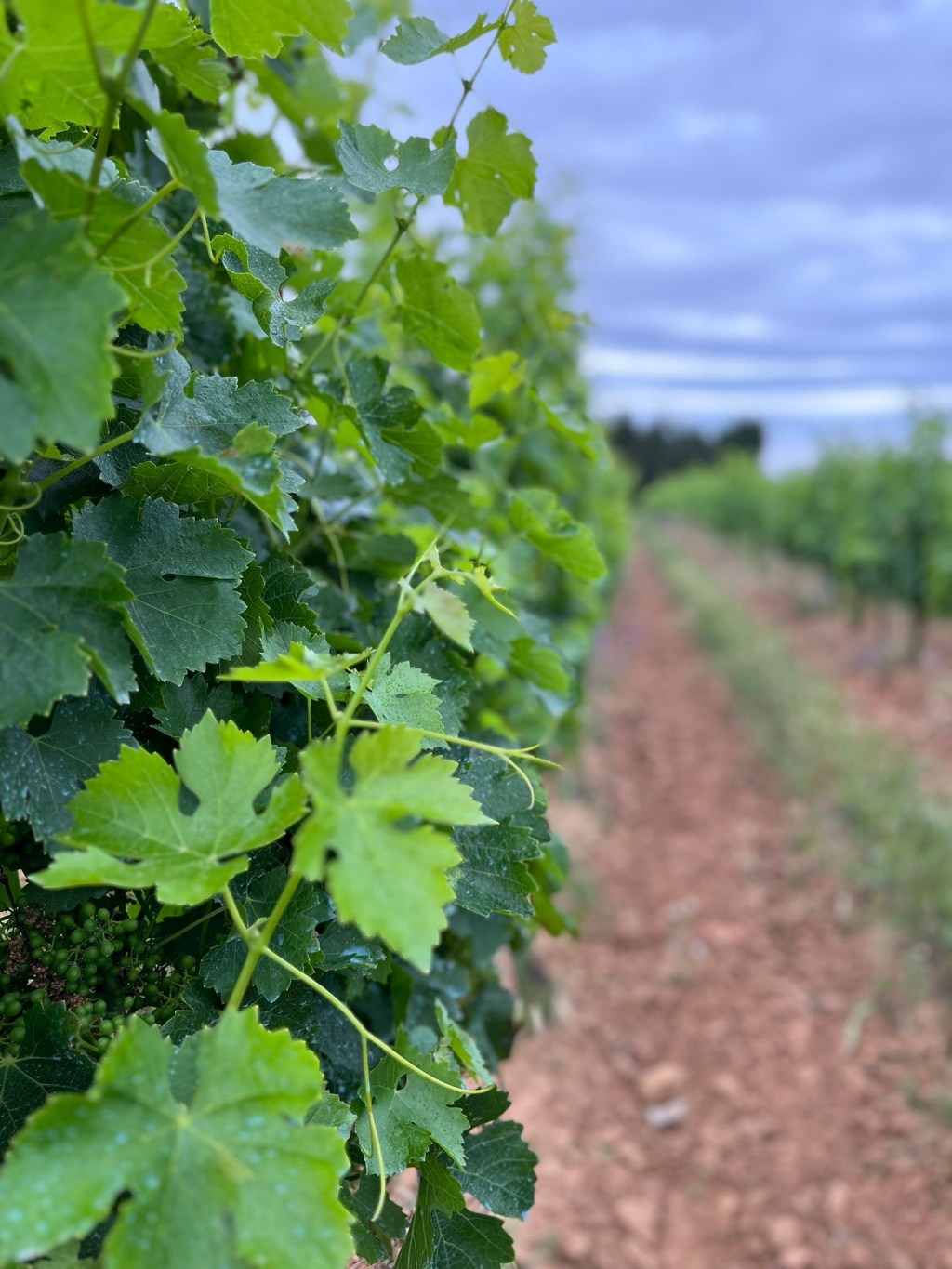
Wine making is a tricky old process, I’ve learned. If you’re not trying to out-smart the wild boar, who pop down from the mountains in the evening to feast on your vines, a whole vintage can be wiped out due to weather that’s too hot, too cold, too dry or too wet.
While I have a vision of bucolic charm in my mind, with me strolling through the wild flowers growing between the vines, sipping a glass of one I prepared earlier and the jolly, local community coming together for the annual harvest, I’m sure it’s not quite that idyllic and I’m not sure I could cope with the stress. Best leave it to the professionals and I’ll do the drinking!
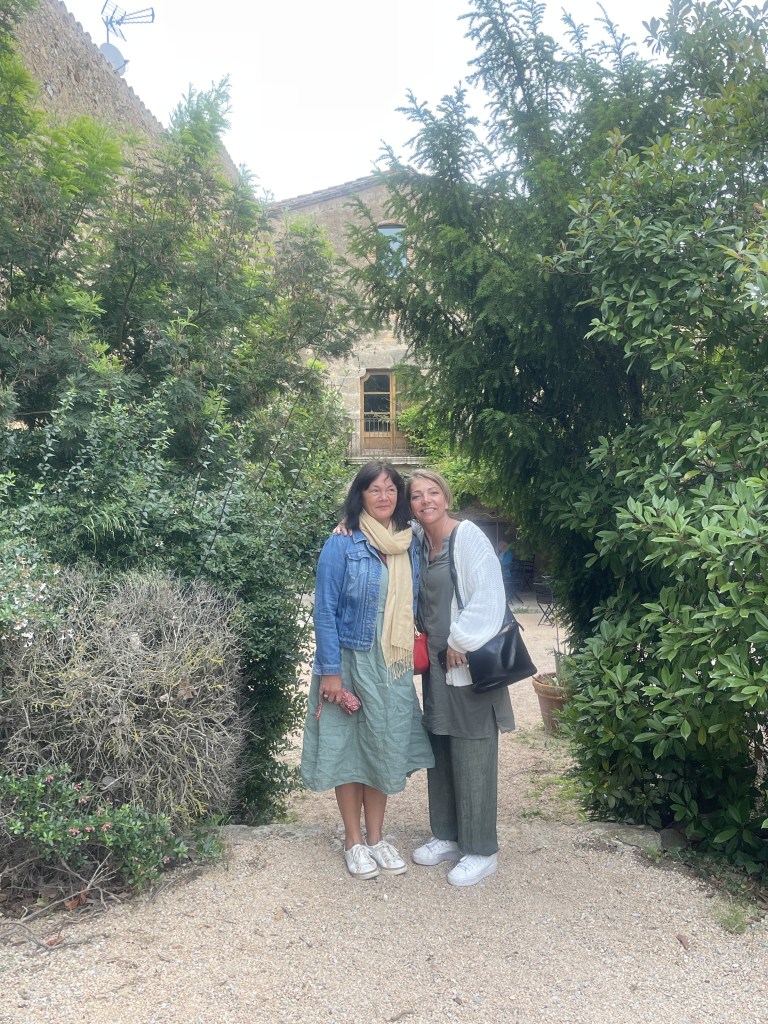
On a cloudy and slightly rainy day in my beloved Catalonia in early June, that’s exactly what I did, joining two wine-loving companions for a guided tour around Mas Oller, a small, historic estate in the L’Empordà region of the Costa Brava. ‘Mas’ means ‘farmhouse’ in Catalan and it was a perfect way to spend an uncharacteristically damp day there. I’d thoroughly recommend a vineyard tour for anyone wondering what to do on a rainy day in Spain.

Where is Mas Oller?
The winery, situated in a bend in the road, not far from the village of Torrent, has a long winemaking tradition dating back to the Greeks in 600 B.C. Situated in a privileged location between the sea and the mountains, after years of neglect, the Esteva family (owners since the 1970s) decided to revive the estate in the year 2000, building a winery in the old cowshed.
If you’re not familiar with the area, the nearest city is Girona, it’s not far from hilltop Pals and it’s easily reachable by taxi (don’t drink and drive, kids) from L’Estartit (20 mins, traffic dependent), or any of the little coastal villages in the Begur area.

While not as common as just over the border in France, you’ll see vines (or ‘wine bushes’, as my darling sister likes to call them – our favourite kind of bushes), dotting the landscape and along the roadside here, where the fields are surprisingly lush and you’ll find field upon field of netted apple trees.
Another common local product is the local rice – arros de Pals – but we noticed this year that the Catalan paddy fields weren’t flooded, as normal, and wondered if that was something to do with the dreadful drought affecting the area.
What are the wines of Catalonia like?
Little known to Brits, the wines of this area reflect the uniqueness of the terroir, with its soil of chalk and red clay, and Tramuntana wind that contributes to a microclimate and the wine’s flavour. According to Mas Oller’s website:
“The influence of the Tramuntana on the wines of Empordà is fundamental. This north wind creates an ideal microclimate, with its freshness and dryness that cleanses the air and regulates temperatures. This results in healthy vineyards and ripe grapes with complex flavours and aromas.”

Indeed, our lovely (if not, formidable) lady tour guide explained that the vines are specially positioned to run up from the direction of the nearby Mediterranean, creating ‘tunnels’ to direct both the humidity from the sea and the Tramuntana itself, even giving a salty taste to the wines (which I didn’t notice).
It’s a very unassuming vineyard and you’d be forgiven for not noticing it’s there, apart from the ‘Oller’ and wine bottle on the side of the building, before you get to the bend in the road.
The estate has 17 hectares of vineyards in production, with red varieties such as Garnacha, Syrah and Cabernet Sauvignon, and white varieties such as Picapoll and Malvasía, with wildflowers and views that create a sort of lost-in-time feeling. It’s very unlike any other vineyard I’ve been to and has a cute, family feel to it.
How are the wines made?

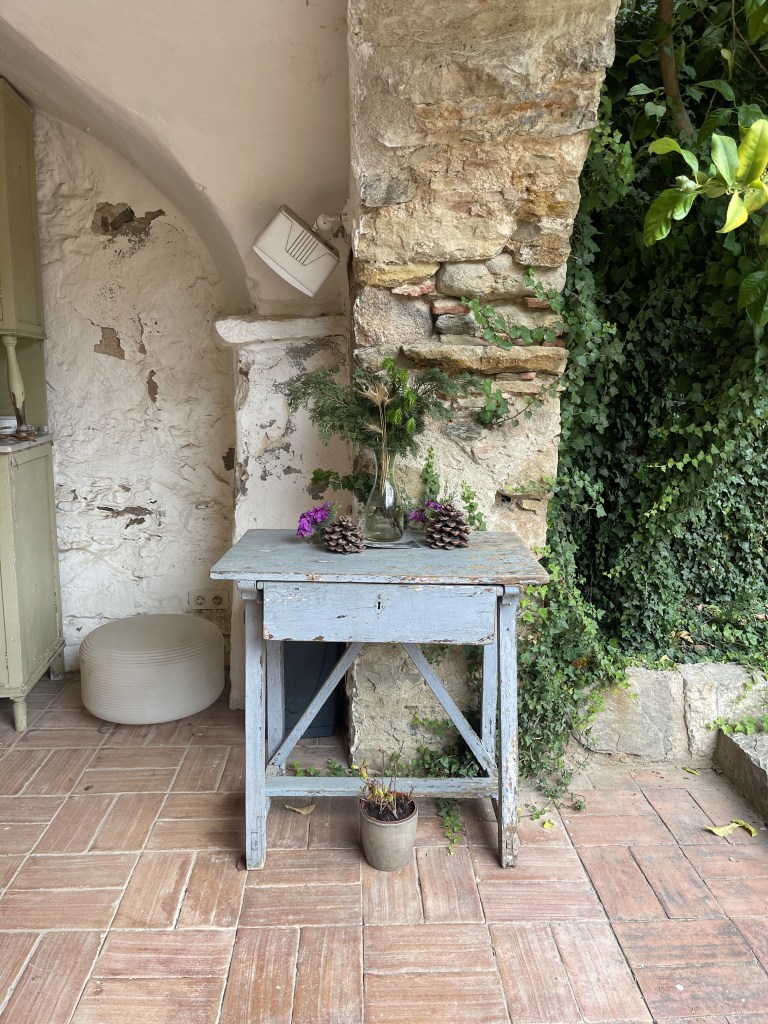
The vineyards surround the 17th century house (which was undergoing gentle renovation while we were there and talk of creating a boutique hotel was mentioned – count me in). The houses here are a faded yellowy/red, not white like you see in southern Spain. It’s like a crumbly limestone. The house itself is ancient, perfectly cool inside and beautiful. It will make a lovely hotel, I am sure.
Grapes are manually selected both in the vineyard and then in the winery. Mas Oller’s philosophy focuses on recovering the winemaking tradition of Empordà with a modern interpretation of wine, it says.
As you trail through the dusty tracks and into the shade of the ancient holm oaks, designed for the production of the region’s corks, it’s hard to imagine that vineyards and olive trees were ripped up in the 1950s to make way for arable and livestock farming.
It was during this time that Franco was dictator of Spain at a time when Catalans suffered significantly. Not only were their democratic freedoms suppressed, but also their Catalan language, which was excluded from the education. Castilian, or Spanish, became the only language of education, administration and the media.

During that time, newborn babies weren’t even allowed to be given Catalan names. The name had to be in the Spanish language. For example, someone from the region couldn’t call himself Jordi (the most common boys’ name in Catalonia, I believe). It had to be he Spanish version – Jorge. Xavier became Javier, but now you see the Catalan ‘X’ used to replace ‘ch’ in almost everything (xocolat, xiringito, etc)!
I imagine, at the time, people were less bothered with producing fresh wines with a hint of saltiness and more with growing food in order to live!
The Mas Oller website now says: “Initially, the first wines produced by the young vines were sold locally. Over time, the vines have matured enough to produce the desired fruit concentration. Today, Mas Oller has become a benchmark winery in the Empordà Designation of Origin, with wines that reflect a philosophy seeking uniqueness and expression of the terroir where they originate.
“With almost 400 years of history, Mas Oller is a living testimony to the wine legacy of the region and its ability to adapt and thrive over time.”
While you may think Spain equals Rioja, I urge you to expand your mind and try Catalan wine. It’s a different as the language itself.

Wine production and global warming
The weather and, of course, global warming, have doubtlessly had an impact on wine production globally. Last summer, when temperatures in the UK even topped 40 degrees, it was a scorching one for the Catalan wine ‘bushes’, with not just the weather itself having an impact.
So thirsty were the wild boar in the forests of Empordà, that they came down from the mountains to feast on the grapes of Mas Oller, meaning significant areas were wiped out.
Not just that, but the start of the summer of 2024 was uncharacteristically colder and wetter than normal (the very thing that caused us to visit). The there are problems like grape blight to deal with. All in all, too stressful for me! I’d be camping among the precious vines or looking out of the window every time I heard a spot of rain!
The wines of Mas Oller
Our tour included a walk through the vines and tastings of three wines, with accompanying snacks. We would have liked to spend more time in the vineyard, if the weather had been kinder…but then, if it was, we’d probably been on a beach and not there!
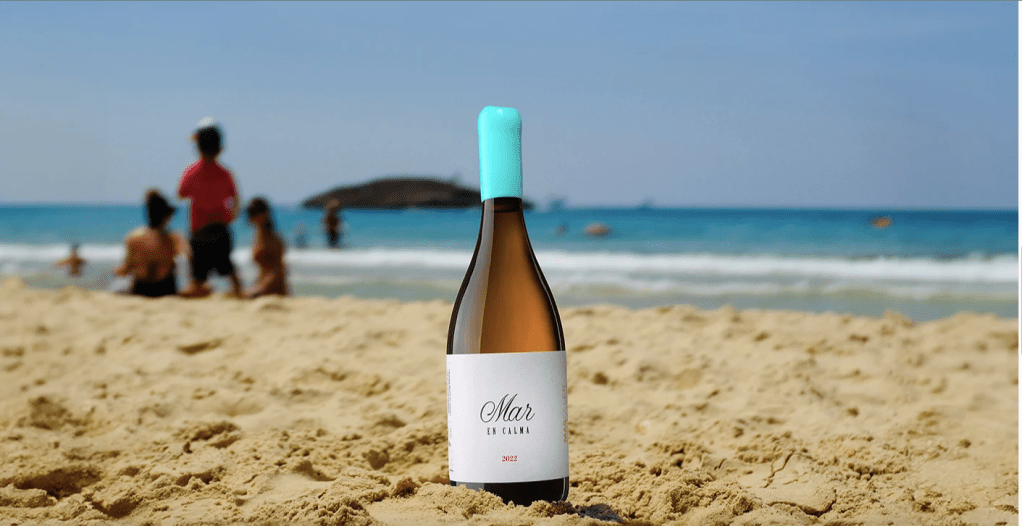
Malvasia and Picapoll blanc (think Picpoul de Pinet) grapes are manually-selected from the low-yielding vineyards El Pla and La Estación, before being gently pressed. The result is a clear, pale yellow wine with a green tinge, which is intense and elegant on the nose, with floral and fresh fruit notes and hints of citrus.
It’s fresh in the mouth, rounded and smooth, with a clean and pleasant finish. It’s also certified organic, as are they all.
Meaning ‘blue night’ in Catalan, this wine is made from Syrah and black Grenache grape varieties which are drained using gravity and no press, then being left to rest in tanks before bottling.

It’s an intense, clear purple wine, with a red rim and aromas of red berries and ripe blackberries. Experts say there is a back-note of Mediterranean flowers and fresh spices. It’s silky and ‘big’ in the mouth. The pleasant and fresh finish entices at least one more glass (which we were sadly denied)!
Another wine drained using gravity and no press, this one is aged in the bottle before going on sale. The Syrah, black Grenache and Cabernet Sauvignon grapes contribute to its appearance of deep garnet with purple rims. If you can keep it in the glass long enough, you’ll notice black berries, Mediterranean herbs, a hint of spice and a long and elegant finish.
The website says it’s “initially silky and succulent. In the mouth it’s jammy, accompanied by pleasant and rounded tannins. The finish is long and persistent”.

Not available for tasting as part of the tour, but if you don’t ask, you don’t get, we also tried the beautifully named Syrah de la Muntanya
Again, drained using gravity and no press, what probably made this wine my favourite of the day is the act that it’s aged in French oak and huge terracotta storage jars before it’s bottled and left to age more.
Think 100% Syrah, with the terroir producing a wine of ripe, red cherries, herbal notes and Mediterranean plants with an elegant sweet spice.
One of the things I liked about the wines were the labels – one of which had the outline of the Illes Medes on it – a nature reserve in the bay of L’Estartit, our second home and where myself and my companions (one British and one Dutch), have been visiting for 50 years.
I particularly liked the design of the Blau Nit (I bought two bottles) so, when home, I ordered a lampshade for it from Amazon and now have it as a lasting memory of a beautiful time, spent in lovely company.

Note, there are several companies selling rechargeable bottle lampshades, the majority of which cost upwards £25 each, plus postage from overseas. So if you want to keep a favourite bottle as a memento, shop around and you’ll find one, like below, for much less (mine was £8).
Guided wine tours at Mas Oller
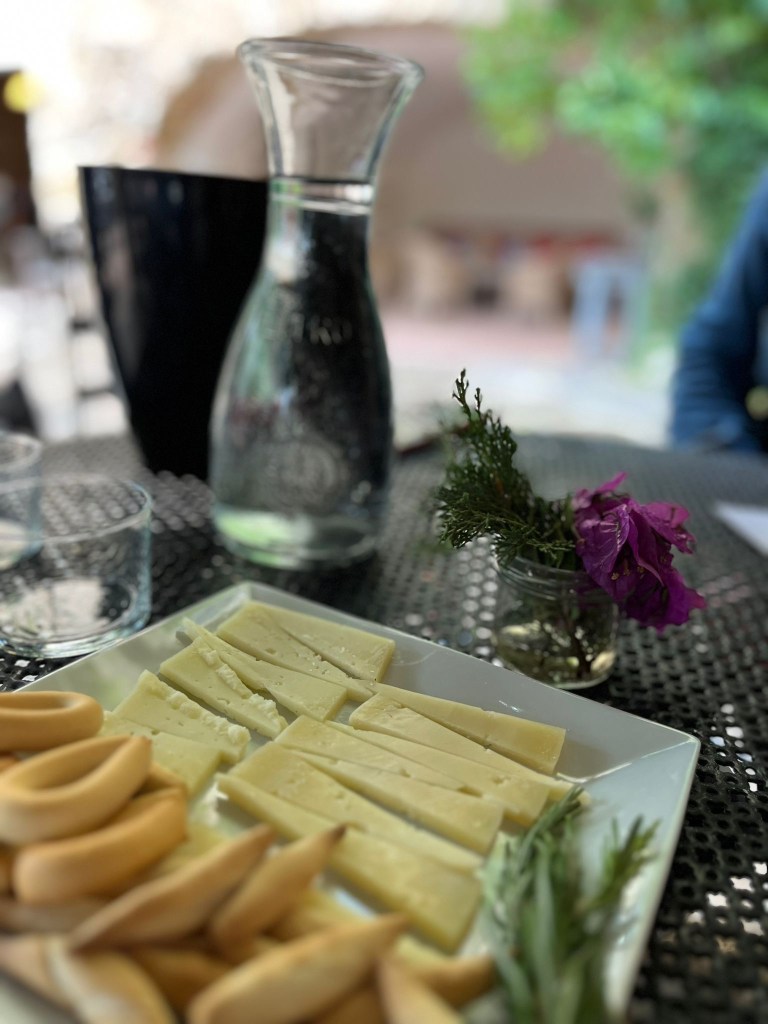
There are tours in Catalan and you can also gave guided tours in English (€25 per person), which included tastings of three wines. Don’t arrive thirsty. These tours are for sippers, not guzzlers, as we discovered.
All wines are available to buy from a lovely on site shop (I bought the Muntanya and Blau Nit).
Think before getting carried away with buying the wines, unless you intend to drink them before heading home or you have hold luggage.


 The Sun Lounger
Leave a comment