
There are many reasons to go to Seville, including the scent of orange blossom in its streets, the amazingly good value tapas, the impromptu flamenco performances, its plethora of palaces and, of course, the weather.
But for Candida Smith, director at Hunters Interiors in Stamford, Lincolnshire, it was her love of ceramics that drew her to the fourth largest Spanish city, situated in an area known as the ‘frying pan of Spain’. We ask Candy about her trip, taken with husband Gary at the end of February
What attracted you to Seville?
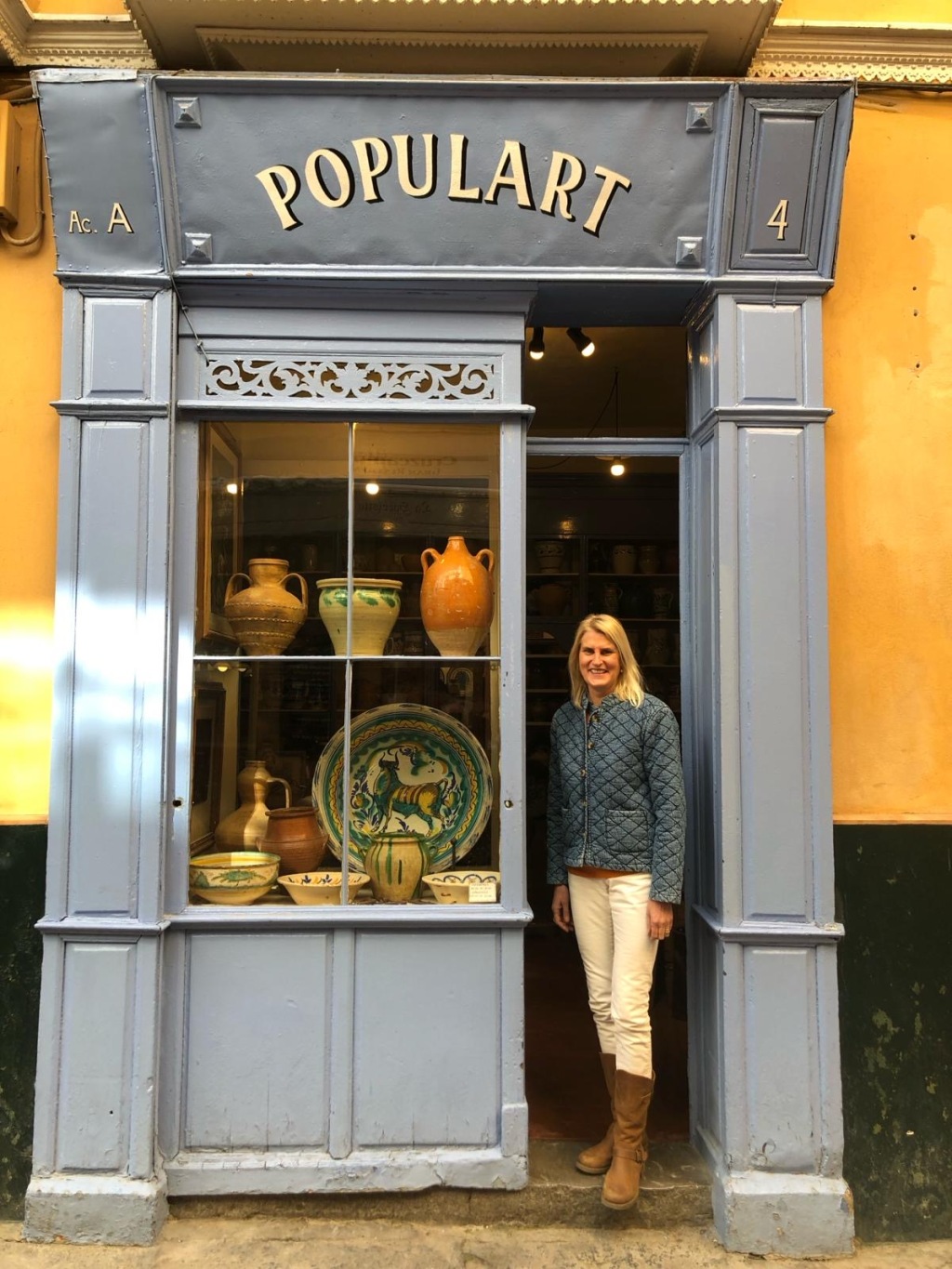
I had been thinking about visiting Seville for a while but what cemented it for me was seeing an image on gardener Sarah Raven’s Instagram account. She had posted pictures of an antique ceramic shop she had visited called Populart. I adore ceramics and, as we were going to Seville for my birthday, it was my call on the location, so later that week it was all booked, having searched online for our flights and hotel.
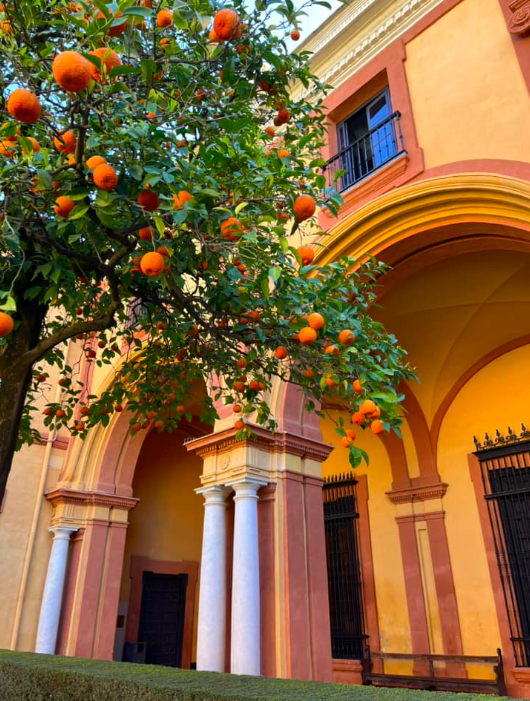
There are gorgeous gardens and parks throughout the city and streets are lined with orange trees, which produce just over 4 million kilos of oranges a year. Don’t be tempted to eat one. They are very bitter.
What did you like about the city?
I last visited Spain the 1990s, and that was predominantly for beach holidays. There was beauty everywhere we looked in Seville: architecture, colours, gardens, people. All of it was utterly charming.
What was the weather like in late February?
Seville is located in the Guadalquivir Valley, which is the area known as the frying pan, the hottest part of the whole country. The annual average temperature is 25.4 °C (78 °F) during the day and 13 °C (55 °F) at night.

We had three uninterrupted days of sunshine when we arrived. The mornings were chilly and a crisp seven degrees, but by lunchtime it was warm enough to sit outside to eat and, by the late afternoon, we were usually on the roof terrace of our hotel, with our trouser legs rolled up, sipping very good sangria and it was in the mid 20s.
How did you find the local people?
The inhabitants are known as ‘sevillanos’ or ‘hispalenses’, after the Roman name of the city, Hispalis. Everyone was very friendly and very beautiful!
What did you do in Seville?
We visited lots of historical sites, churches, palaces and gardens, and walked many, many miles, taking in the atmosphere of the city. Places I recommend visiting are:
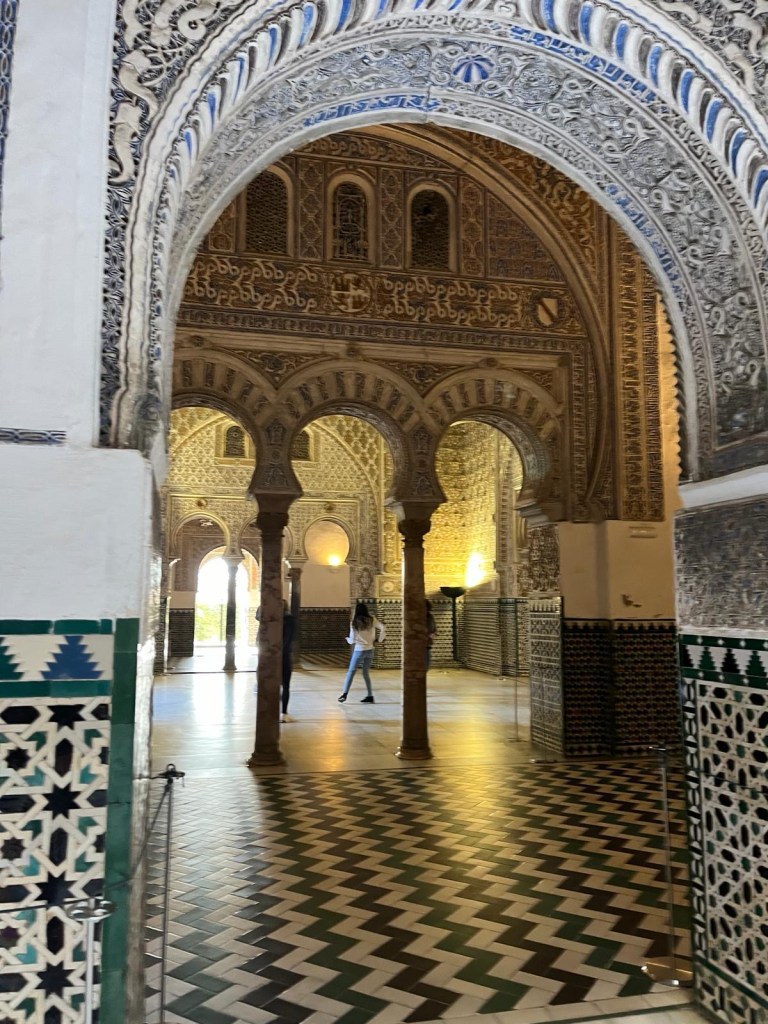
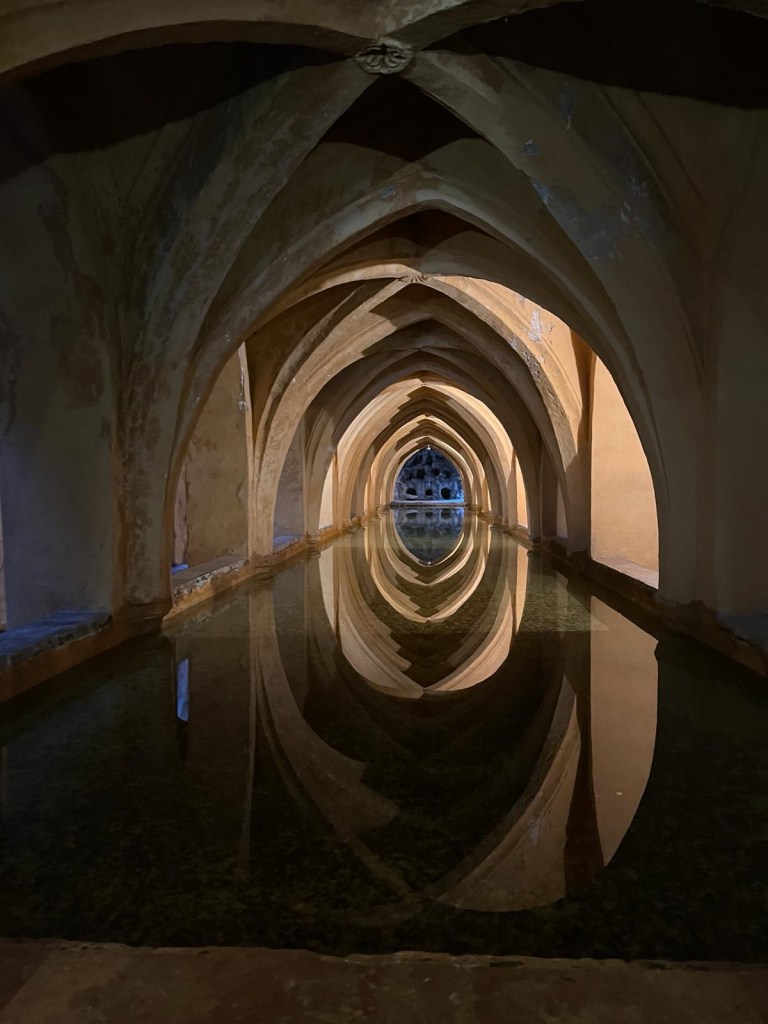
A UNESCO World Heritage Site dating back to the 10th century, it is the oldest active royal palace in Europe, having formerly been the palace of the Arab kings of Al-Andalus who ruled Seville in the middle ages. Within its walls, you’ll find several palaces and ornate gardens.
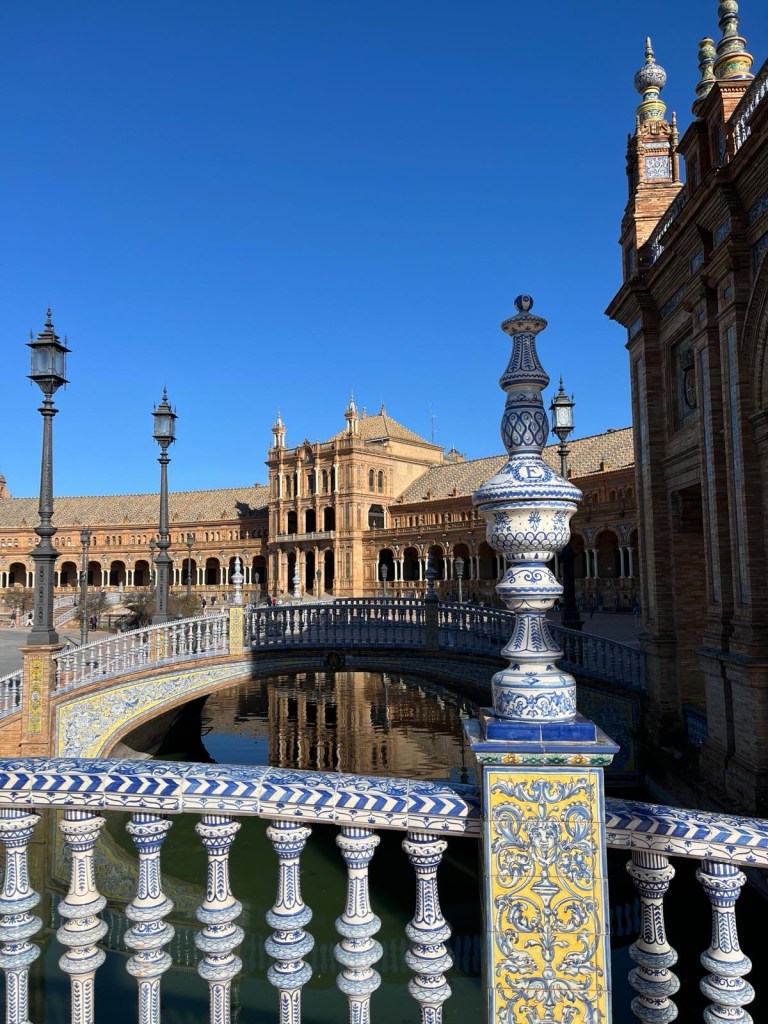
This lavish building was built for the Ibero-American Exhibition of 1929, although it seems older. It’s a large semi-circular brick building with a canal, balustrades and balconies. There are 48 alcoves with benches, one for each province of Spain, each with a relevant tableau and map, all designed on colourful painted ceramic tiles. You’ll see horse drawn carriages all around the city and many of them finish their tours here.
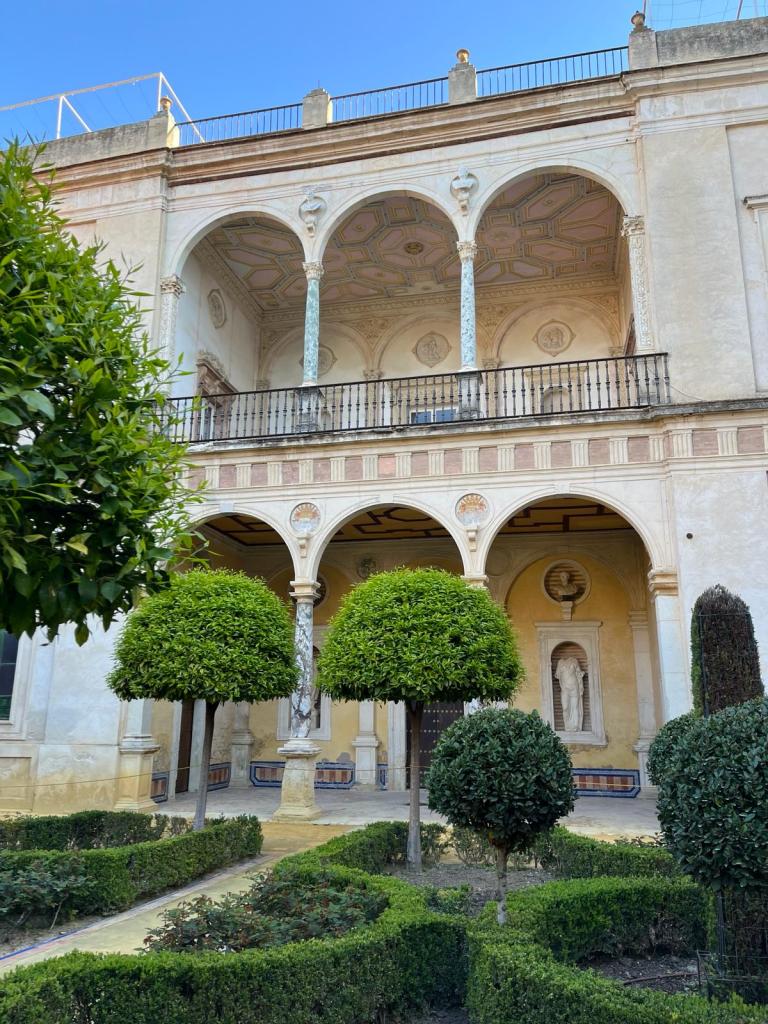
Another stunning, ornate palace which is the permanent residence of the Dukes of Medinaceli. It’s so beautiful, it’s is considered the prototype of the Andalusian palace.
There is often flamenco at the Plaza de España which is an incredible setting in which to see it being performed. Flamenco originated in Andalusia and Seville is a great place to experience the dance that came from the ‘gitano’ community, with deeper roots in Moorish musical traditions.
Where and what did you eat while you were there?
The food in Seville reflects its climate. Given the heat of the sun in the warmer months, cold soups such as gazpacho or salmorejo are often served as appetisers. You’ll find lots of Mediterranean seafood on menus, plus paella, of course.
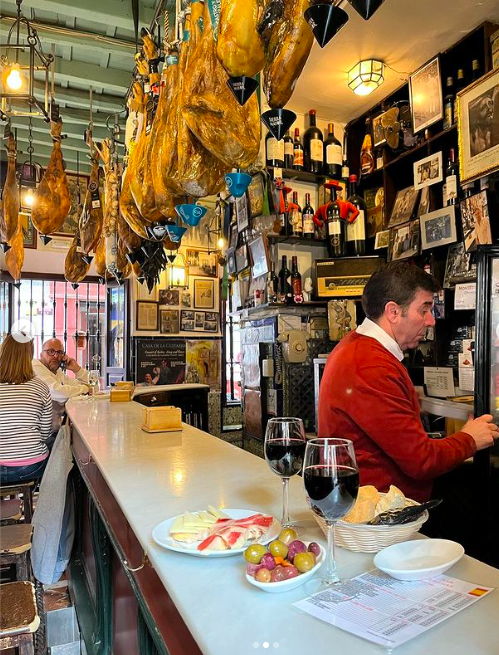
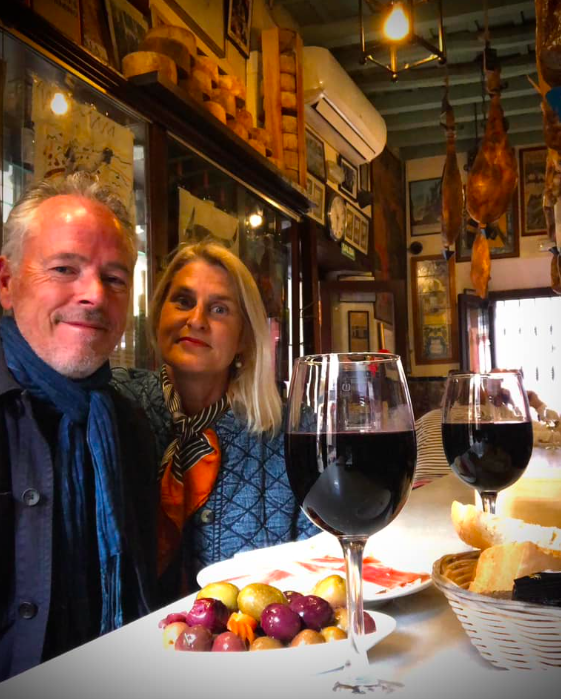
Think jamón ibérico, olives, bold red wine, sherry, manchego cheese, churros, braised pork cheek and ajoblanco – another cold soup, which is a rich blend of almonds, bread and a hint of garlic.
We ate some very good tapas and paella, and some very good, more formal meals. There are plenty of restaurants, bars and coffee shops to choose from to suit all tastes.
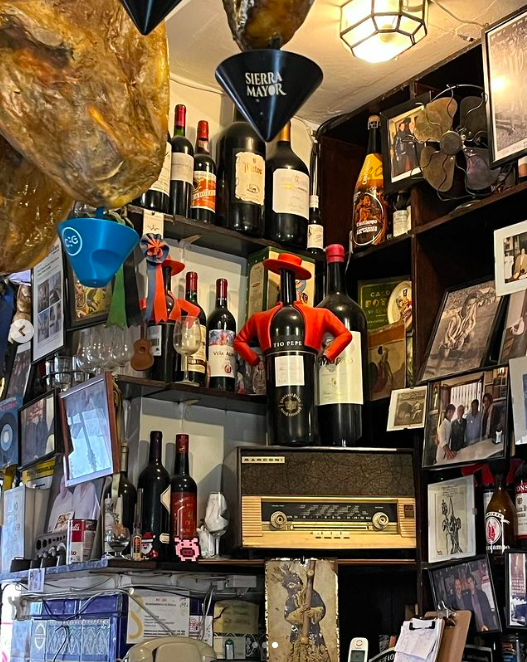
El Rinconcillo is a rustic tavern which dates back to 1670 and is said to be the oldest bar in Seville. Take a seat at the wooden bar or one of the upright wooden wine barrels, while admiring the magnificent ceramic tiles – some are over 300 years old – and wash ham and cheese down with a glass of sherry. Tapas are around €3 to €4 each and the serving staff will keep a tab of what you’ve had by writing down what you order in chalk on the bar.
Castizo serves authentic tapas but with a contemporary twist. As well as tapa stables, like patatas bravas and tortilla, there are creative dishes, such as cherry gazpacho with white prawn tartare (€12.50), fried artichoke with whiskey sauce (€5.50) and pork cheek cannelloni with chopped dried tomato, pistachios and mint (€12).
Found in the in the historic Santa Cruz quarter, Casa Robles has been in the same family for three generations, having opened in 1954. While rubbing shoulders with the occasional celebrity, enjoy dishes such as grilled foie with caramelized apple, mango and Pedro Ximenez ‘rocks’ (€24.50) or creamy rice with ‘fighting bull’s tail’ (€24), potentially delivered fresh from the city’s bullring. Vegans and vegetarians look away!
Do you have any tips or advice for people travelling to Seville?
Visit the main tourist attractions early. We would generally be amongst the first people in and be coming away when the crowds appeared. It’s so much nicer to see places without hoards of people getting in the way of your photos.
Where did you stay?

We stayed at the stunningly beautiful Hotel Las Casas de la Juderia, which which is actually 27 traditional-style Sevillian houses connected by various passageways and patios. It’s called Las Casas de la Judería due to its location in the old Jewish quarter and it’s close to all of the main monuments of Seville.
Its 134 rooms, which are all different, can be found in the various houses, linked by a maze of more than 40 patios, gardens, tunnels and streets.
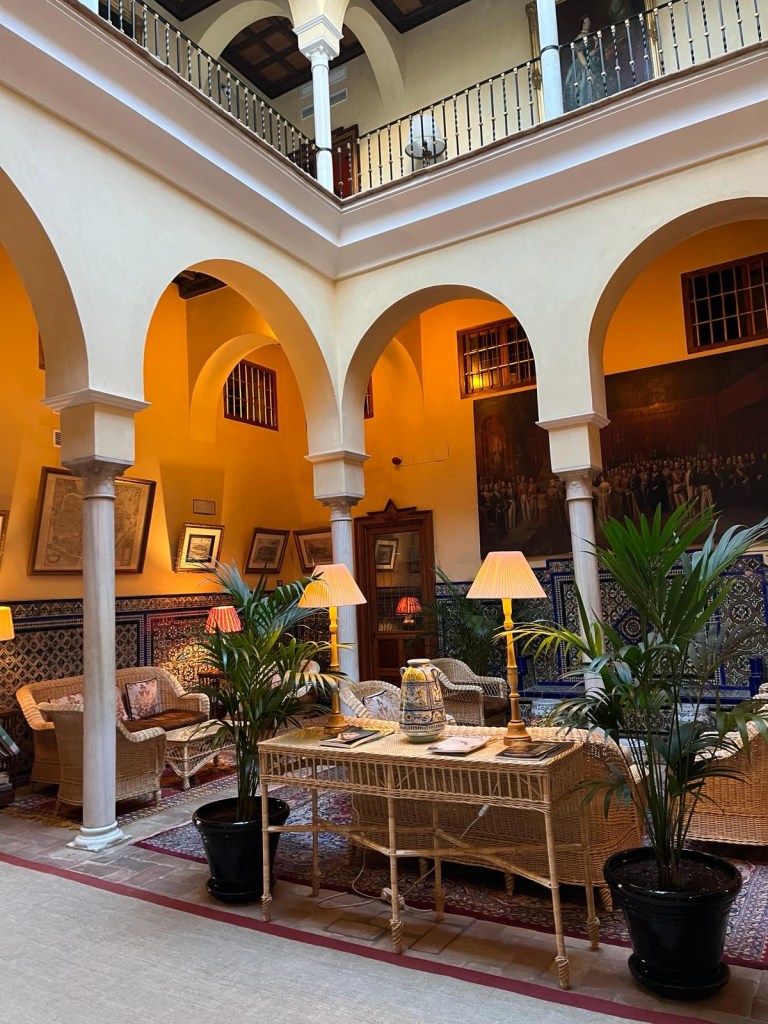
TV fans might have seen the hotel on the BB’s Anton and Giovanni’s Adventures in Spain, as it’s where they both stayed when they visited Seville. Rooms start from around £90 per night.
What were the highlights of your trip?
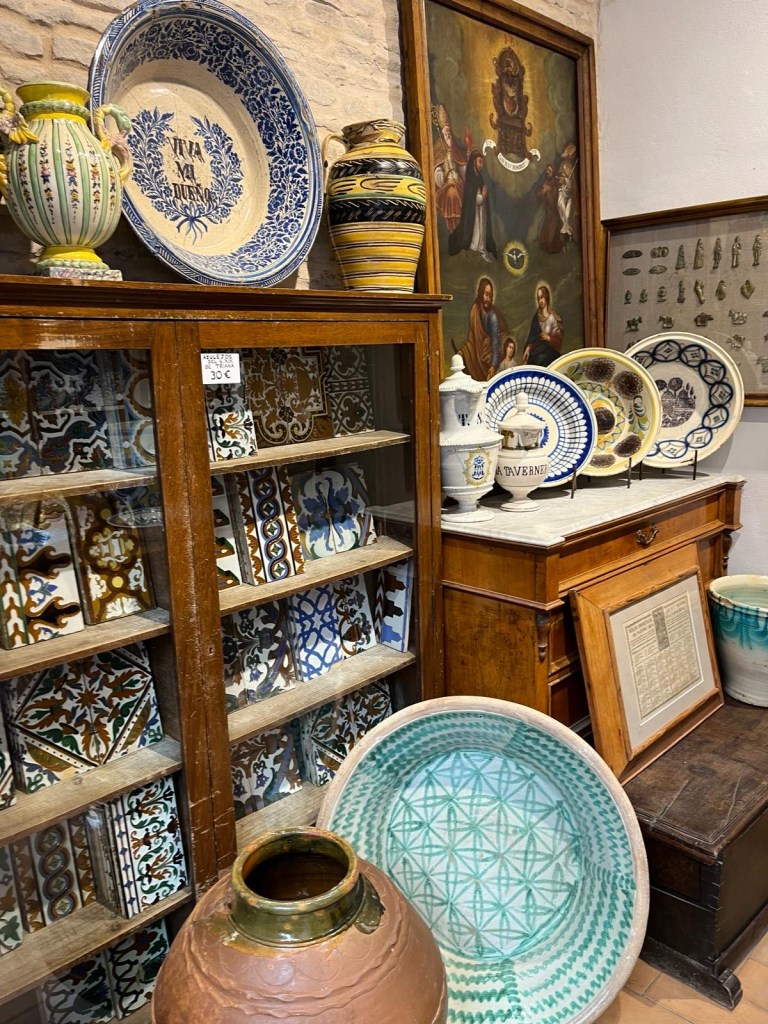
There are two absolute highlights for me: buying a beautiful antique bowl in the Populart ceramic shop and our visit to the Real Alcazar, which is such an incredibly beautiful palace.
Is it a relatively cheap city to visit?
We were very surprised at how reasonably priced it was. You can find tapas priced at between €2 and €4 each, €1.50 to €2 for a small beer and €2 to €3 for a glass of wine. Two people can eat well for €15-20.
In a previous blog post, about your trip to Sicily, you told us about your love for the Greek island of Paxos. How did Seville compare to Paxos?
I think we like it as much but Paxos is for relaxing and Seville is more vibrant and exciting. I can thoroughly recommend Seville and I have a feeling we will be back to discover more of it.
Candy and Gary flew from London Stansted Airport with Ryanair. Flights can start from as little as £29 each way.


 The Sun Lounger
Leave a comment