

There’s a term for people who visit France’s capital and have a sense of extreme disappointment, who feel that the city was not what they had expected. It’s called ‘Paris Syndrome’. I hate to say it but I’m starting to wonder if there is also such a thing as Barcelona Syndrome.
Don’t get me wrong, Barcelona has a special place in my heart. It was the first foreign city I went to as a solo traveller, when I was 18. I have some very dear Catalan friends who are from Barcelona and I know the city quite well, having been lucky enough to live like a local there for periods of my life.
Back then, we would roll into town for dinner, never deigning to eat before 10.30 or 11pm, wander around the El Born area at night, which was then ‘up and coming’ and relatively unknown to tourists, getting absorbed by its winding, narrow alleyways, with the pavements still hot from the day. We’d always take the stereo out of the car, for fear of it getting broken into and pinched, but the city felt magical and special.

I remember walking on my own along La Rambla, past the stalls selling live birds and huge bunches of flowers, the street heaving and noisy with local people out shopping and chatting. I remember a tall, bronzed man walking by wearing nothing but trainers and a baseball cap, and nobody giving a damn (public nudity isn’t illegal in Spain). That kind of summed up Barcelona. It was a relaxed, hip, Bohemian city, with such history and beauty.
Like any big city, you took your precautions and looked after your belongings. There were always stories of thieves making off with people’s bags when they put them down to take photos of the cathedral, but you wouldn’t do that in any other European city and expect them to still be there when you turned back around, so why would you do so in Barcelona?
But the last two times I’ve visited, I felt the city had gone massively downhill. A shop selling knock off football shirts had replaced the barber shop my friend used to go to, there were fewer authentic stalls along La Rambla, which has always felt like the spine of the city to me, and there were more ‘tat’ shops and others selling penis-shaped donuts on its fringes instead.
There have always been clouds of weed smoke in some parts of the city, but there was evidence of much more of a drug culture now, many gorgeous old buildings were groaning under thick graffiti, it felt dirtier and slightly menacing in places and it was just so very, very full of tourists. It was frantic, like it has lost its way a little.
In the past, if asked, I would always vigorously recommend Barcelona as a must-see place to go for a city break. Rome and Barcelona have long been my favourite European cities, but Barcelona has always been the most special to me. I was taken on a tour of the city by local friends when I was young and loved it. The baking hot streets were dripping in history; it was just so beautiful and then there’s the food, wine and the passion the Catalan people have for their land.
That passion is still there, undoubtedly. But, the hoards of tourists and the over popularity of the city have, in my opinion, taken their toll. People flocked there for hen and stag parties, lured by the cheap flights and abundance of accommodation. Would I recommend it so enthusiastically now? I don’t think I would, sadly.
Is Barcelona suffering from over-tourism?
Ask a local person if they feel that the city is suffering from over-tourism and they will, almost certainly, say yes, and with it comes hugely-inflated rental prices, which have forced many locals out of the centre.
The same could be said about London and many other European cities, I guess, but it’s become so bad that, seeking to protect rents and local identity, the Catalan capital was among the first in Europe to ban new hotels in the centre and restrict short-term room rentals. It also shut around 8,000 unlicensed tourist apartments.

You can’t blame a person for wanting to make money, especially not in this economic climate, but turn all of a city’s apartments into holiday rentals and a place loses its identity and character, and becomes nothing more than an historical theme park.
Tourism is big business. Spain was the world’s second most-visited country in 2019, after France, with tourism accounting for 12% of the economy. Barcelona, although a capital city in its own right (#viscacatalyunalliure), it is also Spain’s second largest city, with 1.6 million residents. It received around 30 million visitors, including day trippers, the same year.
When the pandemic hit, some local people probably breathed a sigh of relief at the empty streets and beaches…. if it hadn’t been for the drastic drop in income.
Authorities have also introduced new measures to tackle problems with large tour groups, including banning the use of megaphones. They’ve cracked down on cannabis clubs too.
While strict, I personally think these are good measures to take and, judging by my last visit, they are hugely needed.
Is Barcelona safe to visit?
I read one local tour company’s website which advised avoiding places like Las Ramblas, Raval, El Born and areas around all of the major tourist attractions altogether, which I think is utter nonsense. Some areas are seedier than others, for sure, but Barcelona has long had a problem with bag snatchers and pick pockets. But, then again, my sister had her bag pinched while she was having lunch in Florence.
Wherever you are, in whatever part of the world, you should always be mindful of your belongings and not flaunt them, therefore making yourself an easy target.
As a kid, I think Barcelona was the first place that I really became aware of beggars. When I took my own children there, several years later, I remember seeing the people begging on the steps of the Gothic cathedral, several of them in wheelchairs, seemingly having missing limbs.
But when the cathedral closed, they got up and checked their mobile phones, walking around as they caught up on messages, having miraculously found the ability to walk. There are scammers everywhere and you need to take us many precautions as you would in Barcelona with any other city.
Yes, the bottom of the Ramblas late at night can feel a bit shady, but so are lots of other places in capital cities. It’s a sad fact of life.
Just be mindful and be aware. I know two people who’ve been mugged/scammed on the Rambla. Beware of groups of people coming up to you, asking for directions. Turn around and walk away.
Don’t carry cash on you. Don’t stand in the middle of a street, looking at your phone and pointing. You might as well have an arrow pointing at you saying : “I am a tourist…take what you like.” Have a cross-body or bum bag facing forward and don’t put your phone in your back pocket. Don’t show your ID, passport or bank card to anyone who purports to be an official, even if they flash a badge at you. In other words, just be street smart.
While thieving may be fairly common, I have to say that I’ve never felt physically threatened or afraid in Barcelona. Despite the negatives, there is so much that’s positive.
Barcelona was also the first place I noticed gay people walking hand in hand, several years ago, openly showing affection for each other, which is something I hadn’t previously seen in London, for example. In fact, Barcelona has a reputation for being one of the most LGBT-friendly cities in the world.
Is there much graffiti in Barcelona?
Despite graffiti being illegal in the city, you will see it everywhere, even on the oldest and most beautiful old buildings, like several European cities. Graffiti can be stunning, but it can also be out of control.

I remember one of my favourite restaurants, the emblematic Can Culleretes – the oldest restaurant in Barcelona and, I think, the second oldest in Spain – posting on its social media about its exterior having been illegally decorated by vandals yet again. The pure exacerbation of the owners was evident in their post.
The graffiti culture is strong here, and there are so many walls, especially in the El Raval neighbourhood, that are covered in legal graffiti. Making it illegal doesn’t seem to have done anything to stop ‘artists’ doing their thing.
In four years, the local council reported 1,613 cases of “visual defacement of the urban environment”, and an average of €4 million was spent to erase each half-square kilometre of graffiti.

Fines in Barcelona for graffiti range from between €300 and €500, apparently, and the amount doubles for repeat offenders. Apparently, London, Berlin and Madrid have more graffiti, though. When you visit – and I do recommend that you do – you’ll see that the fines have done little to put people off!
Barcelona is awash with great hotels and restaurants. Below are some of my favourites.
The best places to stay in Barcelona:
I’d hoped to add three hotels here of differing price ranges, but I can no longer find a website for one of my favourites, Hotel Banys Orientals in El born, so fear it may have closed, which is a terrible shame. It was a lovely hotel which offered great value for money on a main artery of this part of town. It used to have an amazing restaurant downstairs, which I know closed, but it’s sad to hear the hotel may have gone now too.

If you have a big budget, Hotel Arts Barcelona is a landmark, luxury hotel, right on the manmade beach, offering panoramic city and beach views. It’s a high rise which can be seen from almost wherever you are in the city and while not a beautiful, historic building, step inside and you are absorbed into its luxury.
I’ve held press events in this Ritz Carlton hotel and stayed here for leisure, and loved it each time. If possible, get a room facing the sea with access to the club level, where you can sit and drink all day, with the occasional snack, totally for free. The views from up here are sublime, as they are in the lofty spa.
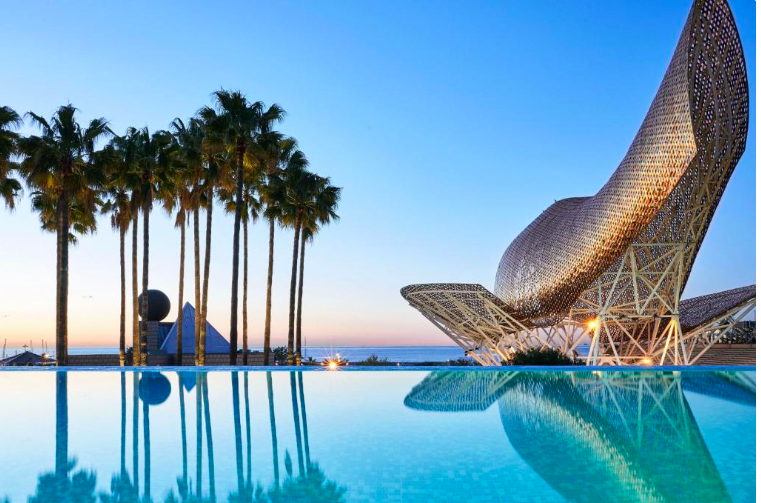
It’s a bit out on a limb here, being away from the city centre, but get a taxi to the Rambla or walk along the promenade, watch the muscle-bound work out on the beach gyms and pop into one or two of the boujee bars on you walk into town.
Breakfasts are magnificent and endless! Service is spot on. Three nights in March 2024 start from €1,275.

Another place I’ve stayed for both work and leisure is Hotel 1898, situated on La Rambla, although access is just around the corner, now. The first time I stayed here, I don’t think the hotel had been long open. Little has changed at this city centre four star and the gorgeous roof terrace with pool still offers peace, calm and hip luxury, high above the hubbub of the streets below.
After having held an event here, on my next visit, they upgraded my room, so I had my own butler and a private pool, which was utterly fabulous. Rooms vary from quite small to large, some with vast terraces. The breakfast is highly recommended in this former colonial headquarters to the Compañía de Tabacos de Filipinas.
I love this hotel and highly recommend it (and have done so to various friends who’ve all loved it too). Three night in March 2024 start from €713.

There are many hotels with rooftop pools now in Barcelona and several swanky ones down by the beach. I have stayed in many, but the above two (plus the missing Banys Orientals) remain my favourite.
Where to eat and drink in Barcelona
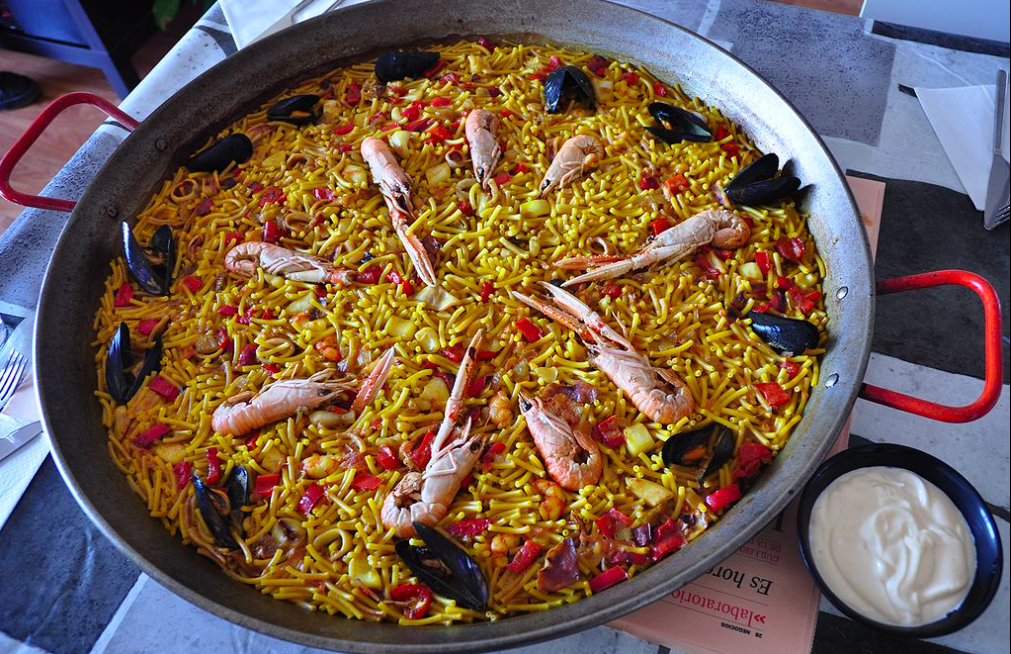
Catalan food is stunning and satisfying. Try dishes such as esqueixada de bacalla (shredded salt cod), arros negre (black rice), fideua (a paella or noodles), bacalla amb samfaina (cod with a local variant of ratatouille) canelons (canalloni), pa amb tomaquet (bread rubbed with garlic and tomato) and calcots (a larger spring onion, best cooked over charcoal).
I have a weakness for ‘croquetes’ and you’ll find lots of delicious variants, not just chicken or ham. You’ll also find Basque ‘pinchos’ all over the city. They’re not from the area, but they’re still yummy.
Tapas are ‘tapes’ in Catalan. They abound and are delicious. Learn a word or two in Catalan and it will be appreciated.
Here are a few of my favourite places to go:
There are many amazing eateries to choose from, including the sublime Enoteca Paco Perez, breath-taking Cocina Hermanos Torres and the understated Gresca. Barcelona wants to shed the skin of cheap getaways and reposition itself as a gastro destination, which it has all of the ingredients for.

While in town, I like nothing more than to wander into El Boqueria market, which is as full of tourists as it is of people food shopping, and head towards the back and one of the tapas stands. Items on the menu might be a little expensive, due to the constant flow of tourists, but it’s fresher than fresh and stunning. The market has been there since the 1200s, situated just off La Rambla. The heady smell of paprika and then fresh fish, as you wander through, is overwhelming and delicious.
Cuines de Santa Catarina is a collection of eateries in a lesser known and more local food market, away from La Rambla. They serve tapas, mediterranean and global dishes in a hip venue, with an open kitchen in the food market itself, so you can be sure the food is super fresh.
Good, modern tapas can be found at Bar Lobo, just around the corner from Hotel 1898. The thin slices of fried aubergine were simply mouth-watering.

Can Culleretes is a landmark restaurant which has been around since the18th century. The walls are plastered with photos of celebrities who have been here and you’ll find robust, Catalan cooking in traditional surroundings, slap bang in the centre of the city.
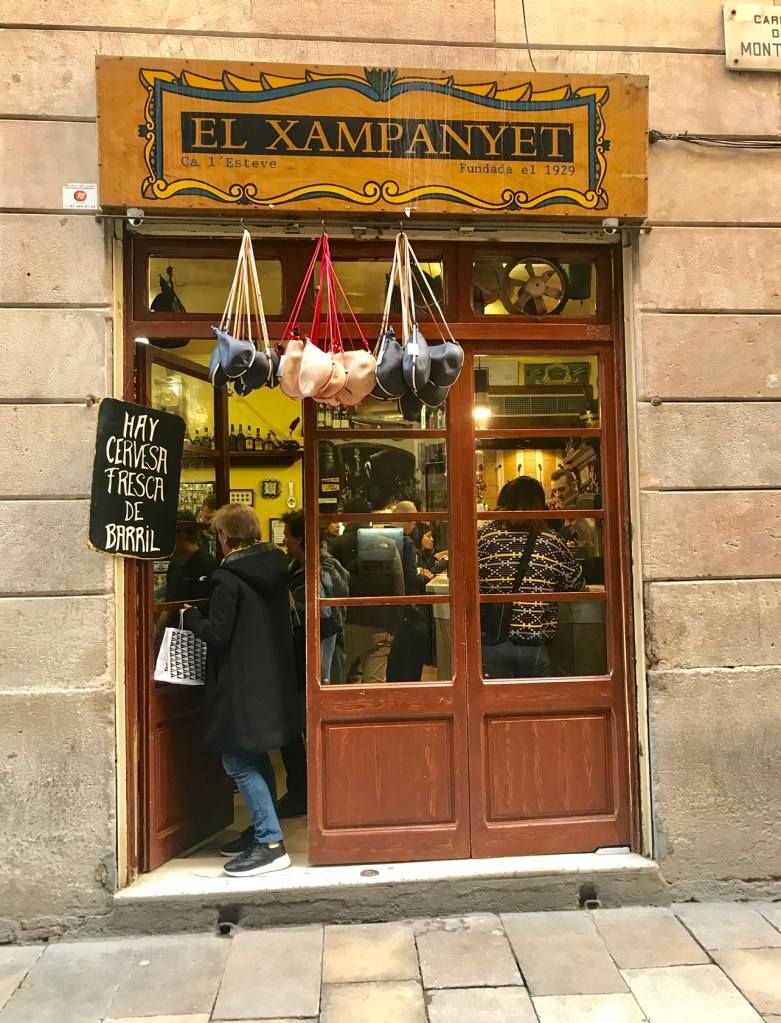
No reservations are possible at very traditional El Xampanyet, a tiny bar which specialises in anchovies, where you’ll have to fight for a seat and maybe settle for standing outside instead. I hope places like this never disappear from the city, as it is simply perfect. There are tapas on the bar and beakers of cava. We got three beakers and two tapas for €8. Be prepared to be packed in like sardines and make friends in this most intimate of atmospheres.
What to do in Barcelona
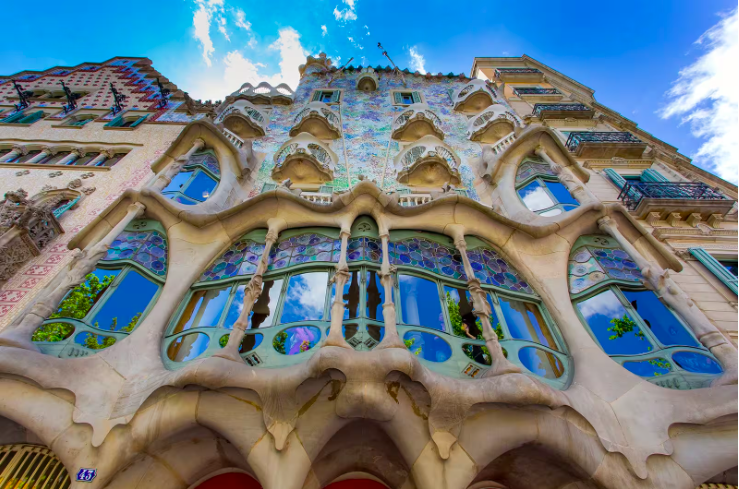
There is so much to do and see. Gaudi is a main attraction here and you have La Sagrada Familia, Parc Guell and much more to see. Be warned that you need to book in advance or you simply won’t get in.

My favourite thing is to wander around and see the sights from the street and then potter around and soak up the warmth from the streets, stopping here and there for something to eat or drink and people watch, of course. The best view of Sagrada Familia for me is from the park opposite, where you can see the reflection of the wonky spires in the lake at night, set against an ink black sky. Simply stunning.
I love Barcelona and had to think twice before saying anything critical about it, to be honest, as it remains very special to me.
That said, the city and I are having a break. I will go back, but we need some space.


 The Sun Lounger
Leave a comment