
Prior to heading to south Spain in January, I did an internet search to check what the weather was like at that time of year:
What’s the weather like in southern Spain in January?
“January is still a good time to visit Spain if you’re looking for warmer temperatures than the freezing winter back home,” said one.
Most crucially: “Snowfall in Malaga, Spain, is exceptionally rare due to its subtropical-Mediterranean climate. The city, located on the Costa del Sol, experiences mild winters with average temperatures ranging from 13°C to 18°C (55°F to 64°F). In fact, the last notable snowfall in Malaga was in 1954,” said the other.
So, we packed a few layers and flew to the Malaga area for a long weekend, expecting warmer weather than in the UK, which we did get down by the coast.

My partner has been toying with learning to play golf, so, as a birthday surprise, I had booked a golf lesson for him at Anantara Villa Padierna Palace Benahavís Marbella Resort (they need to find a shorter name), where we also stayed.
Best hotels in Estepona
Checking into the Anantara Villa Padierna (in short sleeves and sunshine), it was clear this was low season, as the place was almost empty which meant we got an amazing room upgrade to a palatial suite.

This hotel is stunning. It’s old school, classic decadence, with Moorish tinges, a palatial vibe and every mod con. There is a vast atrium with magnificent flowers and the whole building smells delightful. It’s set back from the coast and reached via a road through an affluent residential area.
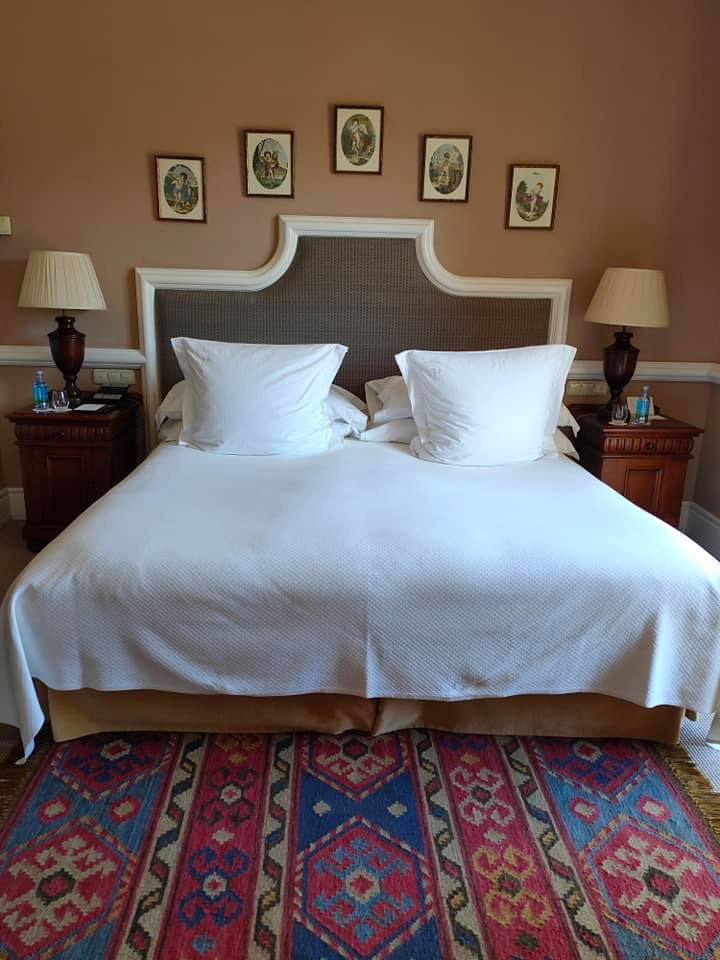
We were shown to our suite, a main feature of which was the enormous terrace, which I assumed was communal, due to its size. But no, it was all for us! The Obamas have stayed here (in a private villa, not the suite we had). The bed was almost big enough to lose someone in!
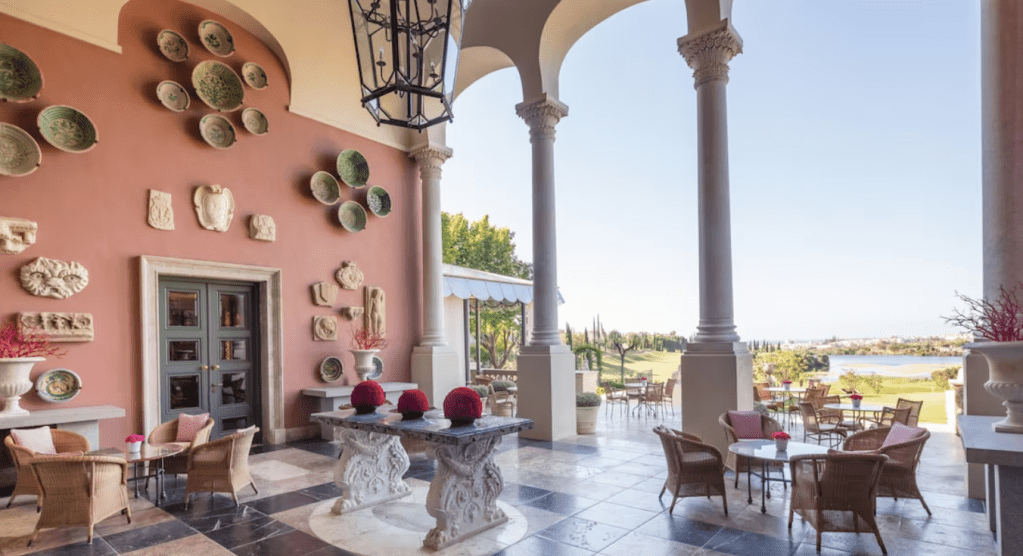
Breakfast here was wonderful too (and I presume can be taken outdoors, weather dependent). Four nights in a double room for two people in January costs about €1,400 (excluding flights) with that magnificent breakfast included.
Golf lessons in Spain
Anantara Villa Padierna Palace Resort has three world-class golf courses, offering some of the finest play in the Costa del Sol, I am led to believe. There’s also a large and luxurious spa, so if one of you doesn’t play golf and the weather doesn’t lend itself to lounging by the pool, one of you can chill for however long a round takes (several hours, I understand).

The Tramores Golf Academy by Michael Campbell was a couple of minutes’ drive away, still within the hotel grounds, and was warm and friendly, giving my partner his first experience of golf – and told him he was the new Tiger Woods!
We hired a car (essential if you want to go exploring), although we did also take a few Ubers, which the area is well-served by.
What’s Puerto Banus like?

If sitting in an Irish bar a few doors down from a Gucci, Versace or Fendi store, enjoying a burger and Guinness whilst looking out over luxury yachts and spotting the occasional Rolls Royce or Ferrari cruise by, Puerto Banus is for you.
It wasn’t for us, which is why we finished our Irish nachos and headed for tapas and Ronda, high in the mountains, an hour from the coast. BTW, I hate it when people refer to somewhere/something being really ‘Spanish’. While I get what they are trying to say, who are we to say what we define as ‘Spanish’ and what we don’t?
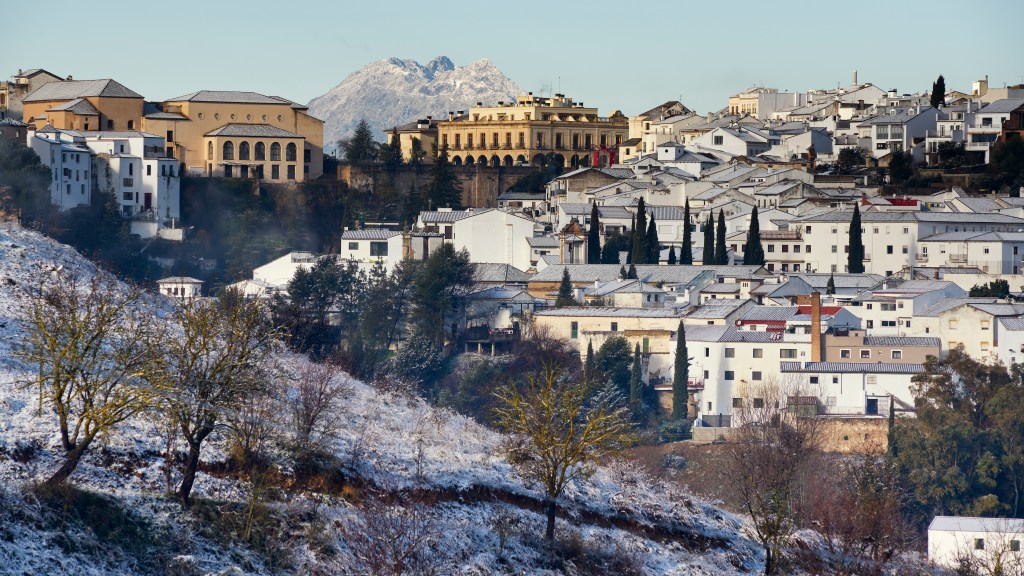
And I am so pleased we decided to venture forth…despite going from shirt sleeves and sunshine in Puerto Banus to snow flurries up there in the hills.
What’s Ronda like?

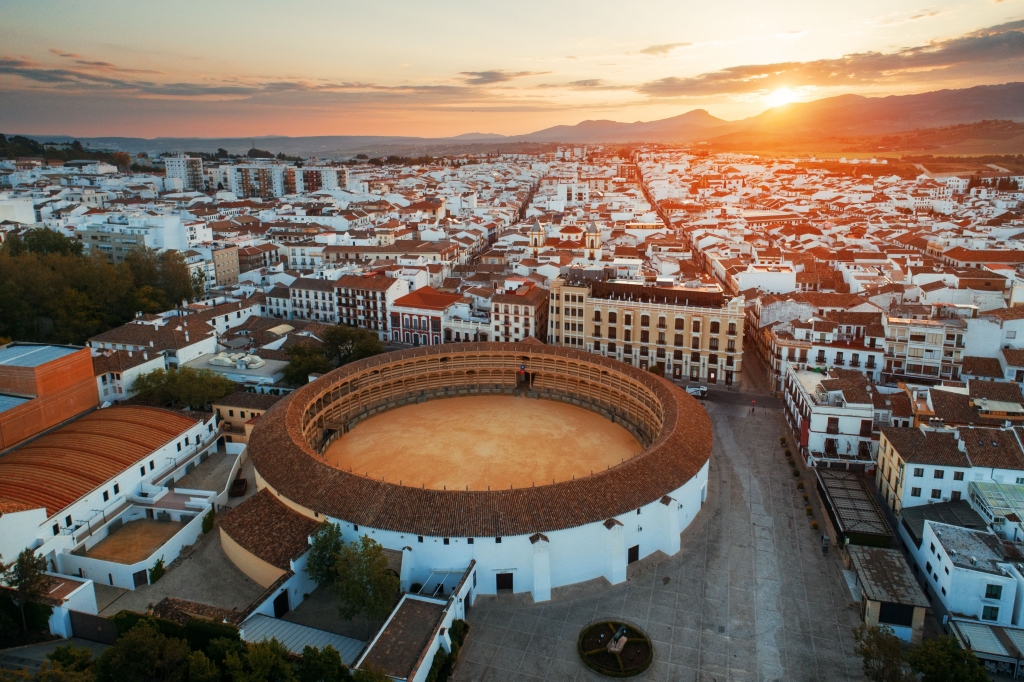
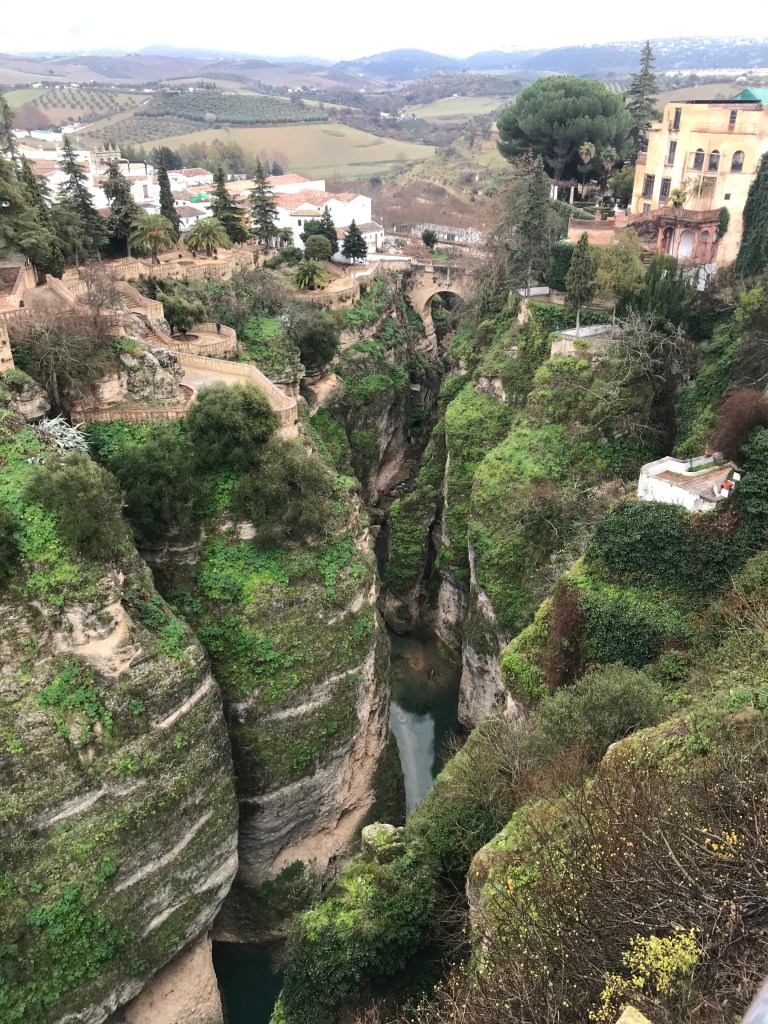
Driving through the hills (a steep incline in places), Ronda is a complete juxtaposition to PB. It’s one of the oldest cities in Spain and the third most-visited location in southern Spain, although in January it was fairly empty.
As a city, it’s divided in two by the 100m deep El Tajo gorge and the spectacular bridge (a dramatic path takes you down to the bottom of the gorge).
While not for all, Ronda is the birthplace of the modern Spanish bullfight. It’s here that in the 18th century, Francisco Romero faced a bull on foot for the first time, rather on horseback. Like it or not, the bullring is a major landmark in the city. We didn’t want to see a bullfight (and can’t really believe that it’s still a thing), but we did visit the bullring itself.

The elegant bullring building itself dates from 1785 and is Spain’s oldest ‘plaza de toros’. It was designed by Martín de Aldehuela, who also built Ronda’s stunning new bridge (which has nothing new about it).
We wandered through the streets, enjoyed some tapas and shopping, the warmth of the local people and the lovely architecture, including the Moorish king’s palace and Arab baths.
We didn’t have time to visit Reservatauro, a nature reserve where bulls and Spanish horses are raised, but I would love to go back and do so.
It was en route to Ronda that we hit the snow storm, which continued as a flurry all the way up to the mountain-top city and meant we had to take shelter, totally inappropriately dressed, in a tapas bar in Ronda until it passed.
Where to eat in the Malaga area?

There are several restaurants tucked away in and around the hotel, including Spanish, Lebanese, Japanese and a seafood restaurant amid swaying palms down on the beach, reached by shuttle bus (seasonal).
For my partner’s birthday, we ate at the La Veranda Restaurant inside the hotel, where the menu is impressive and caters for vegans/vegetarians too. No, it’s not cheap, but it’s one of those memorable, lifetime experiences, where service is exemplary.
Starters include Almadraba tuna belly with yellow pepper sauce (€28), grilled white asparagus (€26) and lobster salad with blue tomatoes and strawberry vinaigrette (€49). Main courses include scarlet shrimps from the Huelva region with asparagus, crispy bacon and fried egg foam (€49) and roasted lamb shoulder with grilled ‘gizzards’ and pickled eggplants (€45).
Two restaurants we really enjoyed and would recommend were Restaurant Los Naranjos in Marbella and Rosatti on the harbour in Estepona.

The former is slap bang the historic old town of Marbella, on a square jam packed with orange trees, heaving with fruit. Due to the time of year, we ate upstairs, indoors, in the beam-filled dining room, overlooking the pretty square.
On the menu were robust flavours, including paellas, tapas, meat and fish. While we ate there in January, check when it’s open as many restaurants close over winter and I saw that this restaurant is now closed from November to February (no prices available on its website)

Rosatti is a Mediterranean Restaurant at the heart of Estepona Marina, with sea views from the terraces. The menu includes salt crusted fish, grilled langoustine, risotto, paella, duck and quail. Again, I couldn’t find prices on the menu, but don’t remember it being over-priced (despite the ‘premium’ views) and the service was utterly lovely.
In my opinion, winter is a great time to visit the Costa del Sol, where they boast 300 days of sunshine per year. Just remember to pack something warm if you go on one of the 65 days that the sun isn’t shining.


 The Sun Lounger
Leave a comment