
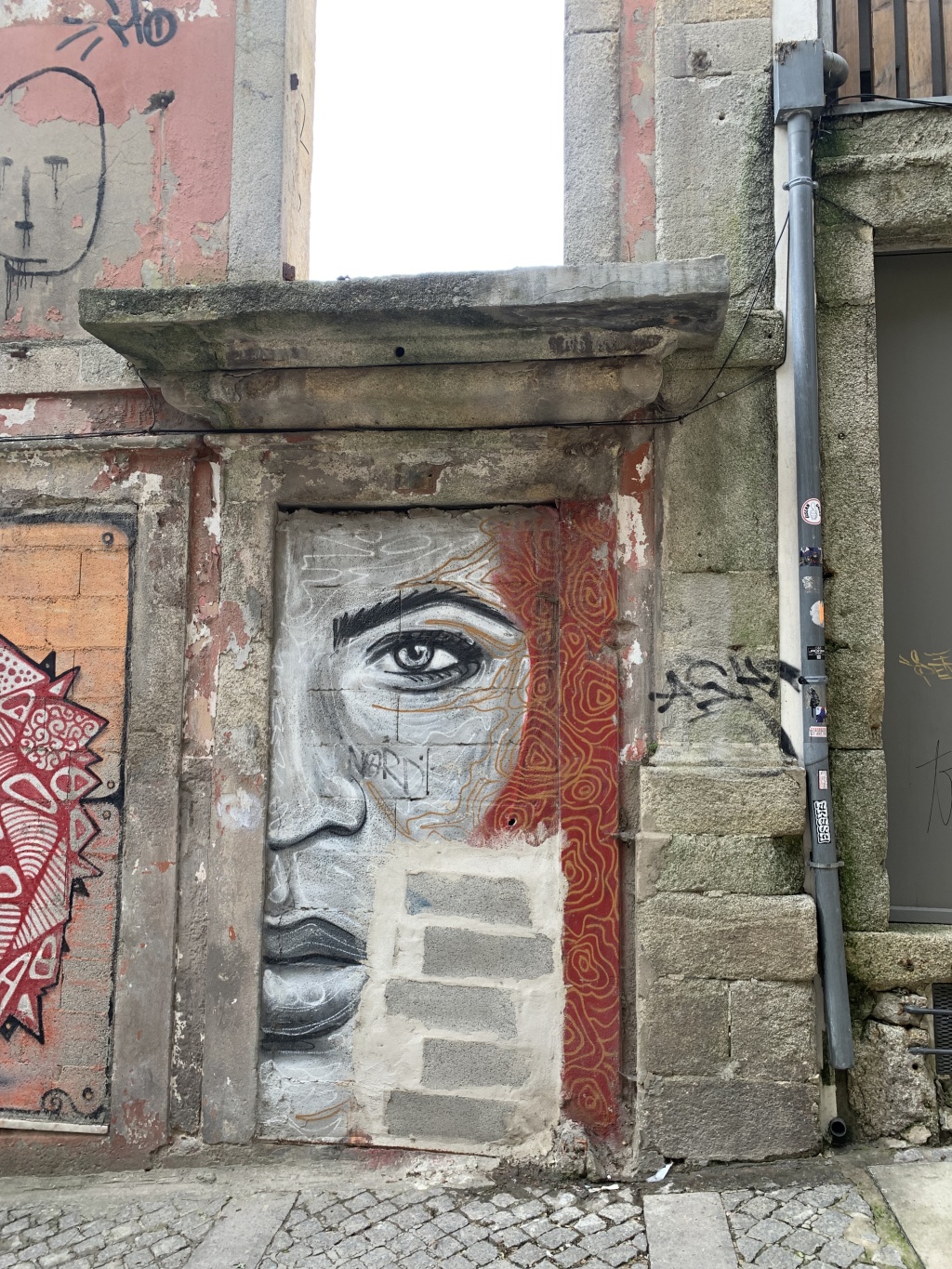
A very jolly taxi driver in Porto told us that a common belief among the older generation in that part of Portugal was that wine was a medicine which should be revered and its magical properties could cure almost anything.
You were unwell, you had some wine. You felt down, you had some wine. Not much, just a little, but often.
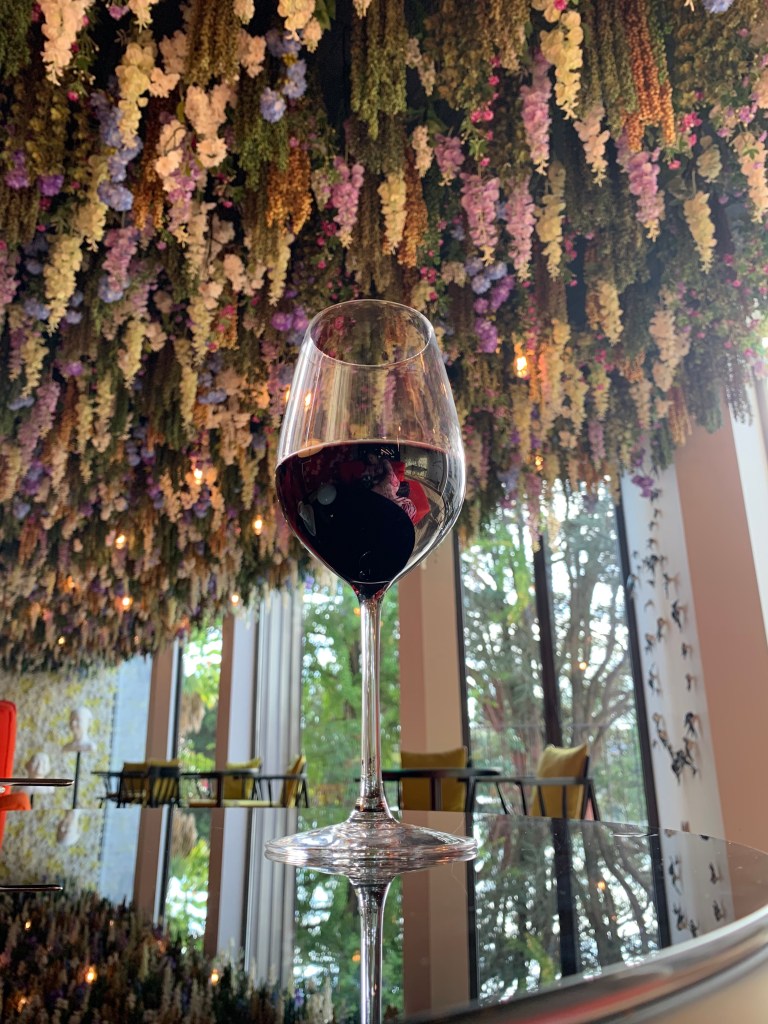
That was the reason, he said, why his grandfather, still in his 90s, was able to tend his smallholding himself, something he attributed to the fact that everyday for breakfast he ate a little bread with wine and sugar.
He also said that because of this, Portuguese people are happy and it’s one of the safest countries in the world to live.
I googled it and, according to the 2022 Global Peace Index, Portugal ranked as the sixth safest country in the world. It also has one of the lowest crime rates in Europe. Is it a coincidence too that the Portuguese are apparently the biggest consumers of wine per capita globally?
It would appear that wine solves everything. Now this is a belief I can get behind.
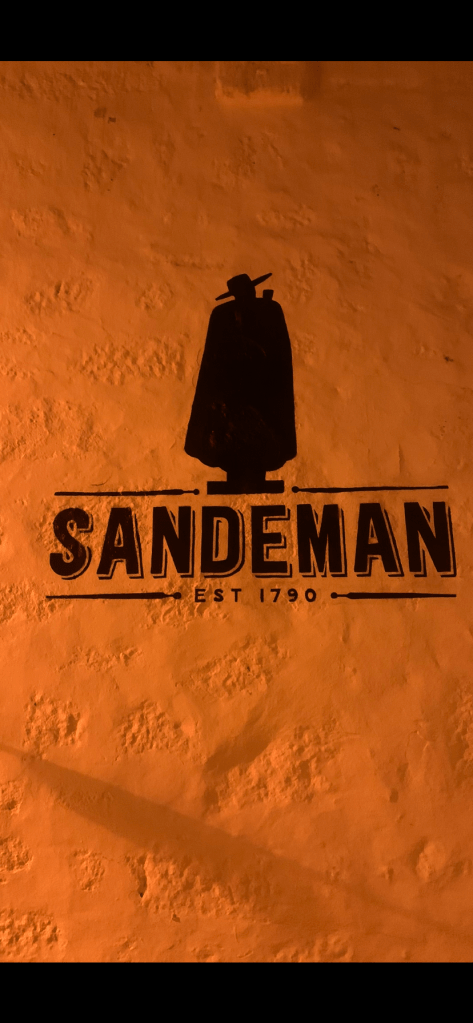
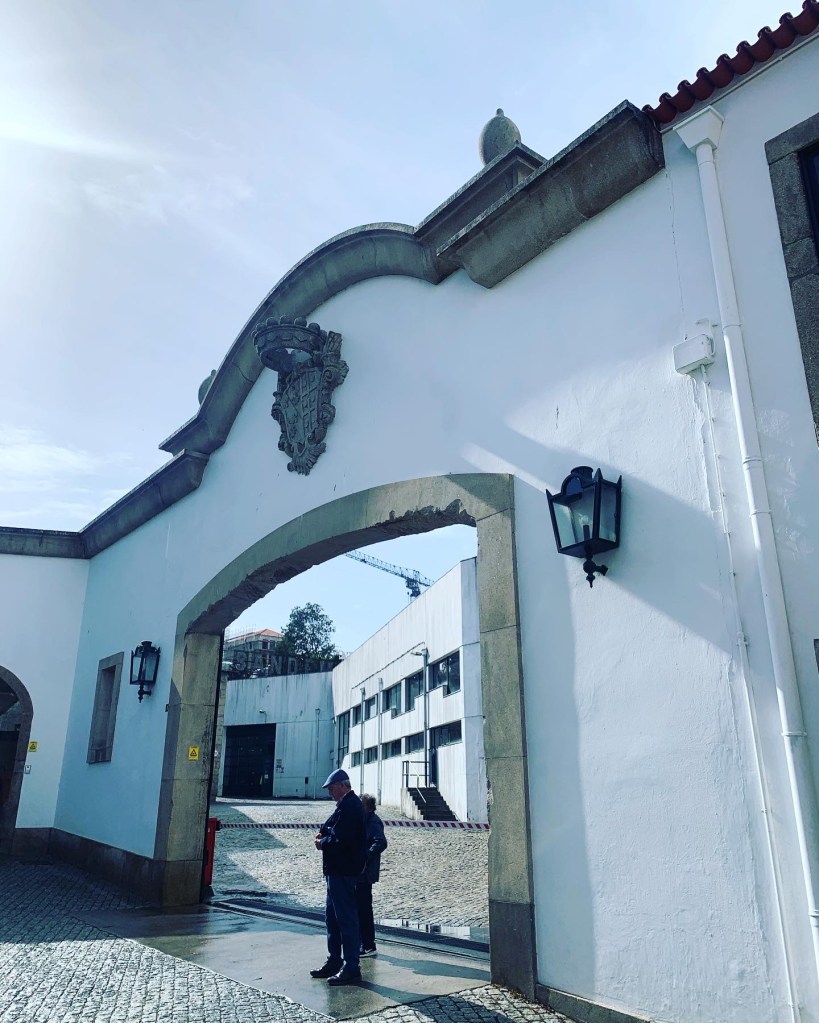
On the other hand the Brits are the biggest consumers of ports in the world. That’s why you’ll see signs bearing names we recognise (Sandemans, Croft, Cockburns and Dow’s, for example) dotted all over Porto – as you look out across the water to neighbouring Vila Nova de Gaia, and dotted among the vineyards as you cruise the Douro river.
We visited in October, for my birthday. I have been to Lisbon a few times, mostly on business, and loved it. I’d seen Porto on Instagram and liked the look of it too, and anywhere which gives its name to an alcoholic beverage warrants checking out, in my view.
Where is Porto?

Porto, or Oporto, is the second largest city in Portugal, after Lisbon. Located along the Douro River estuary in northern Portugal, Porto is one of the oldest European centres and its core was proclaimed a UNESCO World Heritage Site in 1996.
What is Porto famous for?
Port wine is one of Portugal’s most famous exports and named after Porto. Port is a Portuguese fortified wine only produced in the Douro Valley and is typically sweet and dark, although it comes in dry, semi dry and white varieties too. We happened upon a really nice pink one.
The Douro Valley itself is famed for being the oldest formally-demarcated wine-growing region (something to do with boundaries) on the planet and much of it is also a UNESCO World Heritage site.

Not only does wine-making in the region have a 2,000 year history, it’s the only place in the world port can be made, with patchwork vineyards dotting the undulating hills on the edge of the river, where the vines lay their roots down in rock.
The Douro Valley is not only home to port. Lots of wine is also made here and these days, the region produces just as much table wine as it does port.
What’s Porto like?

It has probably the prettiest McDonald’s in the world (no we didn’t go in) and is rich in history, but we were really struck by how many abandoned buildings there are in the city. There is even a special tour which takes you around the most derelict bits, which apparently the government isn’t terribly happy about!
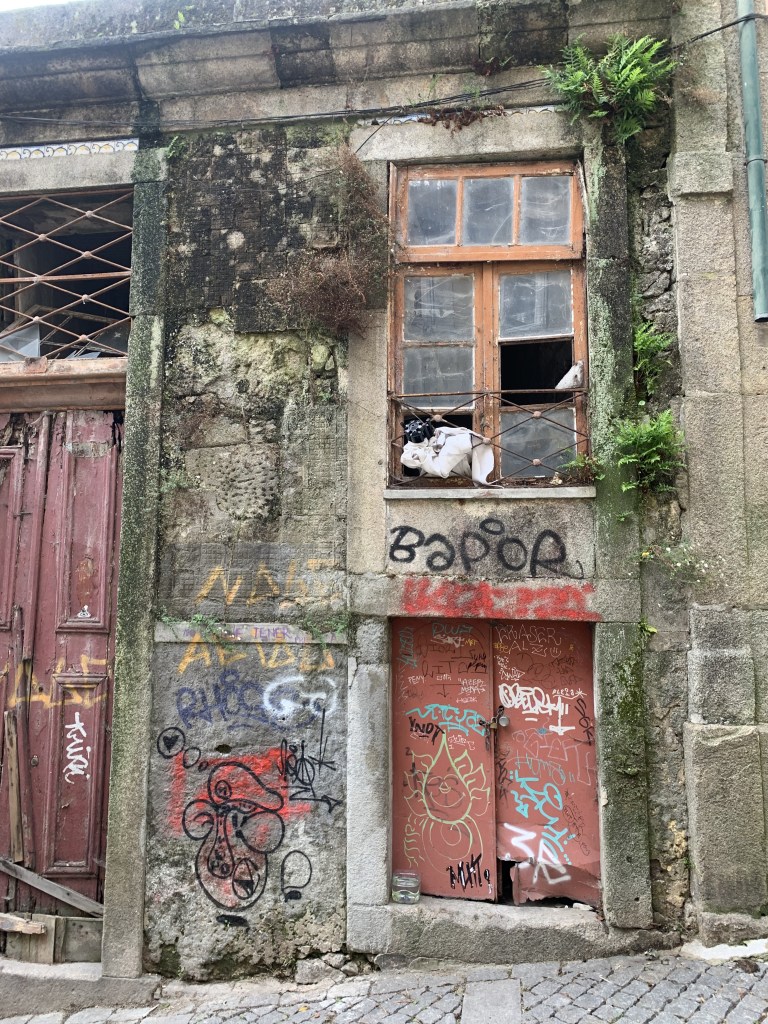
It feels like a working, industrial place (think textiles etc). The number of derelict and abandoned buildings may be due to the fact that in 2011, Portugal received a bailout from the EU to avoid bankruptcy. Since then, nearly 20% of houses in Porto have been abandoned, meaning that one in five houses have been left empty, and there hasn’t been the money to restore them.
Where to stay in Porto?

We stayed at the Torel Avantgarde, whose website greets you with: ‘Welcome to the sexiest five-star hotel in Porto’!
This award-winning luxury boutique hotel is in the city centre (although you don’t step out and straight into shopping streets, with restaurants, bars, etc – it’s a few minutes’ walk to what I would call the centre).
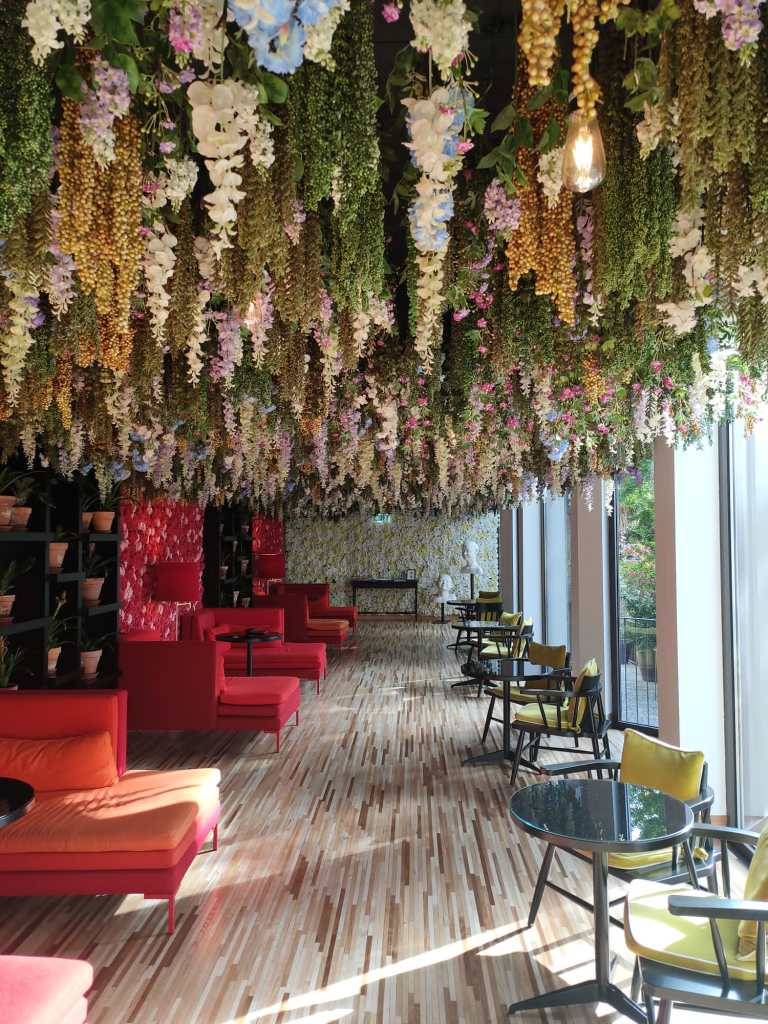
It’s a very stylish, slick hotel, perched on the hill, overlooking the river and over to Gaia, with all of its port houses. The hotel has a very cool (but not very big) pool, with stunning views, wedged between two main buildings. We loved the vibrant bar at night, where everyone of all nationalities chatted, the decor was lovely (including the next door Flower Room) and the staff were very warm and attentive. They made you feel as if you were staying in a five star and always remembered your name, which is a skill I could never possess.
We arrived too late for dinner on our first night and so had to eat off the snack menu in the Digby Restaurant, but breakfast is served here too and is lovely and very extensive.
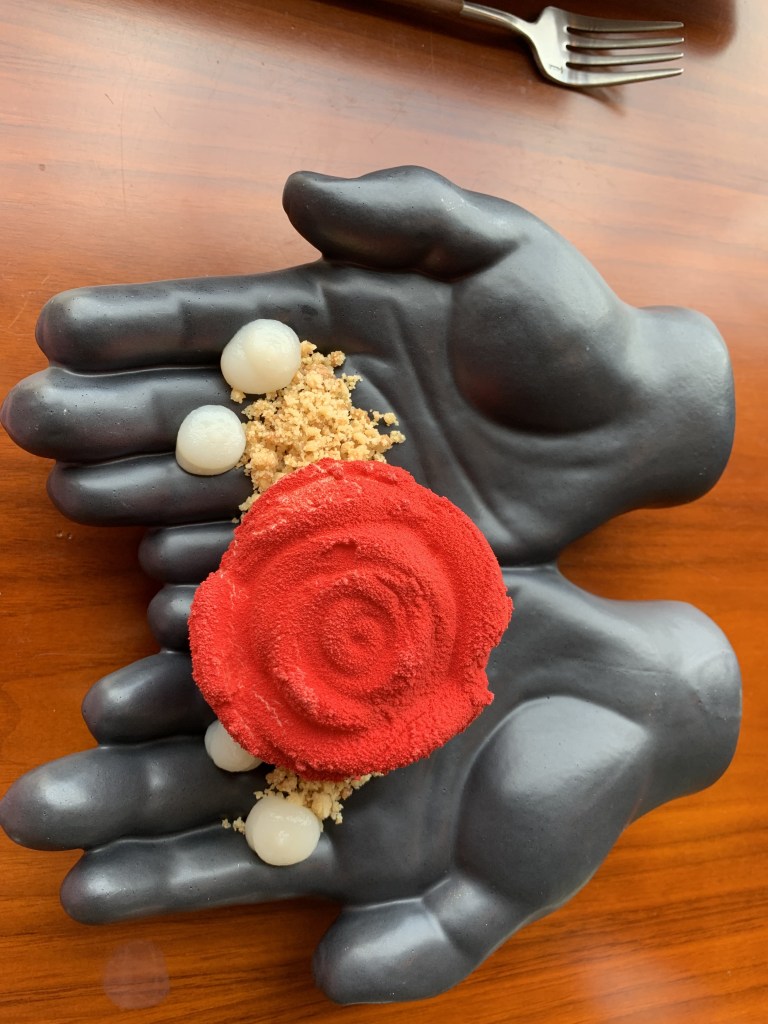
At dinner, I couldn’t decide which wine to order (I don’t know anything about Portuguese wine), so the charming sommelier let me try a few. He also let my partner do the same with different ports, letting him taste one which was 50 years old or so, and was very knowledgeable about them (as you’d expect a sommelier to be).
All of the rooms and suites are named after someone famous from the fields of art, design, literature, architecture and science, ranging from Francis Bacon to Charles & Ray, and the decor of each room reflects the style of that individual, apparently. Choose a room with a river view (some have baths positioned so you can take in the view). We paid approx €1,500 for three nights.
What to do in Porto?

Porto is lovely to wander around and has plenty to see, including a stunning tiled cathedral and train station (it must be ultra annoying if you are running for the train and have to dodge tourists taking photos the walls), but if you’re more ‘winey’ than ‘tiley’, get across the river to Gaia and get stuck into a few port houses.

We crossed the river a couple of ways: on a traditional wooden rabelo cargo boat for a few euros and via the Ponte de Dom Luis I bridge – which is very high and don’t get your heel stuck in the tram track, whatever you do!
We love a tour and tastings, so we booked a half day port wine tasting tour via Viator (from £44.05 per head), which started below the bridge and took us around several producers and into cellars, where our English-speaking tour guide, Anna, taught us about port production in Porto.
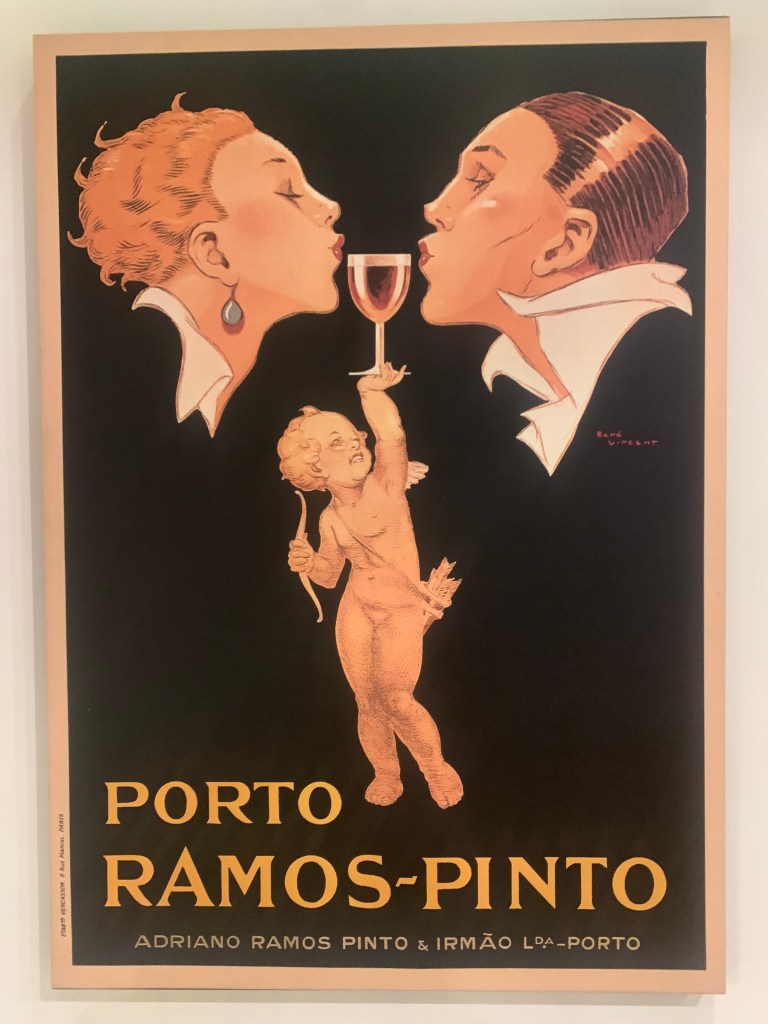
The largest producer we visited was Ramos Pinto (founded in 1880), in its grand building, directly on the riverside, where we dodged the torrential rain and learned amongst the oak barrels, before trying to distinguish our tawny from our ruby, with snacks.
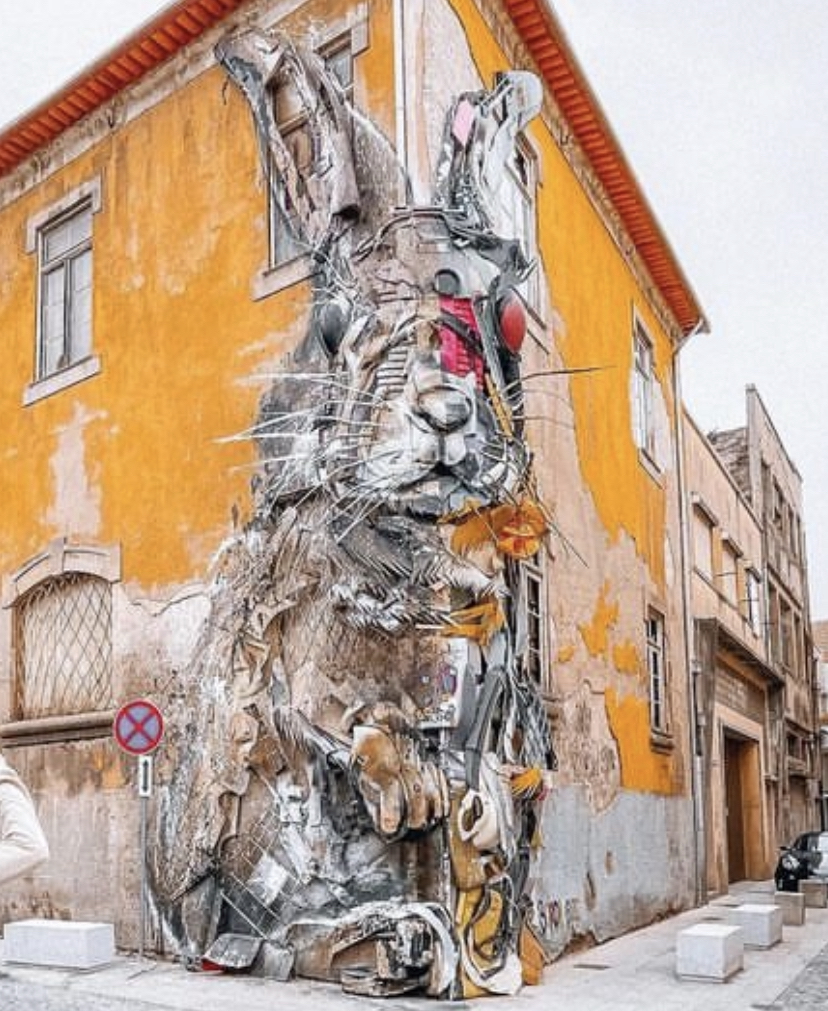
Anna took us on a tour of the back streets of Gaia, past the wall art, giving restaurant recommendations as she did so. We stopped and took a photo of the ‘half rabbit’ sculpture, made from recycled rubbish – a reminder of the wastefulness in society. We popped in and out of more port houses, including smaller producer Carlos Alonso, which is where we tasted their lovely rose port, their delicious Piano wine and filled our pockets with break sticks and lemony biscuits.
There was a third port house we visited and it was a good one – but I am afraid its name is gone, as too much port had been consumed by this stage. But we left having met lots of lovely people!
What’s the Harry Potter connection with Porto?
JK Rowling apparently lived in Porto and took inspiration from it, and there is a (stunning) bookshop (Livraria Lello) which has some connection, but having never read one of the books and unwilling to queue up and pay to look at a bookshop, this was a firm no from me.
What else is there to do in the Douro Valley?

On my birthday, we went on another tasting tour. This one, booked with Viator again, was a full-day with lunch, tastings and river cruise, joining the boat in Pinhão, the prettiest little town in the Douro Valley, sitting on the banks of the river and surrounded by terraced vineyards.
Another rainy day, the tour guide picked us up in a minivan, filled with warm and friendly Americans, and we sped towards the Douro Valley, our tour guide giving us plenty of facts en route.
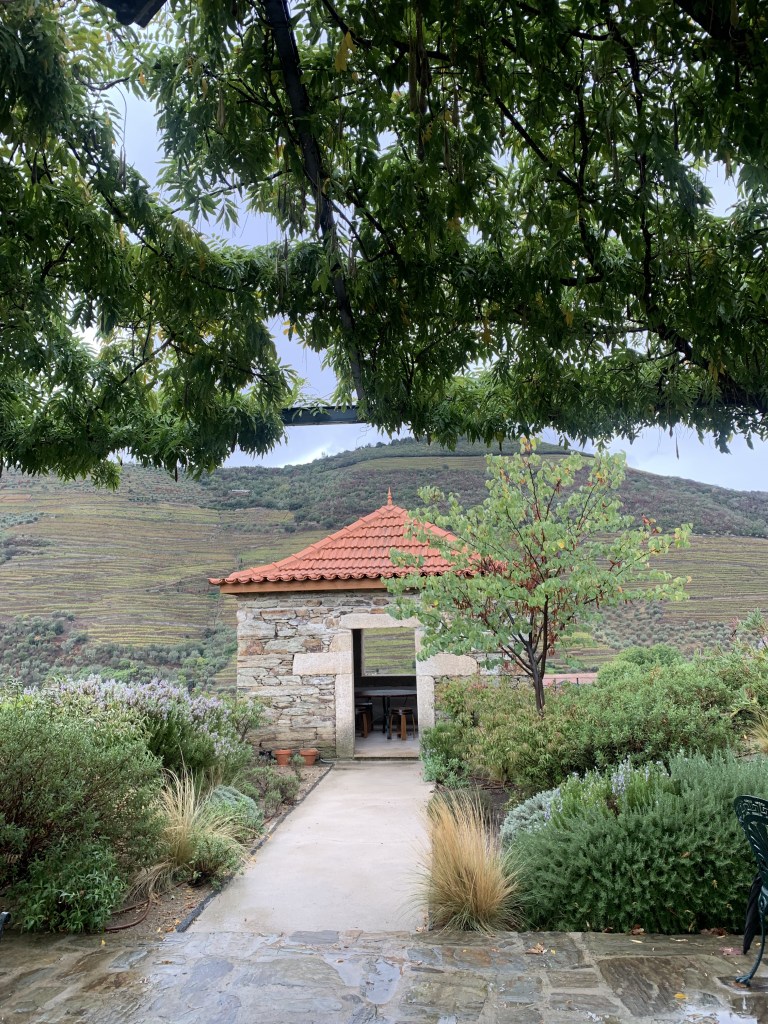
Our first stop was the very beautiful Croft estate at Quinta da Roêda, which was founded in 1588. Croft is the oldest firm still active today as a port wine producer. Here we had a tour (sadly, the weather was too rubbish to go into the vineyards themselve) and snacks, which was pretty much the theme of the day.
Lunch was in a stunning old house with creaky floorboards and exposed beams, but the dining room was full, so we traipsed out the back and into a marquee, which was lacking in character and food felt slightly like school dinners.
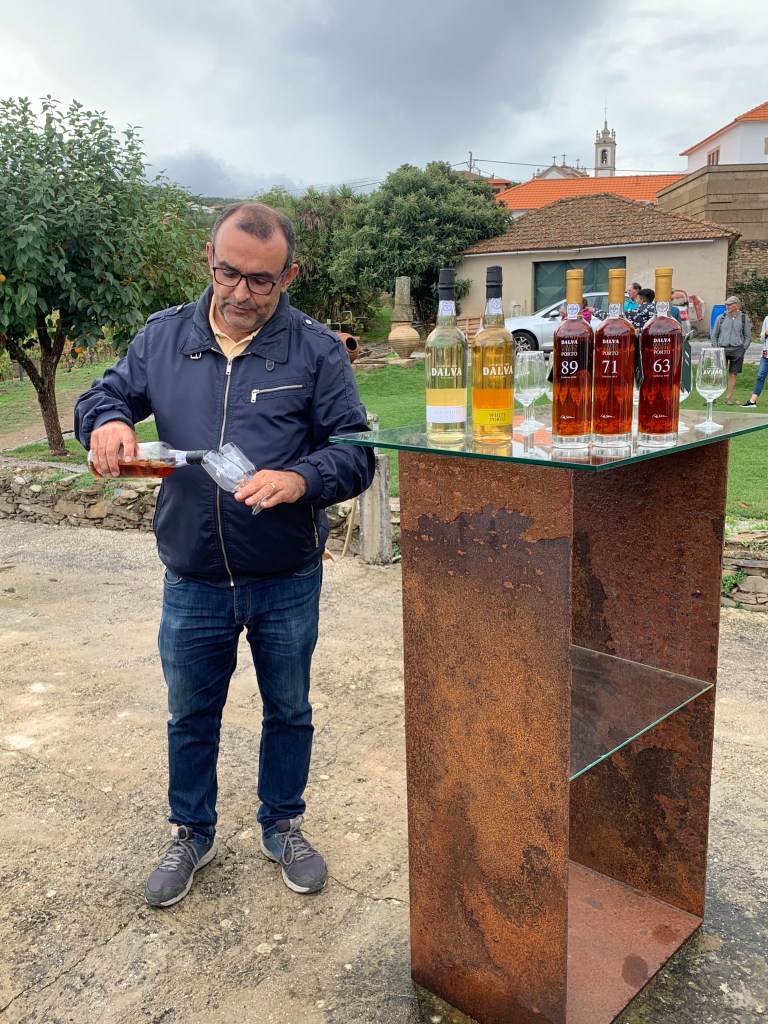
By far my favourite stop of the day was at Quinta dos Castelares where the exceedingly charming and hospitable host took us on a tour of this small estate and enabled us to taste some of his table wines, olive oils and honeys. Less polished than the Croft port wine tour, you really felt as if you were in someone’s house as you ducked through low door frames and into dark, oaky cellars, gathered around the dining table to taste herb-infused honey and stood in the large troughs where the grapes were once trodden.
On the way back to Porto, the Americans and I discussed our very different attitudes to gun control, CCTV and Donald Trump, which was interesting when you are full of wine and port. We all left on good terms!
Our tour guide recommended where to see Fado perform live (rather melancholy traditional music dating back to the 1820s), which we did, but it probably wasn’t the best thing to do when returning on a high, full of grape juice, to be honest.
Where to eat in Porto?
We didn’t see a sign for piri piri anywhere (but maybe we weren’t looking) and we ate like kings/queens in Porto.
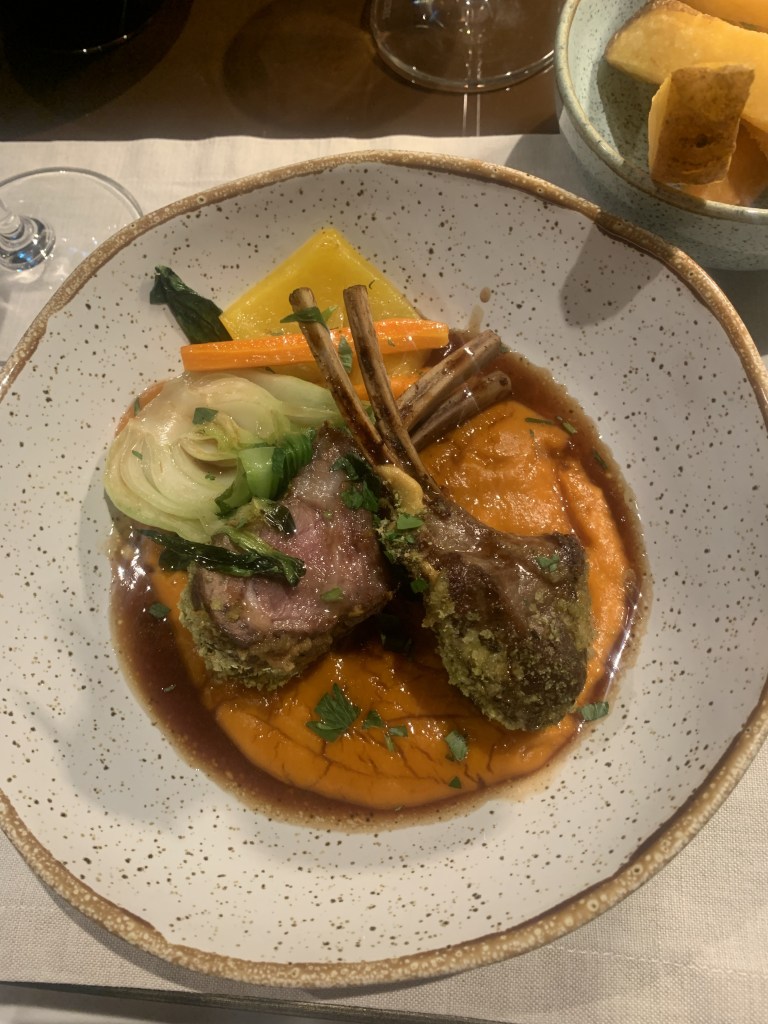
On my birthday, we ate at the very stunning Bistro Flores at the Hotel Porto Bay Flores in what felt like the true centre of Porto (about 15-20 mins from our hotel).
Dishes like sea bass with mussel ‘nage’ and kaffir lime (€32) and tournedo with pepper and exotic mushrooms (€29.50) are on the menu and one of us simply had to choose ‘It looks like a lemon’ for €11 on the menu (and it did).
Our knowledge of Portuguese wine let us down again and we asked for advice and ended up with the Chryseia – a much more expensive bottle than what we would normally have ordered (I’m not saying how much), but it was utterly delicious and it was my birthday, after all. I am not going to lie, I did feel tempted to order the Bastardo!
The waiting staff were very nice indeed and all sang to me when they emerged from the kitchen with a birthday cake and candle.

For authentic Portuguese food served among wine box ends, I recommend Ze Bota (booking essential as this place is very much in demand). It’s very simple in appearance and feels very authentic.
We loved the staff here and when my partner commented that he loved his dish (secretos de porco Iberico com arroz de Feijao/black Iberican pork with beans and rice: €14.50), which was served in a metal cooking pot, the waiting staff brought out the chef who described how it was made and even went back into the kitchen and emerged with the bag of rice to show us.
For a very fancy meal, go and explore the magnificently named World of Wine (or WOW) in Gaia, which we could see across the water from our hotel and had to discover it. WOW is a large new cultural district in the historic heart of Gaia which pays homage to culture, history and Portugal’s main industries.
There’s a wine school, exhibitions, museum, restaurants and shops and while I’m not 100% sure what it was before it got the WOW factor, this to me looks like the way derelict and abandoned buildings in Porto should be revitalised, subject to investment. A lot of money has been poured into WOW.
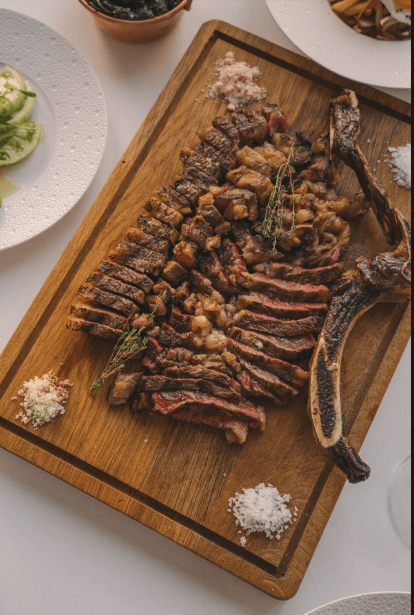
We ate at the exceedingly elegant 1828 within WOW, which calls itself a steakhouse, but this is no Miller and Carter! The beef was out of this world, as was the view – and the wine (we chose our own this time – lessons learned) and it was decanted into a crystal vase and then lovingly poured for us. Wine is medicine, after all!
What made this meal even more easy to swallow was the fact that, when my partner rang to book, he was told he could get 50% off our meal if he used a certain code, which he did, very happily (tenderloin €24; T-bone €69 per KG; ribeye €96 and 30 days matured beef ‘chuleta’ €95 per kilo). We got an Uber back to the hotel that night as we were too stuffed to manage the walk over the vertigo-inducing bridge.
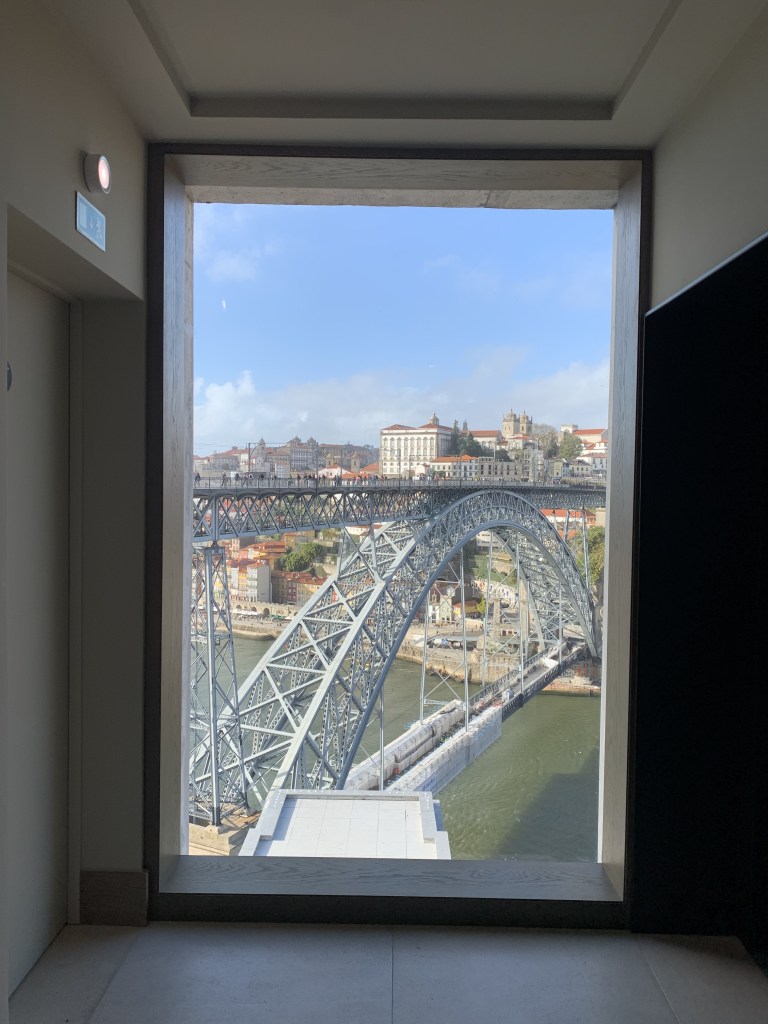
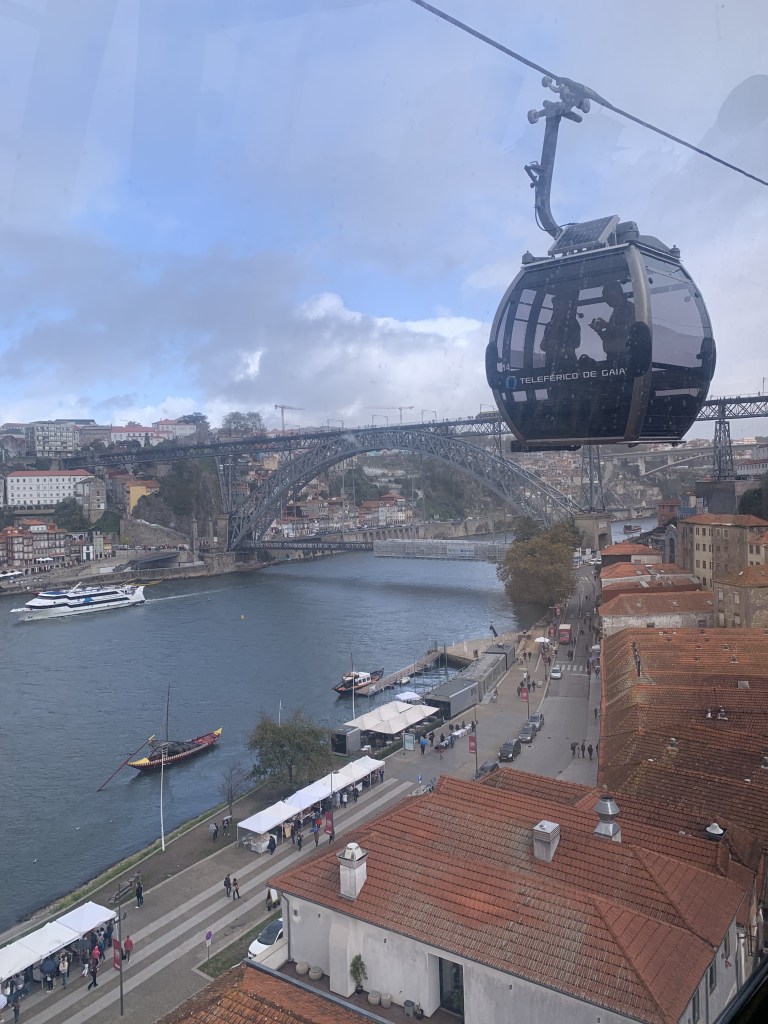
Speaking of bridges, the Hotel Vincci Ponte de Ferro is at one end of the bridge and has utterly spectacular views from Gaia to Porto, which I think is the better view, and is a great stop for a drink, before going on the cable car, the other end of which is right next to all of the lovely riverside restaurants, port wine houses and bars.
How do you get to Porto?
We flew Stansted to Porto with Ryanair, with tickets each way as little as £25 in October.
Which is better: Lisbon or Porto?
They are both completely different and I think will largely appeal to different people. Both have different appeals.

Big sister Lisbon is twice the size and feels way more cosmopolitan, faster-paced and is 200 miles further south, so has a different, hotter climate. Lisbon appeals to me more on an aesthetic level. I love the yellow, tiled buildings everywhere.
Porto is smaller, feels more industrial, and has a much more traditional feel. It’s cooled by Atlantic breezes throughout the summer (although still hot) and can be foggy and wet during the winter. If you’re a ‘Shoreditch type’ who likes places like Budapest and Berlin, Porto is for you, The wine element creates a big appeal for me.


 The Sun Lounger
Leave a comment