
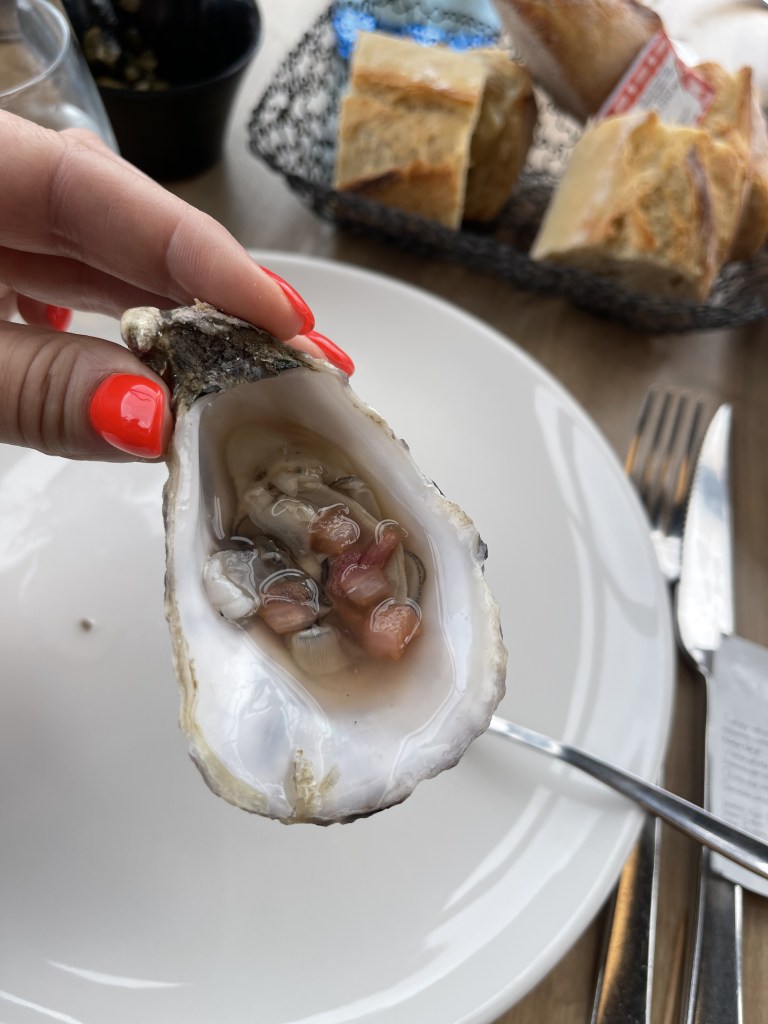
A darling friend of mine told me that she was once asked by a Breton friend whether or not you could call yourself a true local if you didn’t like oysters.
Now, I question this rhetoric, as my friend’s mum was from Brittany and oysters make her sick, and I can’t get enough of them. Does that make me an honorary Breton?
When I cross the Channel and drive for six hours from Calais, I would normally expect the climate to be considerably warmer. Therefore, exiting Le Shuttle, turning right and driving for five or six hours in a westerly direction was initially a bit of a shock to the senses.

But that’s what I’ve done a few times recently, when I have joined my lovely friend on her house-hunting jaunts around the Paimpol area of Brittany in north-west France.
I say it’s a shock to the senses, as it’s not France as I know it. Other than Le Touquet, France to me previously meant glowing terracotta roof tops, beam-filled medieval market squares, precariously perched hilltop towns, endless vineyards, bright bougainvillea and towering chateaux.
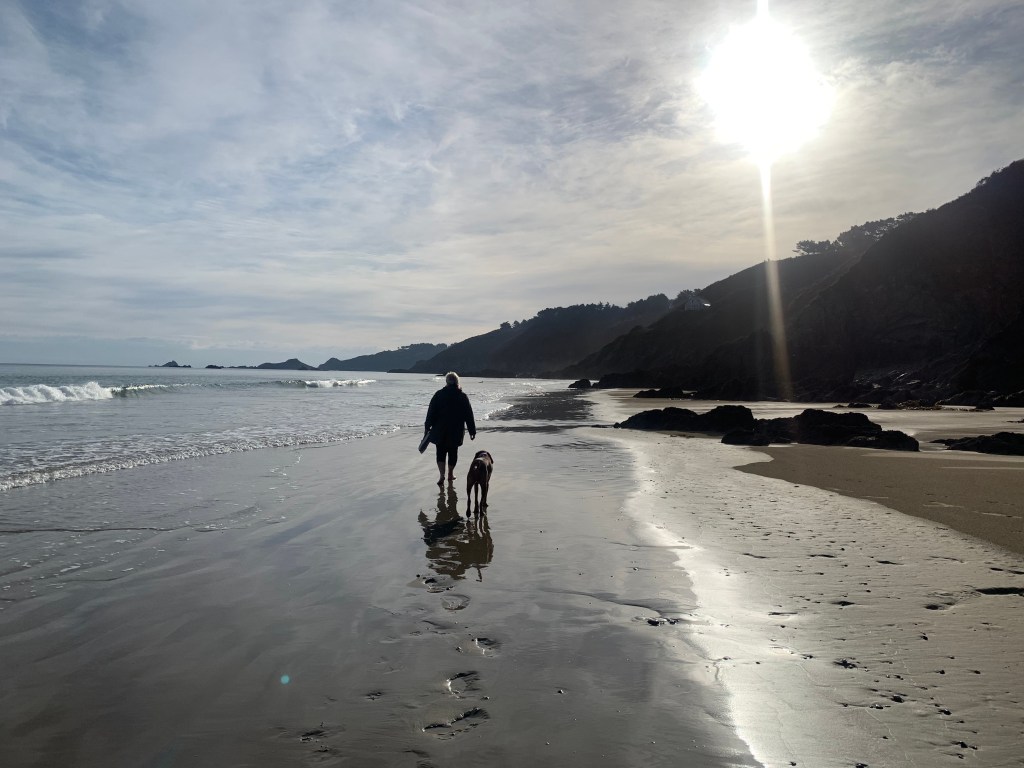
This new-to-me part of France is more like the UK in landscape, being just over the water from Cornwall. What is impressive about the region is its vast, stunning beaches dropping down from grassy hilltops and, hands down, the best seafood I have ever tasted.
The food in this part of France is something else. That alone is worth turning right for.

Saint-Quay-Portrieux, a resort of ports, fishing and beaches, is where we’ve called home, while staying in this part of Brittany. This town has three beaches, where the sand changes colour depending on the tide and the sunshine, due to the presence of black ilmenite crystals.
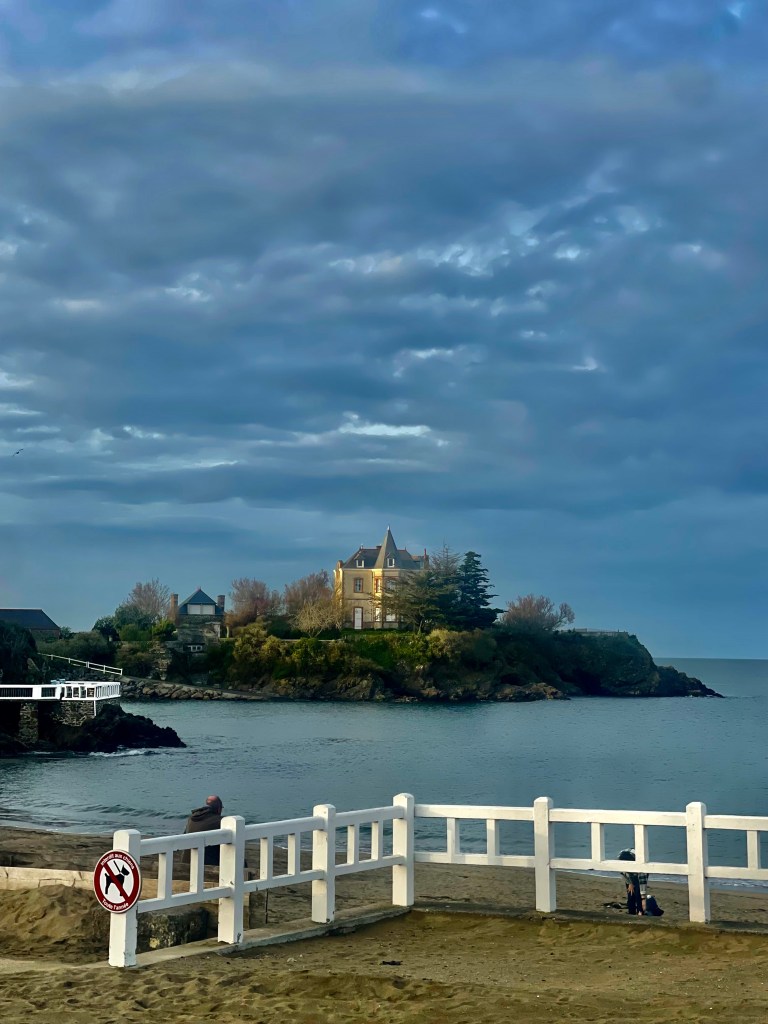
The town is peppered with grand mansions with glorious views, which are holiday homes to the fortunate, and several empty properties, probably due to them having been in the same French families for decades and none of the squabbling relatives are able to agree what to do with them now.

One of the most glorious things about this little town, which has two distinct centres – St Quay and Portrieux – is the seawater swimming pool. I’ve not yet visited in peak season, so haven’t been able to try it myself, but I love the way the pool disappears at high tide, with only the top of the diving board poking out of the waves. Entry to the pool is free. Go at low tide!
My favourite Brittany beaches
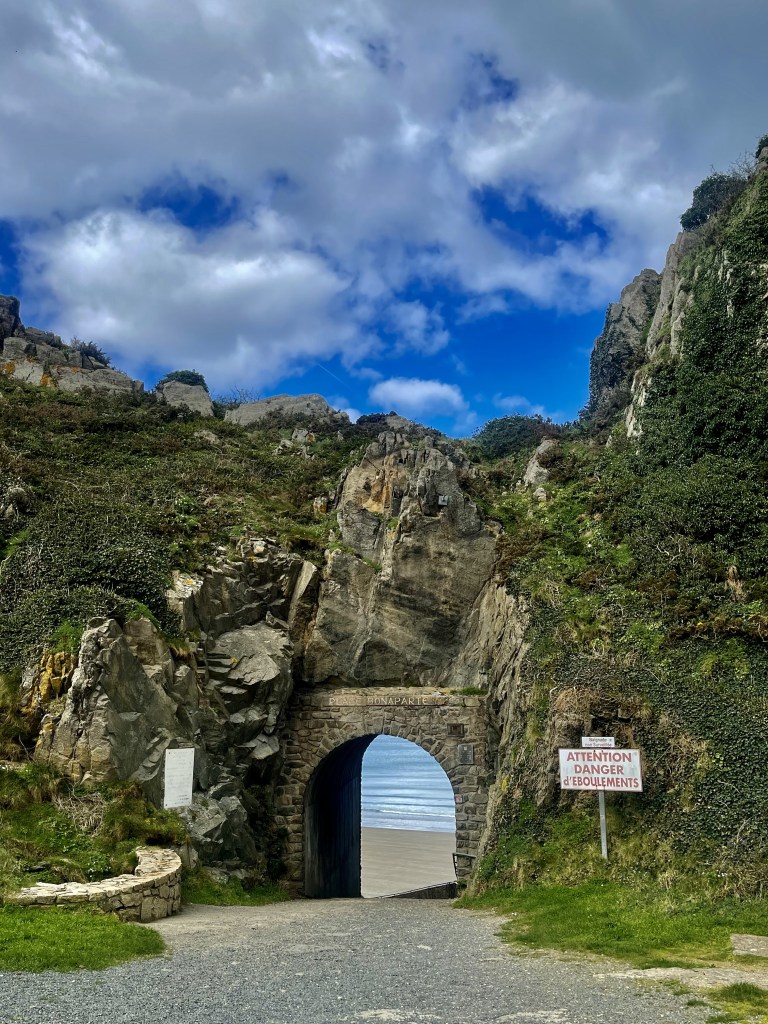
Brittany was targeted in WWII because of its naval bases at Lorient, St. Nazaire and Brest, so it’s unsurprising that this stretch of coast has links with the French Resistance.
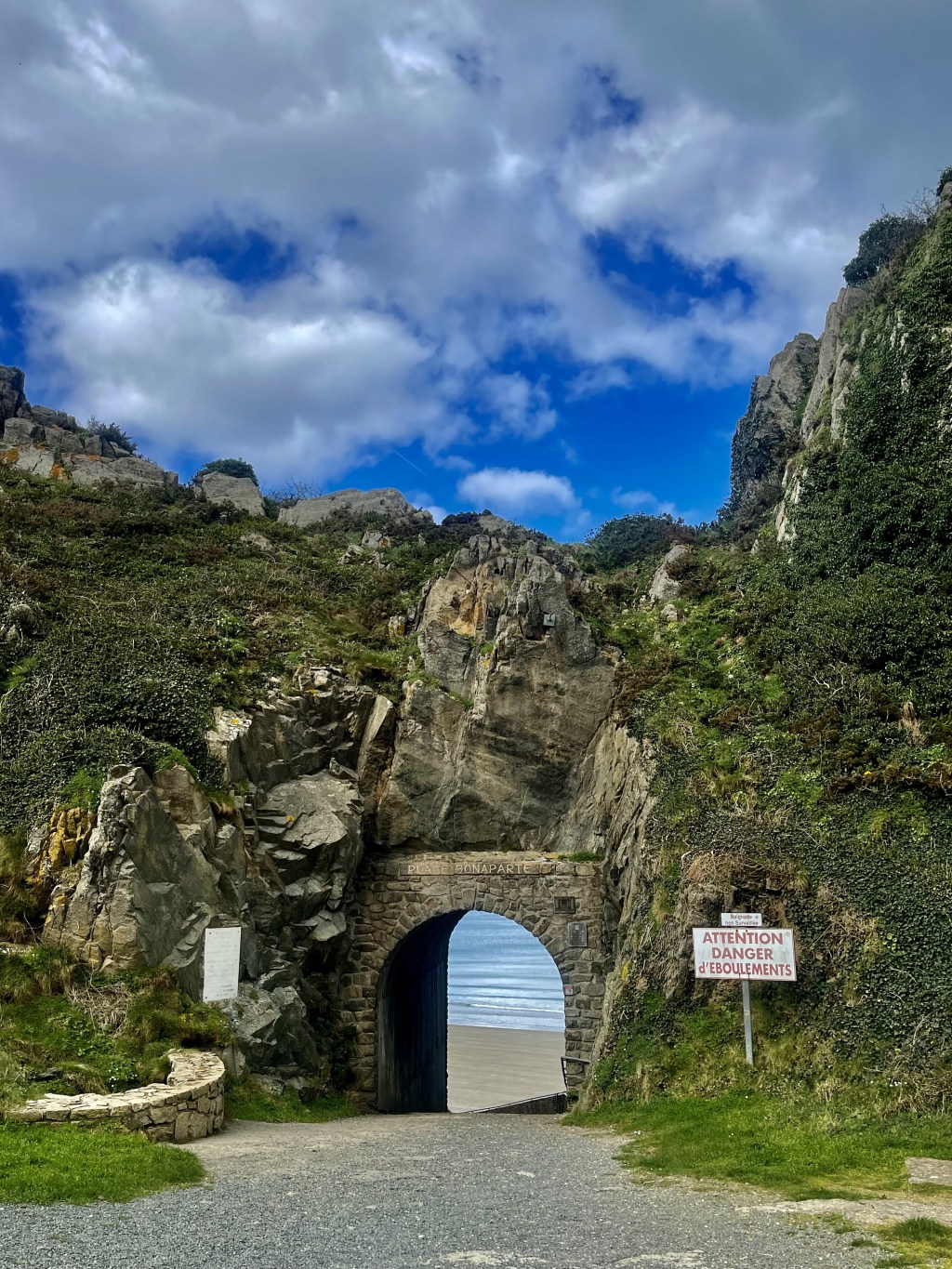
Plage Bonaparte near Plouha was a high point of the resistance during the war and is reached via a tunnel dug into the cliff, with steep path leading down to the glorious beach.
At high tide, there is only a thin slip of sand to walk on. At low tide, it’s a large beach, packed with history, as well as rock pools and cliffs.
Every time I have been there, which has never been in the summer, there has always been someone swimming. Brave souls!
Stunning for bathers and dog walkers now, this beach played an important role in the Second World War. In 1944, 135 British, Canadian and American airmen and agents were secretly evacuated by boat from Plage Bonaparte to the UK, in eight different operations.
2. Erquy
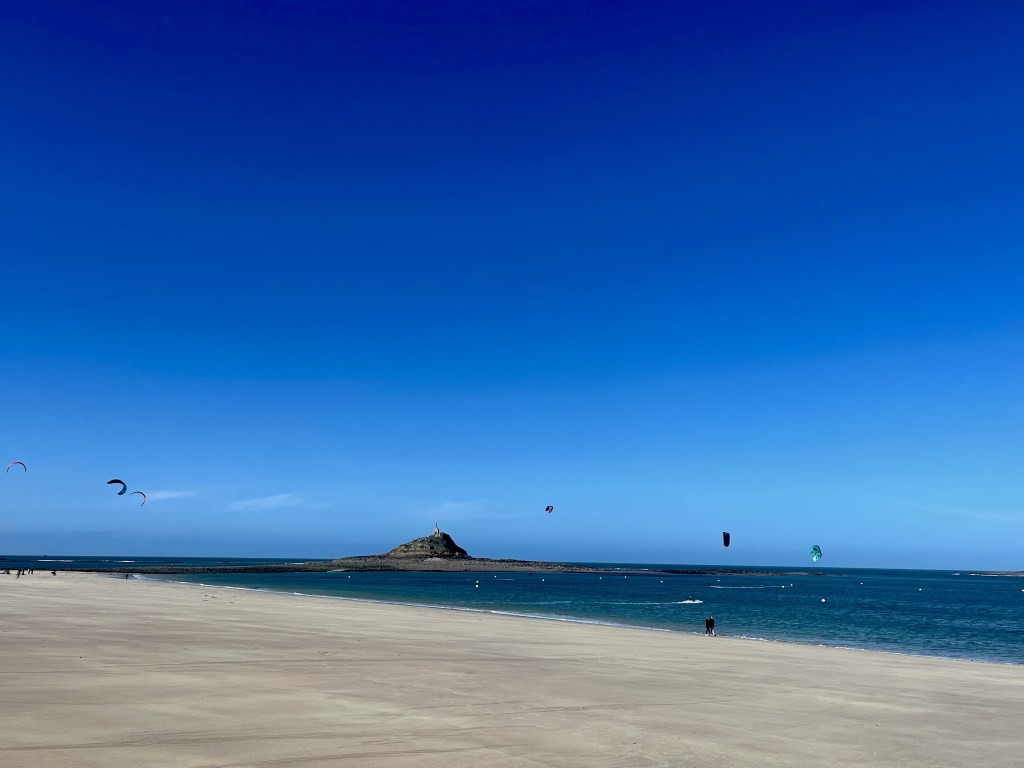
Erquy has an active fishing point renowned for its scallops, coastal walks and a whopping 10 sandy beaches, hued pink because of the colour of the local sandstone. We stood and watched the multitude of kite surfers who, despite their number, had plenty of room due to the expanse of sand.

You’ll also see evidence of the local seafood delicacy, the scallop shells littering the sand near the fishing boats.

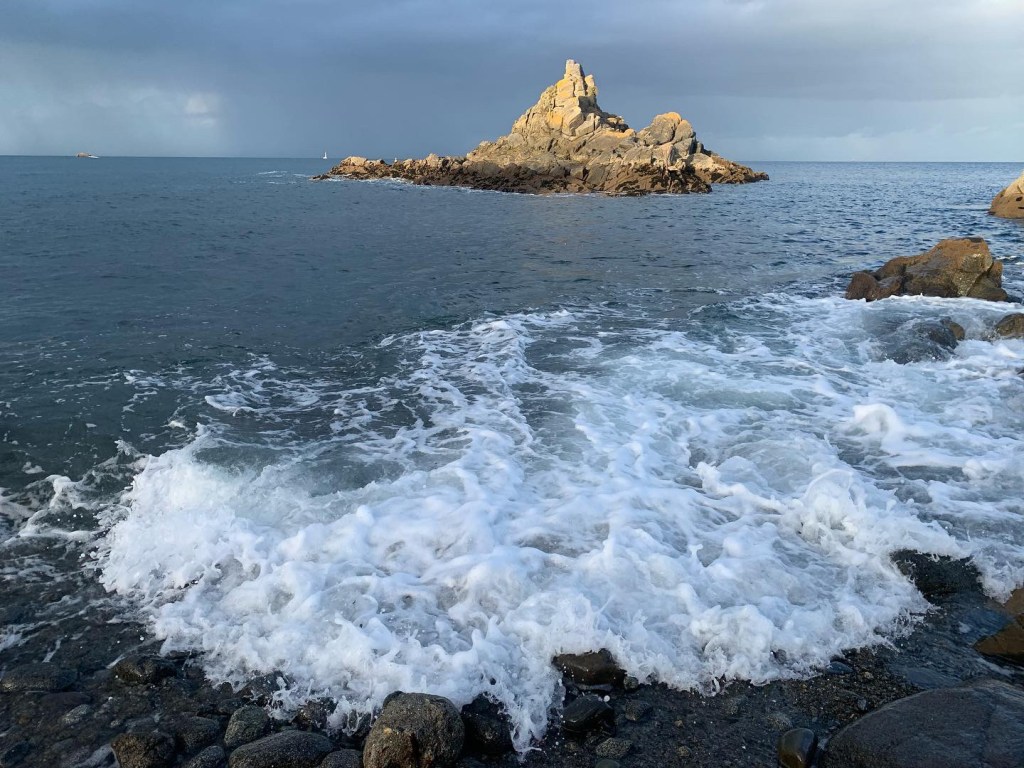
As well as the wild and windswept in Brittany, St Quay has its own lovely town beaches. Plage du Casino is the main beach in town (no dogs allowed) but there is also a smaller one, Grève Noire, where you can walk dogs, as long as you clean up after them, and it’s overlooked by some stunning mansions. Other beaches in the town include Plage du Portrieux, Plage du Châtelet and Plage de la Comtesse.
There’s a great boulangerie not far from the casino (the French win at these), where you can get a lovely beach picnic and be greeted with a cheery “bonjour madame/monsieur” as you do so.
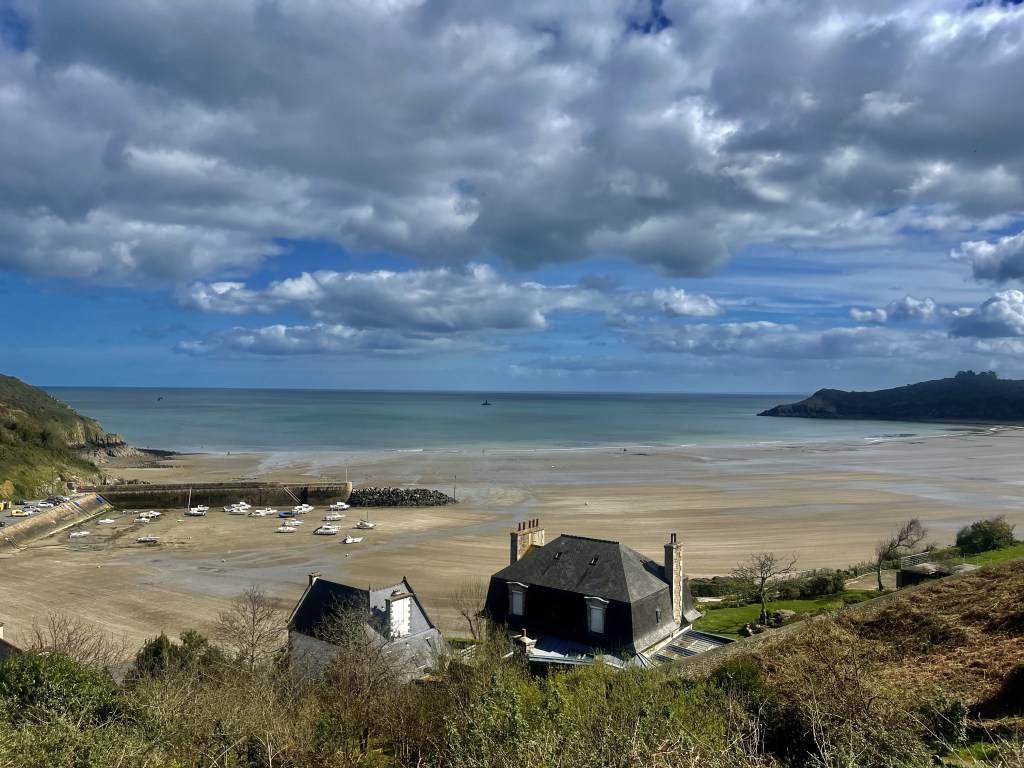
To a Brit, there is something decidedly Cornish about Brehec, again which has an endless expanse of sand when the tide is out and a harbour wall sheltering fishing boats, reminiscent of Gorran Haven.
In fact, the Breton language is closely related to Cornish. Apparently, it’s the only Celtic language still widely in use on the European mainland.

There is a reason why I look forward to going to this town beach in Perros Guirec, where we’ve always seen surfers riding the waves. It’s not the weather, as it’s rained on the occasions that we have been there.

Right on the beach is the spectacular Restaurant La Plage, which we found completely by accident, looking for somewhere to eat to shelter from the rain in April. Weirdly, I can’t find a website nor social media pages for this fab eatery, in a modern, beachfront building with large terrace and floor to ceiling windows, to take advantage of the great views.
Ignore the few negative review on TripAdvisor. The service was quick and charming, and the food spectacular, with huge fruit de mer spilling over on to the tables.

Gastronomy in Brittany
While the French supermarkets celebrate food beautifully, signs indicating which region of France each vegetable was grown in, Brittany is not kind to the waistline.
I love the French attitude to food. My friend was having work done on her house and the workman routinely downed tools at lunchtime, drove home to have lunch with his wife, then came back two hours later. While it might be annoying if you need something on your lunch break and the shop is closed because the shopkeeper is having lunch, it also shows the French love and appreciation for good food, which is revered.
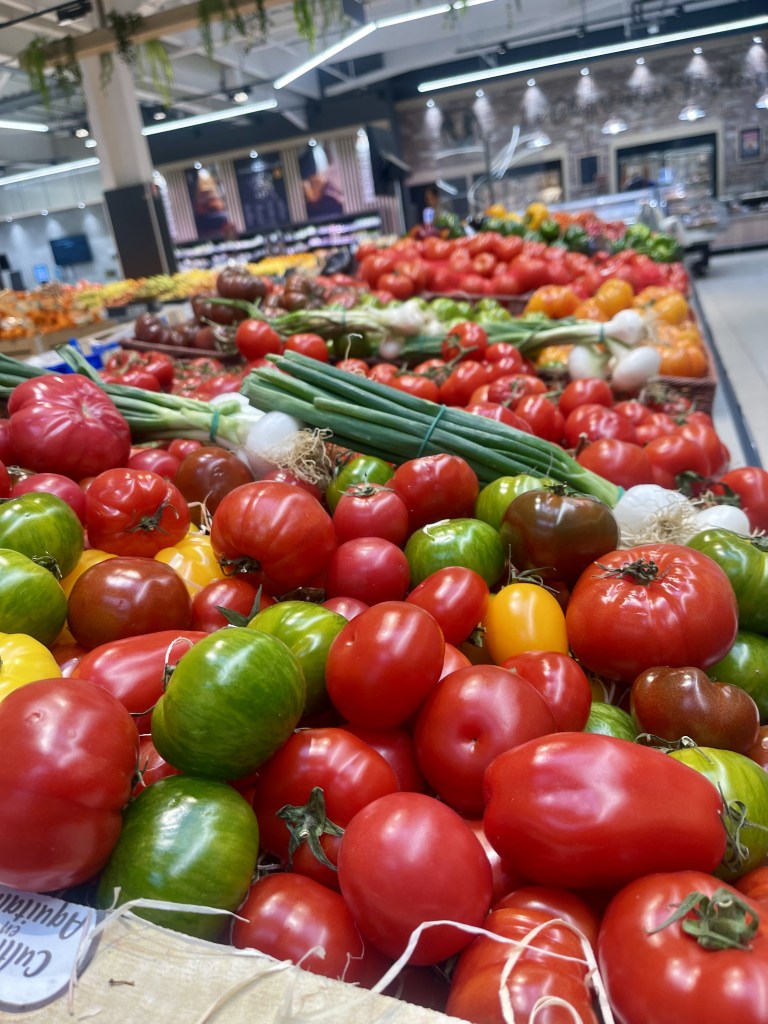
Local specialities include:
Kouign-amann: a sweet Breton cake made with laminated dough, containing layers of butter and sugar, similar in fashion to puff pastry albeit, heavier and with fewer layers
Galette: a pancake made with buckwheat flour, usually with a savoury filling.
Far Breton: a traditional cake or dessert with a base similar to a clafoutis batter and commonly made with prunes or raisins
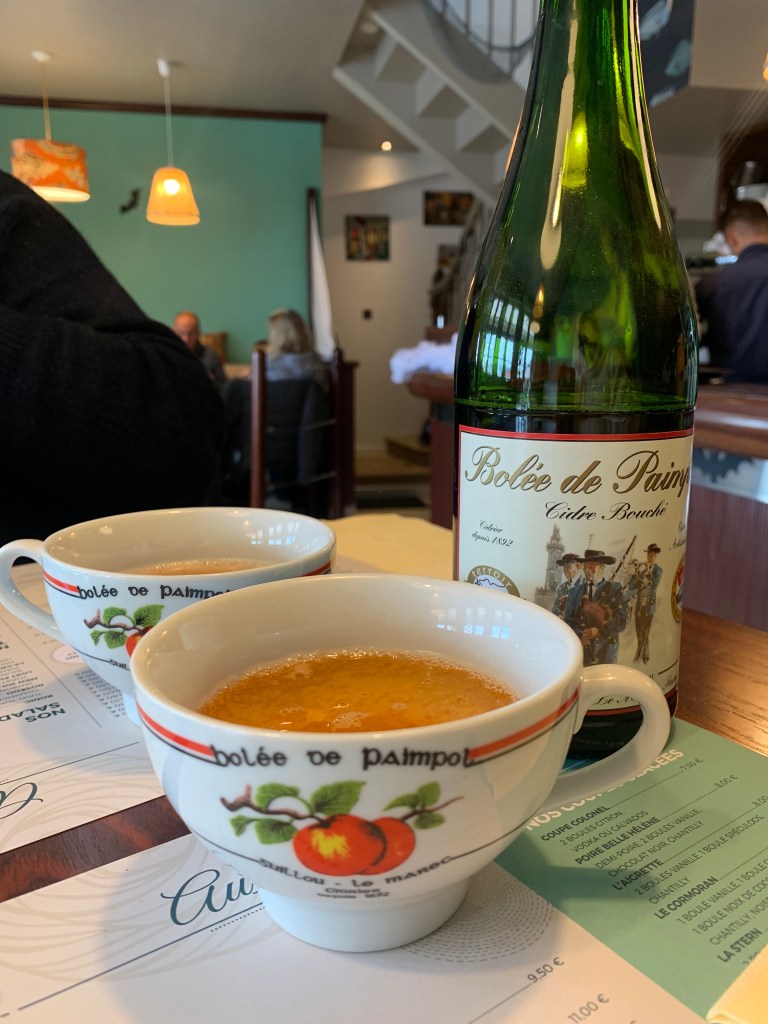
Cider is served in cups in Brittainy and I am here for it! Wash down your galette with a cup of cider. There are more than 600 varieties of apple grown in the region, each giving their own flavour. You’ll find several independent cider makers in the region.
I bought a box of the doux (sweet) variety from Cidrerie Guillou – Le Marec in Paimpol, A family of artisan cider makers for 129 years, renowned for the famous Bolée de Paimpol cider. There’s an exhibition which tells the story of their company and tastings Monday to Friday.
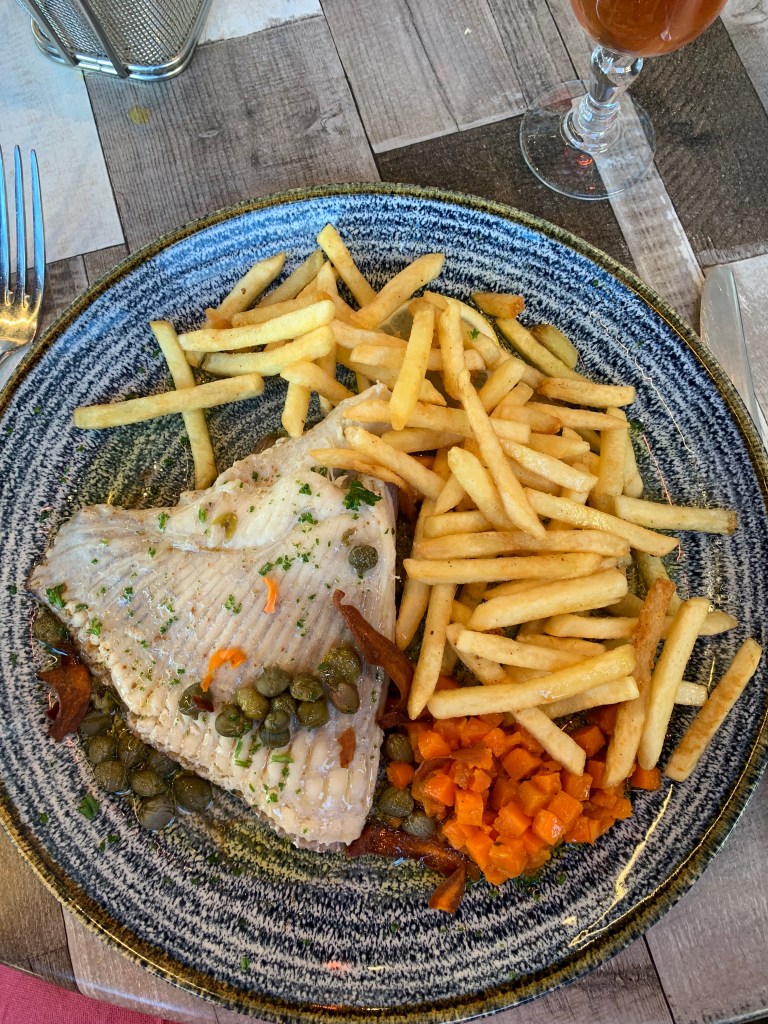
Speaking of Paimpol – another colourful working coastal town with working harbour, immaculate mansions and an ancient centre, where they have some lovely shops and a great market every Tuesday – don’t visit without trying Restaurant du Port, overlooking the boats. I’ve not been since it changed hands, but the skate winds au beure noisette were exquisite.
How to get to Brittany
As well as driving to the region, past Mont St Michel as you do, you can also get the ferry from Portsmouth to St Malo which I particularly enjoyed. The departure terminal in St Malo is straight out of the 1950s.

It took nine hours to cross and the water was as calm as a pond when I did so, with Brittany Ferries. It was also ridiculously cheap as a foot passenger (approx £120). I had a fab meal of braised beef in red wine with pomme purée and a fruit tart, with a mini bottle of red, did some work, looked at the Channel Islands glistening in the sunshine as we sailed past them, napped a lot and arrived in Portsmouth happy and relaxed.
I’m not sure it would be the same in winter, with gale force winds, but it’s a journey I look forward to doing again. The views of walled St Malo as you set sail are stunning.
By contrast, the train was £326 (cheapest fare) from London St Pancras to St-Brieuc and, as lovely and fast as French trains are, it required a change in Paris.

Bretons are fiercely proud of their land, its food and its heritage. I can’t say I blame them! I mean, they even have drive-through boulangeries, FFS!
For more information about Brittany, visit: https://www.brittanytourism.com/


 The Sun Lounger
Leave a comment