

By Russell Higham, arts & culture, history, music, lifestyle and travel journalist
Think of a city break in Italy and your mind will more than likely transport you to Rome, Venice or Milan, but have you ever thought of Turin? The Sun Lounger asked journalist Russell Higham, whose writing is published in international magazines and newspapers, what he made of the north-west Italian city.
What is Turin most famous for?

Predominantly two things: Fast cars and slow food.
The 1969 film ‘The Italian Job’ was filmed here and is one of Sir Michael Caine’s most well-loved movies — and possibly the best ad for the Mini ever made. The plot revolves around a daring $4M gold bullion heist, using red, white and blue Minis belonging to Fiat, the Italian car manufacturer which is based in the city.
None of the iconic 16 Mk I Cooper S’s used in the film survived. There’s only so much swishing through sewers, bumping down staircases and jumping off rooftops that a small hatchback can take, after all, even if the Mini was the best-selling British car in history.
Many of the venues seen in the film, which the robbers hurled the cars up, down and around in their bid to flee the scene of the crime, are still standing.

Piedmont, of which Turin is the capital, is also where the Slow Food movement began. Today, Slow Food is a global network of local communities founded to prevent the disappearance of local food cultures and traditions, and counteract the rise of the fast-food culture.
What’s Turin like?

Turin was the first Italian capital (from 1861 to 1865) and today is an important business and cultural capital, with a population of around 850,000. It’s set mainly on the western bank of the River Po, below the Susa Valley and is surrounded by the western Alps.
Wandering around the city, you’ll see impressive buildings adorned with floral friezes, wrought-iron decorations and stained-glass windows. It is known for its Baroque, Rococo, neo-classical and Art Nouveau architecture, with many of its public squares, castles, gardens and elegant palazzi built between the 16th and 18th centuries
What’s there to see in Turin?
The first stop on my Turin weekend was the Palazzo Madama, in the heart of the city. Now a UNESCO World Heritage Site, with a history that can be traced back 2,000 years, and home to the city’s Museum of Ancient Art, its grand staircase is instantly recognisable.
It’s the one which all three Minis bounced and trundled their way down as they attempted to evade the local police. Their cockney drivers were clearly oblivious to the palace’s connections to the House of Savoy — an ancient royal dynasty that ruled Italy until 1946 — as their cars spewed oil and grease all over architect Filippo Juvarra’s 300-year-old baroque steps.

A five-minute stroll away lies the Galleria Subalpina. This magnificent glass-roofed structure, with its 18-metre-high atrium, is not only one of the most attractive retail arcades in Italy, it’s also the location where, in the film, shoppers are sent scattering by Minis skidding around its polished marble floors.
Here, the famous Caffè Baratti & Milano makes the ideal place to stop for a sweet treat and a coffee or a glass of vermouth — a Torinese creation from the 18th century which was originally used as medicine. The 160-year-old cafe and confectionery company were chocolatiers to the House of Savoy, whose 13 grand residences still remain dotted throughout the Piedmont region, of which Turin is capital.
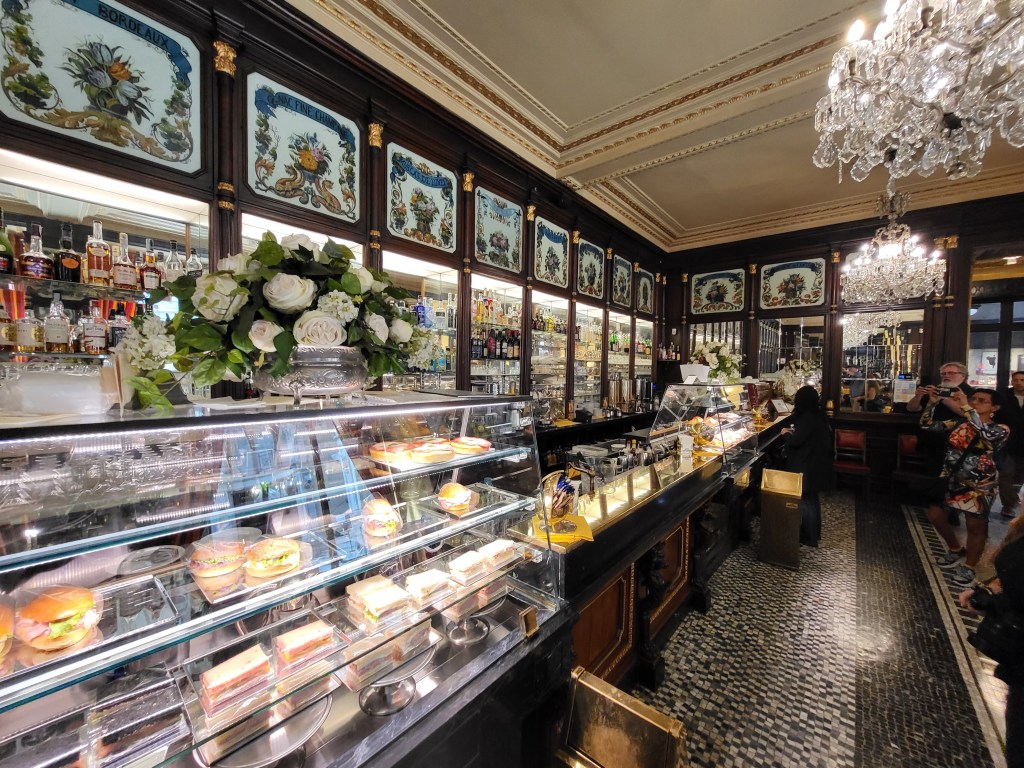
Whilst there are plenty of chic and stylish locals to people-watch as you sip your aperitivo, this city has a less fashion-obsessed feel than Rome or Milan. Turin’s down-to-earth, industrial roots mean you won’t be judged too harshly if you can’t tell your Gucci from your Fiorucci. And the sensible prices here reflect this attitude.

I’d had dinner on arrival the previous night in Tre Galline, a 500-year-old restaurant in the lively Quadrilatero Romano district. Despite being a Turin institution, recommended in the Michelin Guide, I gorged on traditional delicacies including finanziera (meat stew) for less than I’d pay in a nondescript high street chain restaurant back in England.

After an afternoon stroll through the Giardini Reali di Torino, an elegant park laid out in the 17th century by André Le Nôtre, who also designed the gardens at Versailles, the National Museum of Cinema seems like an appropriate stop. Although I couldn’t find any exhibits relating to The Italian Job, there’s still plenty to keep a cinephile such as me occupied, especially on the works of Italian directors such as Federico Fellini and Dario Argento.

Best of all, the museum is fitted cleverly inside the Mole Antonelliana, a 550 feet high monument to Italian unification, making it the tallest museum in the world. Originally conceived in 1863 as a synagogue, this landmark building (which makes a brief appearance in The Italian Job too) now features a lift that will whisk you up to a panoramic terrace.
From here you can enjoy 360-degree views of the whole of Turin and beyond to the Alps which Piedmont — ‘Piemonte’ in Italian, meaning ‘foot of the mountain’ — takes its name from.
Is there much in Turin for car-lovers?

Yes. The recent history of Turin is linked with that of Fiat — even its name is an acronym for Fabbrica Italiana Automobili Torino — the motor manufacturer founded in 1899 by Giovanni Agnelli. Alfa Romeo and Lancia are also based here.
Agnelli’s charismatic grandson, Gianni, took over in the 1960s and, on learning that it was movie producer Michael Deeley’s intention to use Minis in The Italian Job, offered him $50,000 and a Ferrari (a marque once part-owned by Fiat) to switch to supercharged versions of Fiat’s cheeky little 500.
Deeley, of course, refused, wanting the film’s heroes to drive British cars so as to emphasise the ‘us against the foreigners’ aspect of the story; “the first ever Eurosceptic picture” as Deeley later put it.
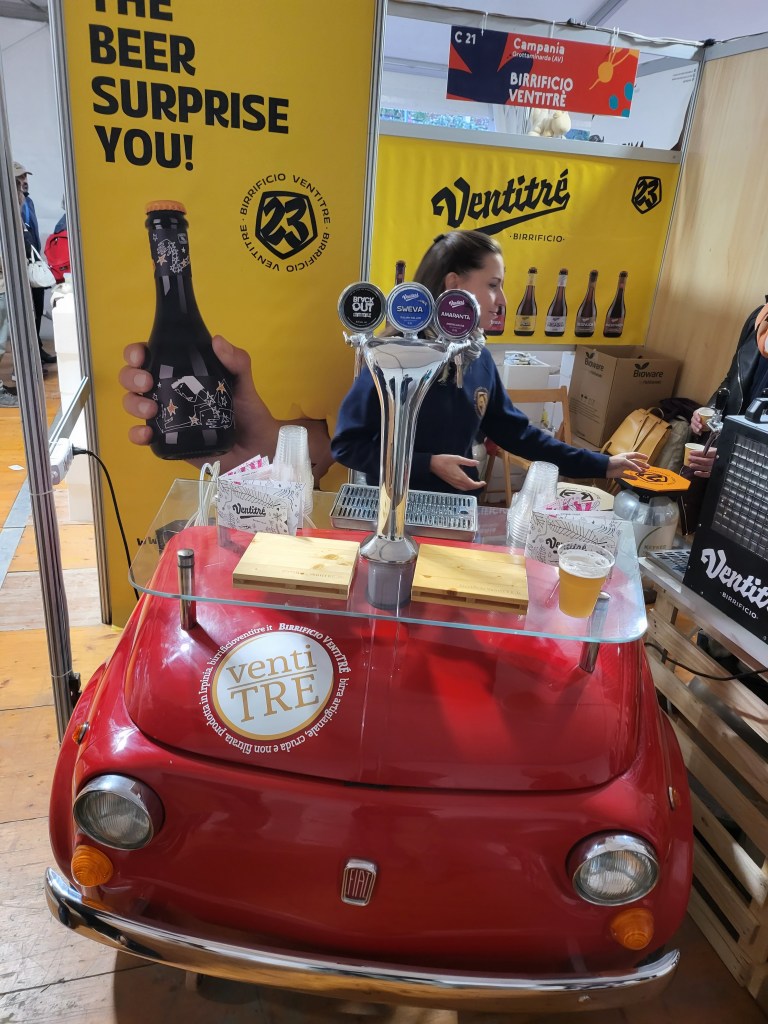
Cars of all nations are on display, however, at MAUTO (Museo dell’Automobile of Turin) which is regularly voted one of the best motor museums in the world. Set in a futuristic looking building 200,000 square feet large, this temple to motoring houses interactive exhibits and over 200 cars from 80 brands, including some very rare and ‘molto bella’ examples from Alfa Romeo, Lancia and Maserati.
Sadly, Fiat themselves no longer make cars in Turin. The factory’s rooftop racetrack in Lingotto, which the much-loved Minis zoomed around on screen, is now a public garden. Similarly, Fiat’s old ironworks on the banks of the river Dora has been regenerated as an urban park which hosts, every two years, the Terra Madre Salone del Gusto food festival.
What is the food scene like in Turin?

The Slow Food Movement calls for a celebration of food that is locally grown, made to nourish the body and which is appreciated when eaten. It started in Piedmont as a protest and has become an international phenomenon for food lovers everywhere.
The city is packed full of restaurants, trattorie, osterie and pizzerie. Choose from traditional, classy, colourful, romantic, characteristic or contemporary atmospheres. There are a few vegetarian options and an increasing number of places that offer fusion cooking based on Italian favourites, blended with exotic flavours and twists on the traditional.
What food is the area famous for?

Piedmont food is bursting with flavour. While in Turin, you can try local specialities such as:
- Tomini: mini, creamy cheeses served with chilli
- Vitello tonnato: veal in a tuna mayonnaise
- Bagna cauda (which means ‘hot bath’): a sauce made with garlic and anchovies
- Agnolotti: a ravioli traditionally stuffed with minced lamb
- Bollito misto: a mix of veal, chicken, pork and offal
- Lumache: snails, often served with garlic, tomato and olive oil
- Carne cruda: a Piedmont version of beef tartare
- Regional cheesesincluding: Toma DOP, Castelmagno and Bra DOP
The Po valley in Piedmont is famous for its rice paddies that produce arborio, used for. Venere Nero, a black, short grain rice is also native to Piedmont and turns a rich shade of indigo when cooked.
Rice or pasta with Tartufo d’Alba (truffles) is another speciality to be found, especially in the autumn.
Would you recommend Turin as a short break destination?

Without a doubt. Turin really has gone from fast cars to slow food but, in the words of the film’s theme tune, you can still “get your skates on, mate” and head down to Turin to explore this vibrant city steeped in automotive and cinematic history.
Just remember, though, as Charlie Croker, played by Caine, warns his band of getaway drivers right at the start of The Italian Job: “in this country, they drive on the wrong side of the road”.
For more information about Turin visit: turismotorino.org/en
See below for more of Russell’s travels and written work:


 The Sun Lounger
Leave a comment