

Say you don’t like sherry and I will roll my eyes.
Say it again when you’ve tried a sherry cocktail on the roof terrace at Hotel Bodega Tio Pepe in Jerez de la Frontera – the world’s first sherry hotel – and then I know we can’t be friends
While the UK is the biggest importer of sherry in the world, it’s still mistakenly regarded an older person’s tipple in Britain (think Dot Cotton in Eastenders). In Jerez, sherry is life.

There are several different types of sherry, including fino, manzanilla, amontillado, palo cortado, oloroso, Pedro Ximénez and muscatel. From the pale and very dry fino, which is served cold, to the thick, sweet, dark dessert Pedro Ximénez, sherry is just one of the reasons why, to me, Jerez is the most perfect city I have ever visited.
Reasons to love Jerez:
- Weather
Jerez sits in the Guadalquivir Valley, which is often referred to as ‘the frying pan of Spain’. In fact, neighbouring Seville is the warmest city in continental Europe.
Summers are hot and even in winter, it has been known to get up to 24 degrees Celsius. The first time I visited was in mid-to-late October and it was 30 degrees on most days, although a jacket was needed at night. Perfect sun lounger weather.
The last time Jerez was covered in a white blanket of snow was in February 1954.
2. Horses
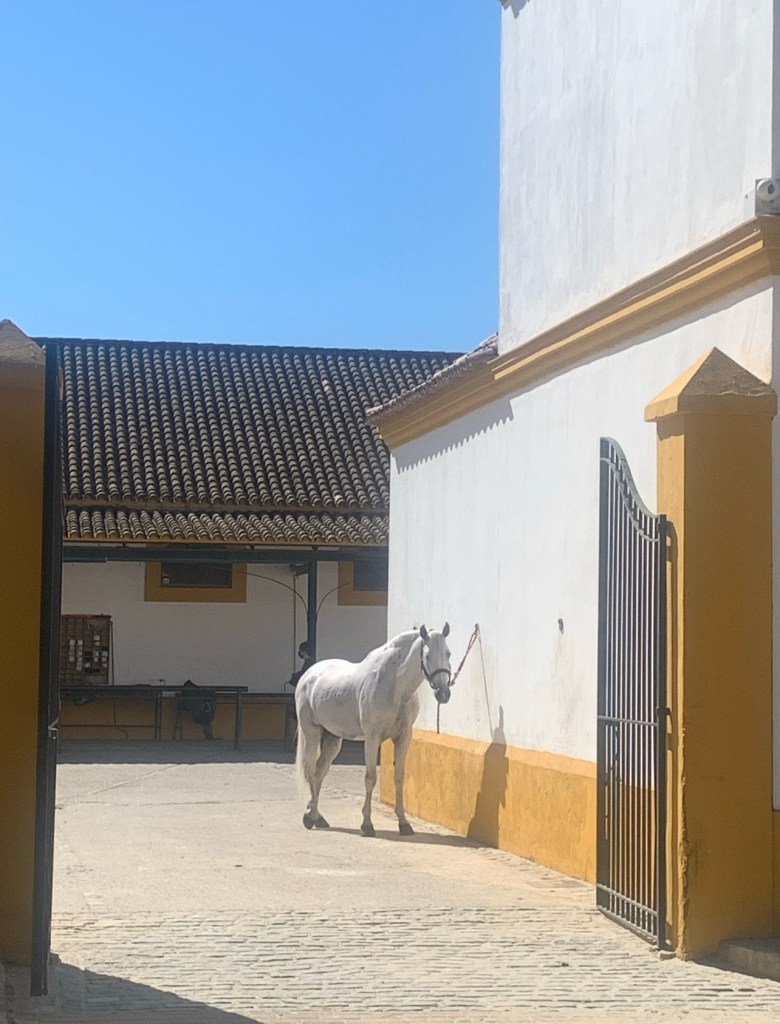
One of the main reasons I had wanted to visit Jerez since a child was because horses are an essential part of life there, intrinsically woven into the fabric of existence. I’d been to Andalusian ‘pueblos’ in the past and seen men just casually sauntering through the cobbled streets on the most noble of horses I’d ever seen and been in total awe.
In fact, the first time I visited the Royal Andalusian School of Equestrian Art (or ‘escuela’, as it’s called) to see the show called ‘How the Andalusian Horses Dance’ (€24 per person), I sobbed throughout much of it (and also for a while afterwards). It was just so utterly moving. I am a horse lover and have been since I was little, but non-horsey friends of mine who’ve been have said the same.

To set the scene, we reached the escuela by horse-drawn carriage through the sun-drenched city centre (€40 from outside the Alcazar). We did have a good look at the horse beforehand and concluded he was in good nick before we got on board. On arrival, you step through grand gates and into the gardens with the Picadero, or indoor arena, which can seat up to 1,600 people, in front of you.
This imposing building is decorated in authentic Andalusian style, with deep yellow tones of albero sand and the brilliant white of the traditional houses. There’s also a 19th century palace, designed by the same chap who masterminded the Paris Opera House and Monte Carlo Casino among others. Basically, it’s awesome.
Then, there are the horses themselves. In the UK, in my experience, a stallion is to be revered and treated with extreme respect and caution. All teeth and hooves, these frothing, snorting beasts are often kept away from other equines and certainly from other stallions. Yes, there are exceptions but that’s the general rule of thumb.

Due to the noble but docile nature of this most stunning of horse breeds, the PRE (puro raza Andaluz) stallions mix with other stallions, mares and geldings for the show, which is a constant stream of elastic-limbed, flying horses, moving in time to stirring classic music, handled, ridden or driven by proud men and women in traditional dress.
After the show, you can sit and watch horses train outdoors, the immaculate stables backed on to by sherry bodegas, with storks nesting on telegraph poles. You can do so with a glass of sherry from the bar beneath the arena in hand, rubbing shoulders with riders, coachmen and women. I cried there too.
3. Culture
Proud is the word I would use to describe the people of Jerez. They are proud of their traditions and culture.

One evening, while walking to a bar, we saw a group of teenagers making quite a noise. There was guitar playing, ‘cante flamenco’ (flamenco singing) and heels hitting the cobbles. The girls in jeans and belly tops swirled round making ‘floreo’ hand movements, while the boys clapped. We clapped as we passed and they swirled around us too, happy that we enjoyed them. I can’t imagine anything similar ever happening in the UK.
Flamenco was born in nearby Seville and you’ll find it everywhere. As well as in the ‘tabancos’ – traditional bars through the city, believed to have started in the 17th century, from where sherry and tobacco was sold – you’ll find it springing up almost everywhere.

I was of the impression that flamenco was only performed by ladies in tiered, spotty dresses with castanets in hand. I was wrong. It’s not uncommon to be in a bar and impromptu flamenco will start. We were in one bar when a woman in jeans and leopard print top walked in, accompanied by a guitarist and someone with a wooden box drum, and raw, unpolished flamenco just began. It ended with everyone of all ages getting up and dancing too.
Two places I would particularly recommend for flamenco in Jerez are Tabanco el Pasaje and Tablao Puro Arte.

In this hole in the wall, painted bright green with a rustic bar, a few tables and barrels piled one on top of another, there are daily flamenco shows which feel authentic. We sat close to the stage and had the tapas menu, with sherry and wine, which cost €40 per person and ate meats, tortilla, artichokes in sherry and pork rinds. Vegetarians/vegans, eat before you come!
The performance at Puro Arte made the hairs on my arms stand on end. We sat at small tables, looking up at the stage. In between the tables, there was a much smaller, low stage, which is where the show started. Being so close, you could not help but literally ‘feel’ the ‘cante flamenco’ and every stamp of the heel from the flamenco dancers. It was another emotional experience.
A show and drink itself is €30 per person, while we had the tapas menu, which started at 9pm for dinner, with the show commencing at 10pm and lasting an hour. That cost us €49 per person and included salad, tortilla, fried aubergine and croquettes to start, Iberian beef cheeks in Oloroso sherry, plus dessert and a drink.

While there were tourists in the audience, it felt all the more authentic as there were Spanish people there too and the owner could not help but shout ‘ole’ several times, so engrossed was he in the breath-taking performance.
Get a taxi to Puro Arte as it is a good 20-minute walk out of the centre of town and we had trouble finding it on Google maps.
4. Food
Tapa means ‘lid’ and is so called because bar keepers used to cover their customers’ drinks with a slice of bread, ham or cheese to stop insects and dust from entering. There are great tapas all over Jerez and this way of eating enables you to have a little bit of everything. It’s my favourite way to eat.

We’ve never had a bad meal in Jerez. One of our best meals was had at Bar Juanito, which is tucked away in a quiet street off Plaza de Arenal, but is hugely popular, so don’t make the mistake we made one time, when we showed up, thinking we’d be able to eat, but they had to turn us away.
The restaurant is everything you want a tapas bar to be, with a reasonably priced menu. There’s no website (they obviously don’t feel the need)!
The receptionist at the hotel recommended Albores to us, which I had already researched and found on Google. Situated on a main pedestrian street, it is a great place to people watch. Diners continue to pile in at 11pm. The restaurant also encourages diners to go into the wine cellar and choose their own wine.
The menu is what you want it to be – either tapas or full plates, with creative dishes such as sea anemone pate with a chicory and saffron aauce (€8.50 for a starter) and acorn fed Iberian ham (€4.80). The Iberian pork cheeks, oloroso sherry sauce and pumpkin puree (€15) was melt-in-the-mouth good.
5. Heritage
If you think of the Costas when you think of southern Spain, think again. You won’t find rows of Irish bars and cafes selling full English here.

While a simply stunning, historic film set of a city which is easy to walk around on foot, Jerez literally means ‘sherry’ and it is studded with sherry bodegas, or ‘cathedrals’ as they call them. On the way into town from the small and rather cute airport, you’ll see silver hills covered in vines and several cathedrals of wine on your approach. You’ll also see names you recognise, such as Croft, Harveys and Tio Pepe at every turn.
Sherry is a type of wine is only made in the triangle of land formed by the towns of Jerez de la Frontera, Sanlúcar de Barrameda and El Puerto de Santa María. The city has been a centre of wine-making since the art was introduced to Spain by the Phoenicians in 1100 BCE. Then followed the Romans and the Moors, each of whom left their mark on the city.
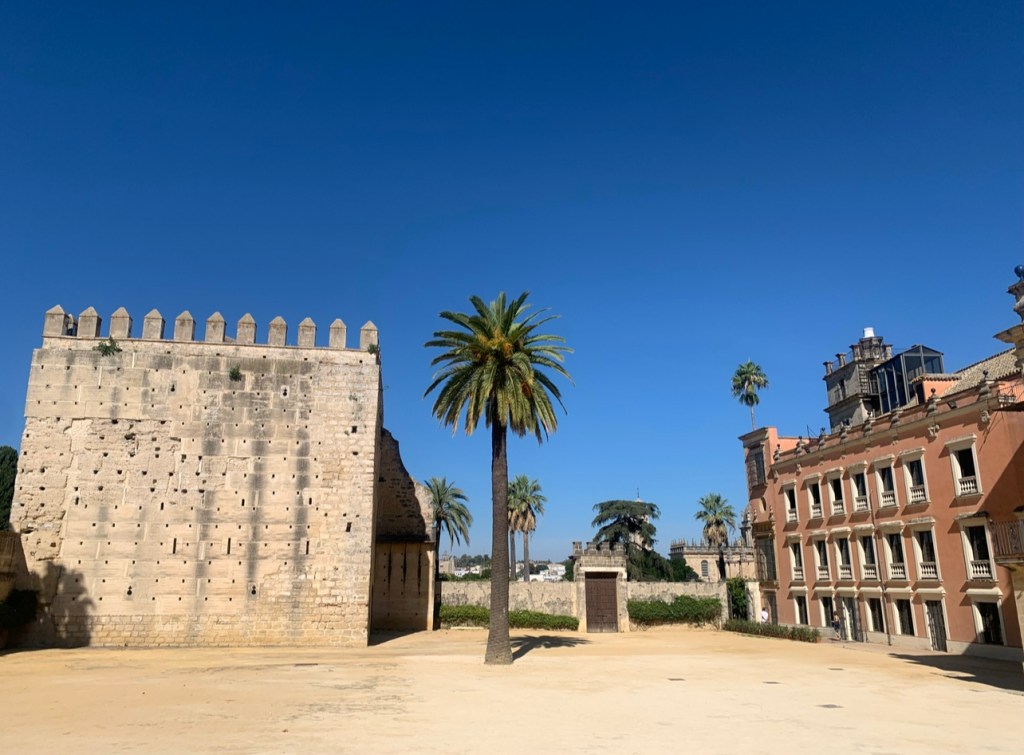
The Alcazar in the heart of the old city (entry €5 per person) is the oldest building in Jerez, with an 11th century fortress of Islamic origin, with mosque, gardens, old city walls and Arab baths. It’s worth a visit and is a stone’s throw from Bodegas Tio Pepe, where you can take a tour and discover the history of sherry.
The tour takes in Andalusian courtyards, trellis-lined streets and ancient wine cellars, heavy with the smell of aged oak, where the finest sherry and brandy are aged.
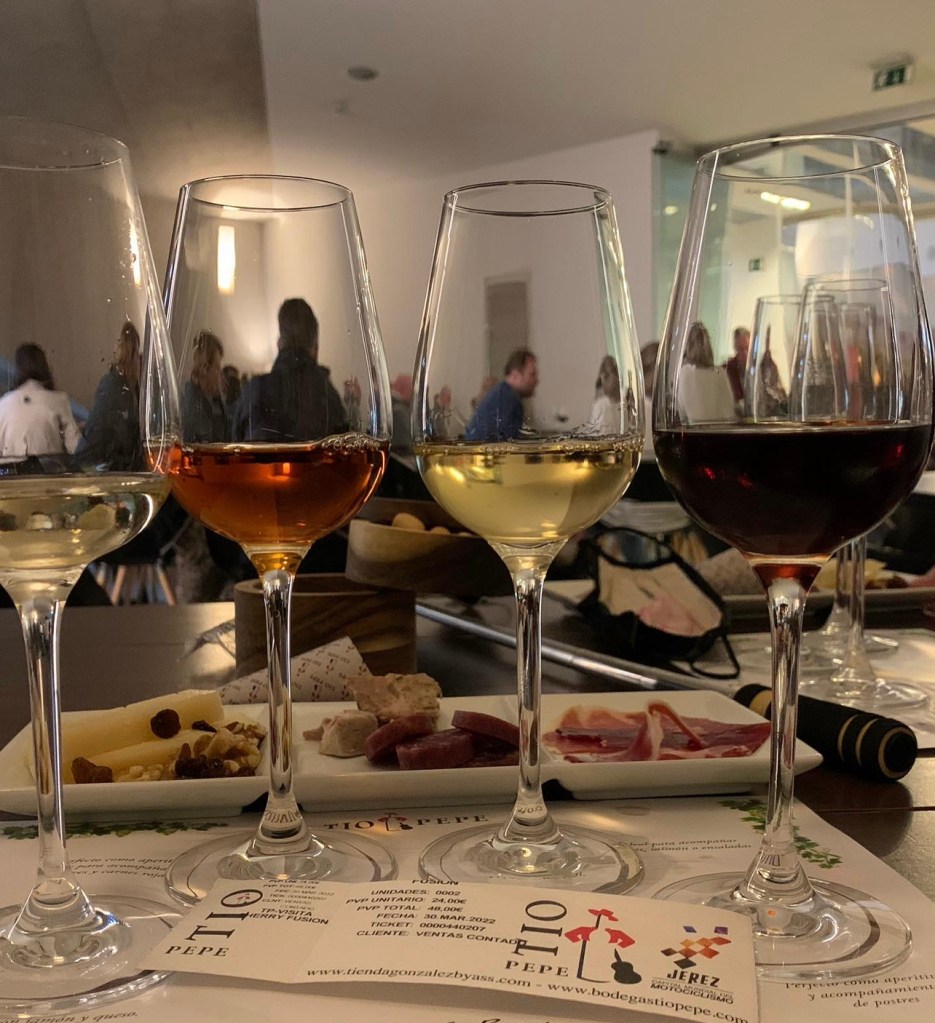
I can’t recommend this tour highly enough. A basic tour costs €19.90 or you can choose one which ends with a tasting of five sherries with five tapas. It’s a good job we were staying at the adjoining Hotel Bodega Tio Pepe itself, so there wasn’t far to stagger.

The stunning hotel itself is made up of four historic houses that were formerly the home of the winery workers, situated within the winery, steps away from both the Alcazar and Jerez cathedral. On the two occasions we’ve stayed there, we’ve had rooms with terraces. It is class personified. The first thing that hits you when you walk in is the smell. I’m not sure what it was (maybe orange blossom) but every corridor and room smells beautiful here.
Breakfast is an under-stated feast, served either in the dining room or courtyard garden, where there is a water fountain and orange trees.

The crowning glory of this understatedly luxurious hotel is the roof terrace, where you’ll find the dinky pool and can see stunning views across the terracotta rooftops of Jerez. This is where you can also enjoy sherry cocktails, like Fino and tonic or Solera sherry with Fanta orange.
Sipping the latter as you watch the sun go down over the distant Andalusian countryside is a memory I will never forget.


 The Sun Lounger
Leave a comment